
10 Interesting Facts About The Jurassic Period

I was recently at a museum, you know, one of those places where you try to look intellectual and nod sagely at dusty artifacts. Anyway, I was staring at this massive dinosaur skeleton, and a little kid next to me, probably no older than six, pipes up to his mom, "Mommy, was this dinosaur really real?" The mom, bless her heart, tried to explain paleontology and fossilization, but the kid just looked utterly bewildered. It got me thinking: how weird and amazing was that ancient world? The Jurassic period, specifically, feels like something out of a sci-fi flick, doesn't it? All those giant lizards stomping around! So, let's dive into some mind-blowing facts about this prehistoric playground. Get ready to have your socks knocked off, or at least your carefully curated museum-visit composure shattered!
It’s easy to picture the Jurassic as this monolithic era of constant dinosaur domination. But, like all good stories, it had its own twists and turns. And before we even get to the big names you know and love, let's talk about the beginning of it all.
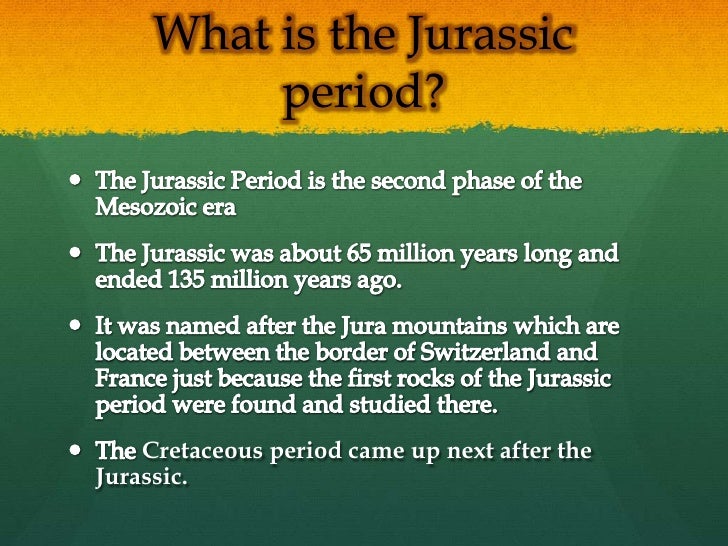
1. It Was the True Age of the Giants – and We Mean Giants
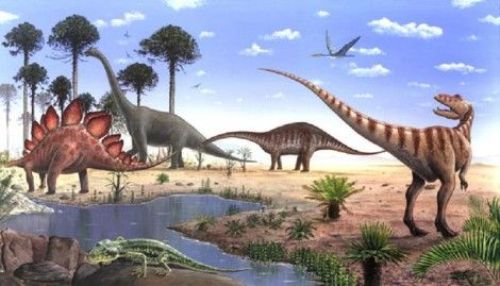
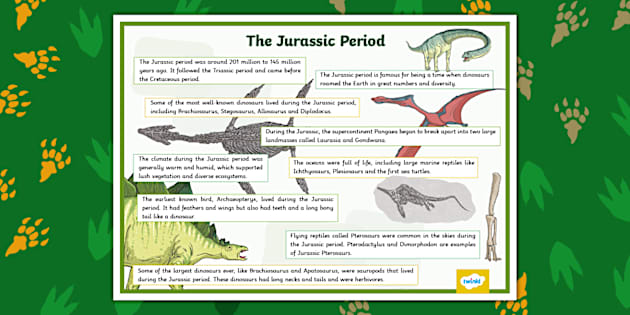
Okay, so "Jurassic" probably conjures up images of T-Rex, right? Wrong! T-Rex was a Late Cretaceous rockstar, darling. The Jurassic was all about the early giants, the sauropods. Think Brachiosaurus, Diplodocus, and the ridiculously long Apatosaurus (formerly known as Brontosaurus, remember that whole naming drama? I do!).
These guys were like living, breathing skyscrapers. Some of them could reach lengths of over 100 feet and weigh as much as several elephants combined. Imagine a herd of these moving through a forest. It wasn't just a rumble; it was probably a bona fide earthquake. Can you even wrap your head around that kind of scale? I certainly can't. My biggest concern today was finding a parking spot. Their biggest concern? Not accidentally stepping on a mountain.
These herbivores were the undisputed kings (or queens) of their domain, primarily because they were just… too much to handle for most predators. Even the early large carnivores would have had a tough time taking down a fully grown sauropod. It's like trying to tackle a cruise ship. Good luck with that!
2. The World Was a Different Place – Literally
Forget what you see in movies with lush, green, temperate forests everywhere. The Jurassic world was wildly different. For starters, the continents were all bunched up together in one supercontinent called Pangaea. Yep, that’s right, all our modern-day landmasses were basically one giant island.
This meant that climates were often more extreme. You had vast arid deserts in some areas and humid, swampy regions in others. And guess what? This mega-continent was starting to break apart during the Jurassic. So, while it was still mostly together, the seeds of our current continental arrangement were being sown. It's like watching the Earth's ultimate divorce proceedings.
This breakup also led to the formation of new oceans and seas, changing coastlines and creating new environments for life to evolve in. Fascinating, isn't it? Next time you're at the beach, just remember you might be standing on land that was once smack-dab in the middle of nowhere, thousands of miles from the nearest ocean.
3. Birds Were Just Getting Started (Like, Really Just Getting Started)
We associate dinosaurs with scales and roars, but the Jurassic was the era when feathered friends began their evolutionary journey. Enter Archaeopteryx, a creature that’s pretty much the poster child for the bird-dinosaur link. It looked like a bird, but it had teeth, claws on its wings, and a long bony tail. Talk about a mixed bag!

This little critter, and its ilk, were starting to experiment with flight. It’s believed they were more gliders than powerful flyers at this stage, using their feathered limbs to catch air currents. Imagine a fuzzy lizard with wings flapping its way through the prehistoric sky. It’s less eagle, more… a very enthusiastic, prehistoric pigeon.
This is a crucial piece of the puzzle for understanding modern birds. They’re not just distant relatives; they are, in essence, living dinosaurs. The next time you see a pigeon strutting down the street, give it a little nod of respect. It's carrying on an ancient legacy!
4. Plants Were… Different, Too
You might think of ferns and palms, and you wouldn't be entirely wrong. But the Jurassic flora was missing a key player: flowering plants. Yep, those pretty blossoms you see everywhere? They hadn't evolved yet. The world was more of a stark, green and brown landscape compared to the vibrant hues we're used to.
Instead, you had a dominance of cycads (which look a bit like squat palm trees with spiky leaves), conifers (like pines and redwoods), and ferns. It was a more primitive, less diverse plant kingdom. Imagine a world without roses, tulips, or even that annoying dandelion that keeps popping up in your lawn. Kind of a shame, really.
These plants formed the basis of the food chain for all those massive herbivores we talked about. So, while the animals were spectacular, the botanical landscape was the silent, essential stage setting. It’s a good reminder that even the most epic battles on screen are often powered by the humble plant.
5. Marine Life Was Absolutely Epic
While the land was dominated by colossal sauropods, the oceans were a whole other ballgame. This was the time of some truly terrifying (and fascinating) marine reptiles. We’re talking about creatures like ichthyosaurs, which looked eerily like dolphins or porpoises but were reptiles, and the mighty plesiosaurs, with their long necks and paddle-like limbs.
And then there were the pliosaurs, which were basically the apex predators of the Jurassic seas. Think of a short-necked, incredibly powerful plesiosaur with a massive head filled with terrifying teeth. The most famous example is probably Liopleurodon, which some estimates suggest could reach lengths of over 50 feet. Yeah, that’s a big dude. Imagine swimming in the ocean and seeing that pop its head up. I’d probably just spontaneously combust from sheer terror. No thank you!
These marine giants were actively hunting fish, ammonites (ancient relatives of the modern nautilus), and even other marine reptiles. The Jurassic oceans were a constant, high-stakes buffet. It's a good thing we invented submarines, right? Because I'm not signing up for a dip.
6. It Wasn't All About Dinosaurs (But They Were Pretty Important)
While the dinosaurs get all the glory, it’s important to remember that the Jurassic period also saw the rise of other significant groups of animals. For instance, early mammals existed, though they were mostly small, shrew-like creatures that scurried around in the undergrowth, avoiding the big dinosaur drama.
Think of them as the timid background characters in a blockbuster movie. They were there, doing their thing, but they weren't exactly stealing the spotlight. It’s amazing to think that our own evolutionary lineage was taking its first tentative steps in such a dramatically different world. Talk about humble beginnings!
Insects were also thriving, and the oceans were full of diverse invertebrates. It was a complex ecosystem with many players, even if some were a lot more… toothy… than others. So, while the dinosaurs were the headliners, the supporting cast was pretty impressive too.
7. The Atmosphere Was Different
The air we breathe today is a delicate balance. Back in the Jurassic, that balance was a little different. Oxygen levels were generally higher than they are today, possibly contributing to the massive size of some of the animals. Imagine breathing in a richer, more potent air. It might have given those giants an extra boost!
Carbon dioxide levels were also significantly higher, leading to warmer global temperatures. This contributed to the lush vegetation in many areas. It's a stark contrast to the climate change concerns we have now, isn't it? Although, higher CO2 levels also mean that the planet was likely a much hotter place, which probably wasn't ideal for, you know, us.
This denser, warmer atmosphere would have created a very different sensory experience. Sound might have traveled differently, and the overall feel of the environment would have been quite alien. Hard to imagine, but it’s a testament to how dynamic our planet’s systems are.
8. The Jurassic Was a Transitional Period
The Jurassic period wasn't an isolated event; it was a crucial stepping stone in Earth's history. It followed the Triassic, a period of recovery and adaptation after the massive Permian-Triassic extinction event (the "Great Dying"). The Jurassic saw life rebound and diversify significantly.
It also set the stage for the Cretaceous period, which would become home to some of the most famous dinosaurs of all, like the aforementioned T-Rex and the armored Triceratops. So, the Jurassic was like the training montage for the Cretaceous blockbuster. All those massive sauropods and early theropods were paving the way for what was to come.
It's a reminder that evolution is a continuous process, with each era building upon the last. No period of Earth's history just "happened"; it was all interconnected. Pretty cool to think about how one era's giants were another era's ancestors, or even their lunch.
9. Volcanoes Were Constantly Active
Remember that whole Pangaea breaking apart? Well, that wasn't a gentle process. The Jurassic was a period of intense volcanic activity. Massive lava flows and volcanic eruptions were common, especially in areas where the supercontinent was splitting.
These volcanic events had a huge impact on the global environment. They released massive amounts of greenhouse gases, contributing to the warm climate. They also caused ash falls that could smother vegetation and affect air quality. It was a dramatic and sometimes violent period for our planet.
Imagine looking up at the sky and seeing plumes of smoke and ash from volcanoes in the distance. It would have been a constant reminder of the raw power of nature. Definitely not a time for a quiet picnic, unless your idea of a good time involves getting dusted with ash.
10. The Name "Jurassic" Comes From the Jura Mountains
This one might seem a bit anticlimactic after talking about giants and volcanoes, but it's still pretty neat. The Jurassic period got its name from the Jura Mountains, a range that stretches across France, Switzerland, and Germany. Why? Because significant fossil discoveries from this period were first made in that region!
Geologists, the folks who study rocks and fossils, were exploring these mountains and finding a distinct layer of rock containing fossils that were clearly from a specific time period. They named this period after the location where they found the evidence. It’s a bit like naming a dessert after the baker who invented it, but for rocks and ancient life.
So, next time you hear "Jurassic," you can picture those majestic mountains. It’s a nice little nod to the scientists who pieced together this incredible prehistoric puzzle for us. And it's a good reminder that sometimes, the most amazing discoveries are found right under our noses (or, in this case, under the mountains).
So there you have it! Ten glimpses into a world that seems impossibly distant and incredibly strange. The Jurassic period was a time of incredible evolution, colossal creatures, and a planet that was still figuring itself out. It makes you wonder what other incredible secrets are still locked away in the rocks, waiting for us to uncover them. Keep exploring, keep wondering, and maybe, just maybe, keep an eye out for any particularly large lizards in your backyard. You never know!