
18 8 Stainless Steel Vs 316 Stainless Steel
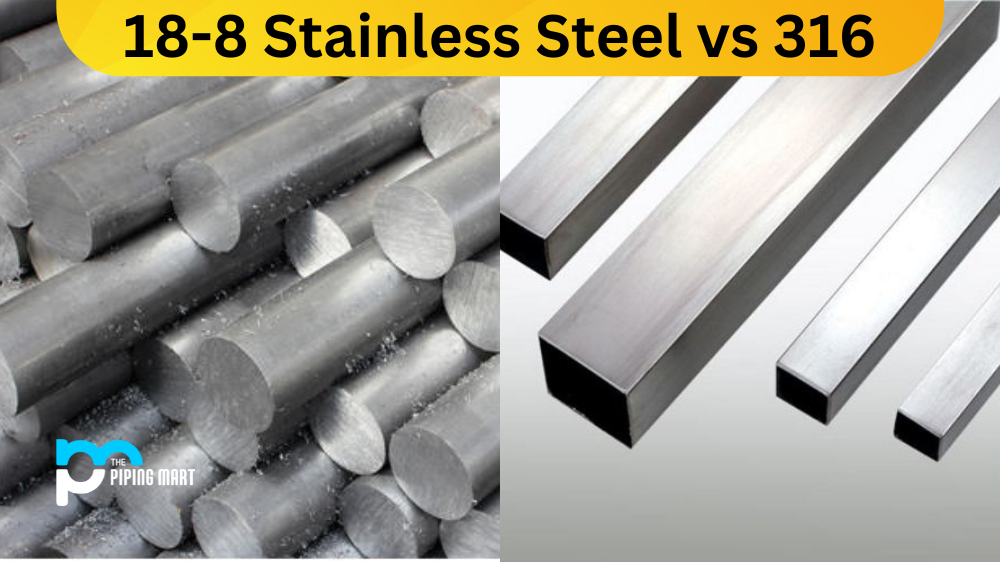
Hey there, wonderful humans! Ever found yourself staring at a shiny piece of metal and wondered, "What's the deal with this stuff?" You know, the kind of metal that doesn't get all rusty and sad when it encounters a little moisture. Yep, we're talking about stainless steel! And today, we're diving into a super-duper exciting topic that might just revolutionize how you look at your kitchen gadgets, your outdoor gear, and maybe even your trusty car keys. We're going to talk about two rockstar siblings in the stainless steel family: 18/8 and 316.
Now, before you start picturing some intense science lab experiment (don't worry, we'll keep it fun!), let's just say these two are like the best buddies of corrosion resistance. They're designed to hang tough, whether it's battling salty air, acidic foods, or just the general wear and tear of life. Think of them as the superheroes of durability. And understanding them, even a little bit, can actually make your life way more enjoyable. Seriously!
So, what's the big fuss about "18/8" and "316"? It all boils down to their secret sauce – their elemental makeup. These aren't just random numbers, folks. They're a peek into the recipe that makes these steels so awesome. It's like knowing the secret ingredient in your favorite cookies, except, you know, for metal.
Let's Meet the Contenders: 18/8, The Everyday Champion
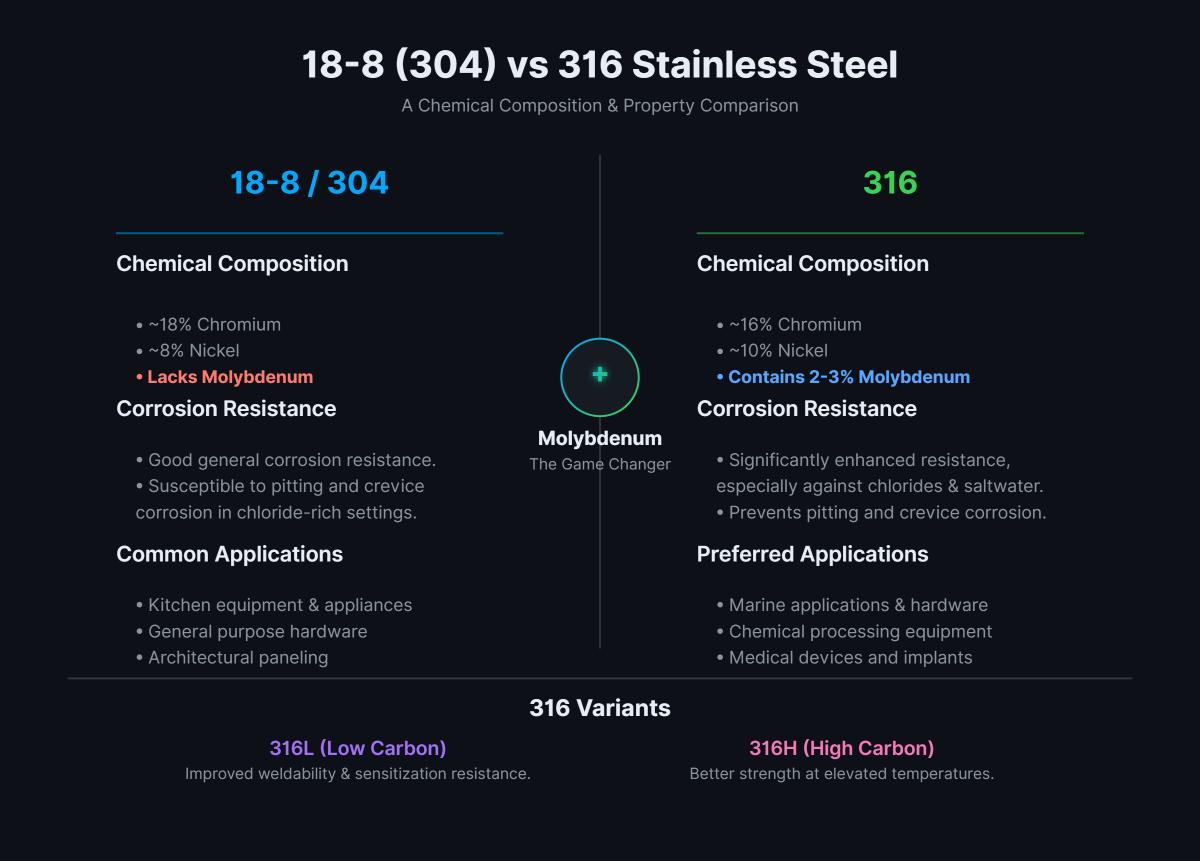
First up, let's give a warm welcome to 18/8 stainless steel! This is probably the guy you've met most often. It's the workhorse, the reliable friend, the one that's probably in your favorite water bottle, your fancy cutlery, and maybe even the little doodads on your outdoor gear. So, what does "18/8" mean? It's a pretty straightforward clue: it signifies that this steel is made up of approximately 18% chromium and 8% nickel. Pretty neat, right?
This dynamic duo of chromium and nickel is what gives 18/8 its superpower: its resistance to rust and corrosion. The chromium forms a thin, invisible layer on the surface that acts like a shield, protecting the metal from attacking elements. And the nickel? Well, it helps to make the steel even more robust and, dare I say, lustrous.
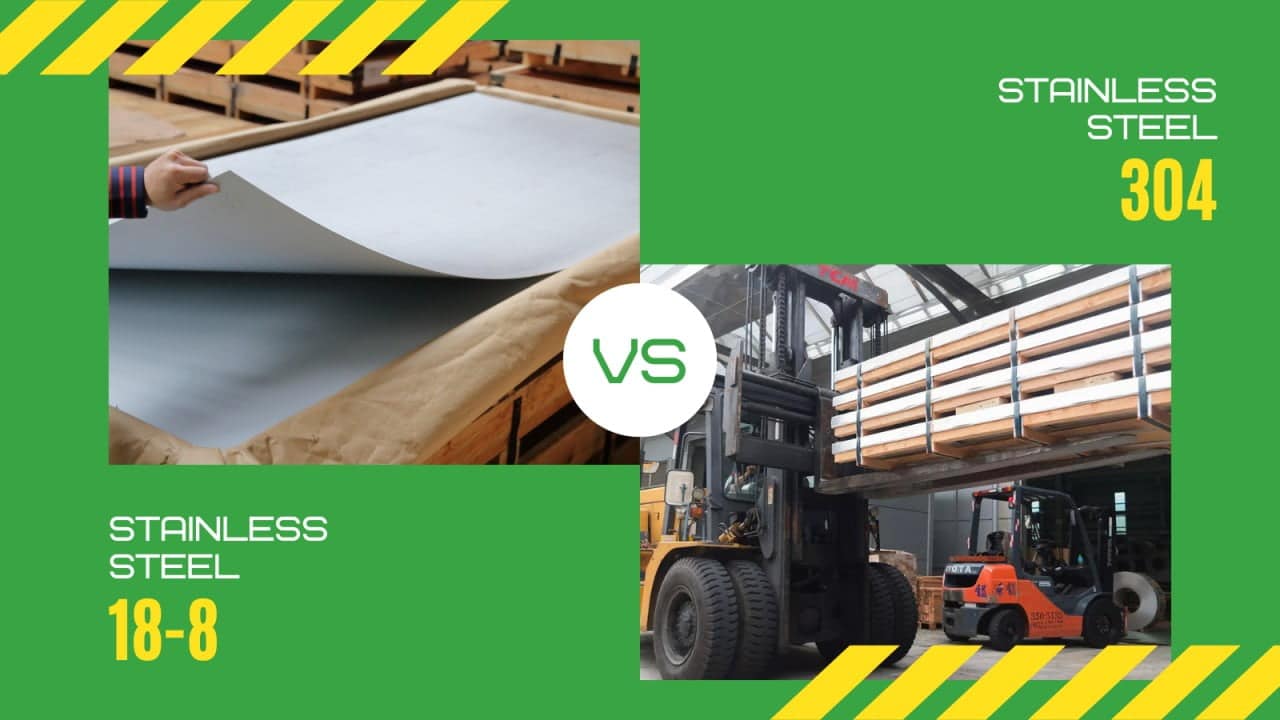
Think about it: you're enjoying a zesty lemon-lime water from your trusty stainless steel bottle. No funky metallic taste, no weird orange spots appearing. That's 18/8 working its magic! Or imagine your dinner party. Your elegant forks and knives gleam, ready to tackle anything from a delicate appetizer to a hearty steak. Again, hats off to 18/8!
It's tough, it's versatile, and it's generally very affordable. This is the stainless steel that makes everyday life a little bit brighter and a whole lot less prone to rust-induced frowns. It's the comfortable pair of jeans in the stainless steel wardrobe – always reliable, always stylish enough.

And Now, Introducing... 316, The Heavy Hitter!
But wait, there's more! Let's talk about 316 stainless steel. This is where things get a little more extreme. If 18/8 is your reliable sedan, 316 is your high-performance sports car, ready to tackle tougher terrains and more demanding situations. What makes it so special? Its recipe has an extra little kick: besides the chromium and nickel (similar percentages to 18/8), it boasts a significant addition of molybdenum – usually around 2% to 3%. Plus, it often has a bit more nickel than 18/8.
And what does this extra molybdenum do? It's like giving our superhero a secret power-up! Molybdenum significantly boosts the steel's resistance to corrosion, especially in environments that are particularly harsh. We're talking about places where chlorides are lurking – think salty sea air, industrial chemicals, and even certain acidic foods that can be quite aggressive.
So, where would you find this super-powered steel? You'll often see 316 showing up in more demanding applications. Marine environments, for instance, where saltwater is constantly trying to wage war on metal. Medical implants? You bet! The human body can be a surprisingly corrosive place, and 316 is biocompatible and tough enough to handle it. It's also a go-to for chemical processing equipment and high-end architectural features exposed to the elements.
Imagine your beautiful seaside home, with railings that gleam year after year, unfazed by the ocean spray. Or think about that premium camping cookware you invested in – the kind that can handle campfire soot and whatever culinary experiments you dream up in the great outdoors. That's often the work of 316 stainless steel, providing superior protection.
So, Which One is Right for Your Next Adventure?
Now for the fun part: deciding which of these fantastic steels is the perfect fit for your needs! It's not about one being "better" than the other, but rather about choosing the right tool for the job. For most of your everyday needs – your coffee mug, your kitchen utensils, your basic camping gear – 18/8 stainless steel is an absolute star. It offers fantastic performance, looks great, and is incredibly cost-effective. You really can't go wrong!
However, if you're looking for that extra layer of bomb-proof protection, if you're planning on spending a lot of time near the ocean, dealing with aggressive chemicals, or just want the absolute pinnacle of corrosion resistance, then 316 stainless steel is your champion. It's an investment in unparalleled durability and peace of mind.
Thinking about buying a new water bottle? Check the specs! Looking at a set of fancy outdoor cooking pots? See what they’re made of! This little bit of knowledge can lead to some seriously satisfying purchases, ensuring your gear lasts longer, performs better, and continues to bring you joy for years to come. It’s about making informed choices that lead to a more enjoyable, less frustrating life. Who knew steel could be so… empowering?
So, the next time you're admiring a shiny piece of metal, take a moment to appreciate the science and engineering behind it. Whether it's the trusty 18/8 or the mighty 316, these stainless steels are working hard behind the scenes to make our lives easier, more beautiful, and a whole lot less rusty. They’re a testament to human ingenuity, proving that even everyday materials can be pretty darn inspiring. Go forth and explore the wonderful world of stainless steel – there’s a whole lot of shine waiting for you!