
3 Characteristics Of A Metal
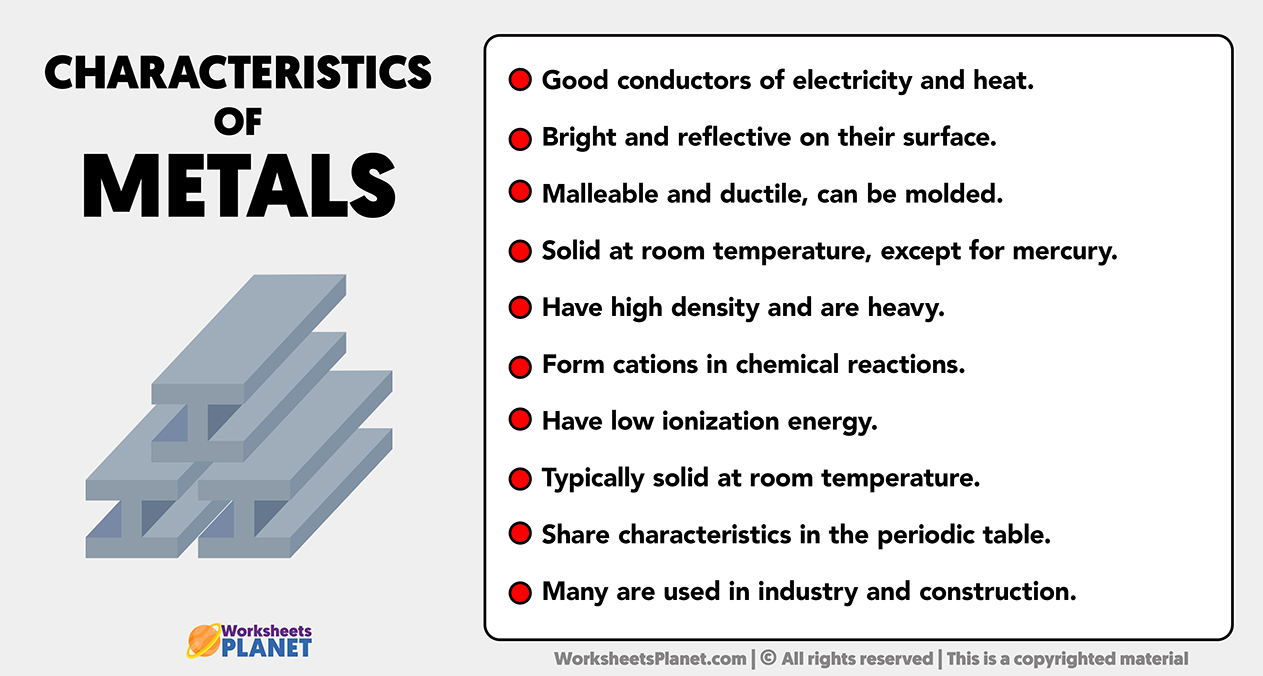
Alright, pull up a chair and grab your overpriced latte, because we're about to dive headfirst into the wonderfully weird world of metals. Forget your dusty textbooks and stuffy lectures; think of this as your friendly neighborhood metal gossip session. You know, the kind where you learn something actually interesting and maybe even snort-laugh a little into your almond milk. So, what makes a metal a metal? Is it their brooding personality? Their inability to accessorize outside of chrome? Well, not exactly, but there are a few standout traits that scream "I'm a metal, deal with it!"
They're All About the Shine (and the Shock!)
First up, the most obvious one: luster. Metals are like the divas of the periodic table. They absolutely love to reflect light. Think of a perfectly polished spoon, a knight's gleaming armor, or that one friend who always seems to catch the spotlight. That, my friends, is metallic luster. It's that shiny, reflective quality that makes them look like they just stepped off a runway. And it's all thanks to their electrons doing a little dance party. These little fellas are loosey-goosey, meaning they can zoom around freely. When light hits them, they get all excited, absorb it, and then immediately chuck it back out, making them look all sparkly and fabulous. It’s like they’re constantly saying, “Look at me! Aren’t I gorgeous?”
Now, here's where things get a little zesty. This same electron freedom that gives them their shine also makes them fantastic conductors of electricity. Seriously, without metals, your smartphone would just be a fancy brick. Your toaster would be a sad, cold rectangle. And your gaming console? A monument to disappointment. Metals are basically the superhighways for electrons. They let them zip and zoom from one atom to another with incredible ease. It’s like they’ve got express lanes and zero traffic jams for electricity. This is why we use copper for wiring, aluminum for electronics, and probably why that shiny doorknob you’re touching right now is probably conducting the faint hum of the universe (or just the building's electrical system, but let's go with the universe). It’s a bit of a shocker, isn’t it? In the best possible way, of course.
They're Tough Cookies (But Bendy Too!)
Moving on to characteristic number two: malleability and ductility. Now, don't let their shiny exterior fool you into thinking they're delicate flowers. Metals are built tough. But here’s the kicker: they’re also surprisingly… bendy. This is where the terms malleable and ductile come in, and they sound fancy, but they’re actually pretty straightforward. Malleable means you can hammer them into thin sheets without them breaking. Think of those impossibly thin gold leaf decorations on fancy cakes. That's gold being super malleable. Ductile means you can pull them into long wires. Like the copper wires in your headphones, delivering the sweet sounds of… well, whatever you’re listening to. Probably some aggressive death metal, knowing the subject matter.

So, how do they pull off this apparent contradiction of being both strong and bendy? Again, it’s those free-roaming electrons. Imagine the metal atoms as a neat stack of billiard balls. If you hit them hard enough, they’ll shatter. But in a metal, those electrons act like a super-slippery lubricant. When you apply pressure, the atoms can slide past each other without snapping the whole structure. It’s like they’ve got tiny roller skates on. This is crucial! Without this ability, we couldn’t forge swords, build cars, or even make those cool metal sculptures that look like they defy gravity. They’re strong enough to hold up a bridge, but flexible enough to be shaped into a delicate bracelet. Talk about a Renaissance element!
They're the Ultimate Heat Seekers (and Not in a Good Way)
Finally, let's talk about characteristic number three: thermal conductivity. Metals are the ultimate gossipmongers when it comes to heat. They spread it around like wildfire. If you’ve ever touched a metal pot on the stove without oven mitts, you know exactly what I’m talking about. That searing, immediate pain? That’s your metal friend enthusiastically sharing its heat with your fingertips. It’s like they’ve got an insatiable need to equalize temperatures, and they do it fast. That’s why pots and pans are made of metal – they efficiently transfer heat from the burner to your food. Ingenious, if a little painful for the uninitiated.

This isn't just about cooking, though. This high thermal conductivity is also why we use metals in things like car radiators. They need to soak up all that engine heat and then efficiently dissipate it into the air. They're basically the unsung heroes of preventing vehicular combustion. Now, some metals are better at this than others. Copper and silver are absolute champions, practically Olympic gold medalists in heat transfer. Aluminum is pretty good too, which is why it's used so widely. Lead, on the other hand, is kind of a slacker in the heat conductivity department, which, thankfully, is useful for other things (like shielding from radiation, but let’s not get too serious). So, while their shine and their bendiness are pretty cool, their ability to conduct heat is a double-edged sword. Useful, yes. Painful, also yes. Just remember to wear your metaphorical (and literal) oven mitts when dealing with them!
So there you have it – the three key characteristics that define a metal: their undeniable shine (and electrical conductivity), their tough-yet-bendy nature, and their enthusiastic embrace of heat. They’re complex, they’re essential, and they’re definitely more interesting than most of the people I meet at brunch. Next time you pick up a coin, use a metal utensil, or even just lean against a metal railing, give a little nod to these incredible elements. They’re the true rockstars of the chemical world, and frankly, they deserve a standing ovation… just make sure it’s not a metal one, you might get burned.