
304 Vs 316 Stainless Steel Difference
Okay, so you're staring at a shiny object. Maybe it's a fancy new grill. Or perhaps it's that super-sleek kitchen sink. And there it is, printed somewhere: "304 Stainless Steel" or "316 Stainless Steel." What gives, right? Is it just fancy jargon for "looks good"? Nope! It’s actually a pretty cool little secret. And today, we're diving into the thrilling world of stainless steel grades. Hold onto your hats!
Think of stainless steel like a superhero team. They're all strong, they all resist rust, but they have different superpowers. And 304 and 316 are the two most popular members of the squad. They're like the dynamic duo of the metal world, but with a subtle, yet important, difference.
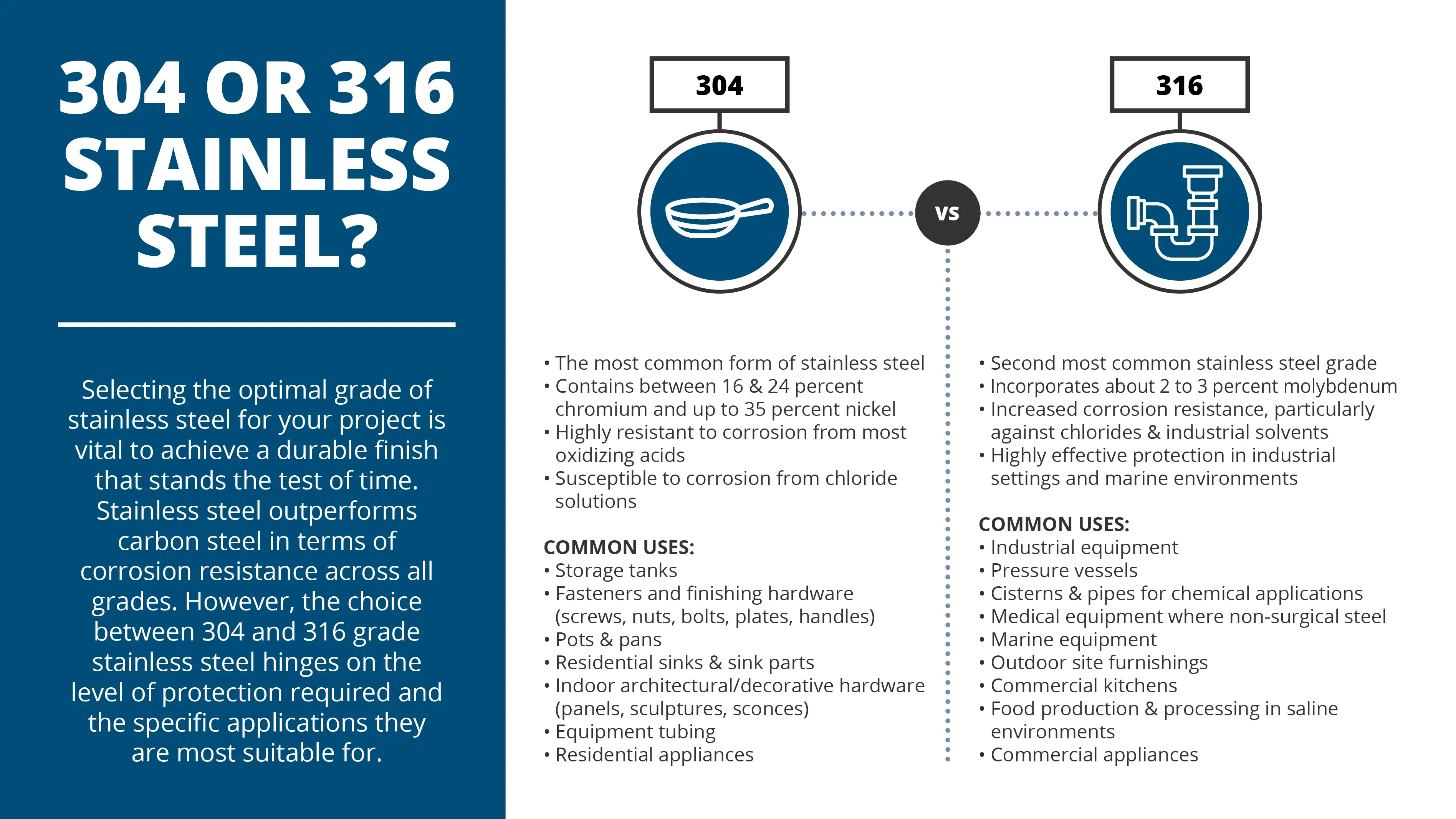
First up, let's meet 304. This guy is the workhorse. The reliable friend. The one you can always count on. He's made of about 18% chromium and 8% nickel. This is the classic stainless steel. You see it everywhere. Seriously, everywhere. Your cutlery? Likely 304. That nice pot you cook in? Yep, probably 304. Even some car trim!
It’s called "18/8" sometimes, which is a fun little nickname. Like saying your favorite cookie is "chocolate chip." It tells you the main ingredients. And 304 is great at resisting rust. It’s super durable. It doesn’t tarnish easily. It’s also relatively affordable, which makes it a popular choice for a whole lot of things. It’s the everyday hero.
But wait, there's more! Enter 316. This dude is the superhero superhero. He's like 304's cooler, more powerful cousin. What's his secret sauce? A little something called molybdenum. Just a tiny bit, usually around 2-3%, but it makes a HUGE difference.
Why is molybdenum so special? Imagine your standard 304 stainless steel. It's doing a pretty good job against corrosion. But if you throw it into a super salty environment, like near the ocean, or expose it to certain chemicals, it might start to get a little… grumpy. Like when you're trying to get a toddler to share. It can get stressed.

This is where 316 shines. That molybdenum is like a superhero shield. It makes 316 way more resistant to corrosion, especially from chlorides. What are chlorides? Think salt. Lots and lots of salt. So, if you live by the beach, or your grill is going to be exposed to salty air, or you’re using chemicals in your industrial setting, 316 is your guy. He laughs in the face of salt spray.
This makes 316 the go-to for marine applications. Boat parts? You bet. Piers? Absolutely. Anything that's going to be constantly splashed with saltwater. It's also super common in medical implants. Yep, that’s right. Your fancy new hip replacement? It’s probably made of something like 316 stainless steel. It’s biocompatible, meaning your body plays nicely with it. How cool is that?
Think of it this way: 304 is your trusty sedan. It gets you where you need to go, reliably, every day. 316 is your sports car with all the upgrades. It’s built for tougher conditions, for performance. It’s a bit more exclusive, and often, a bit more expensive.
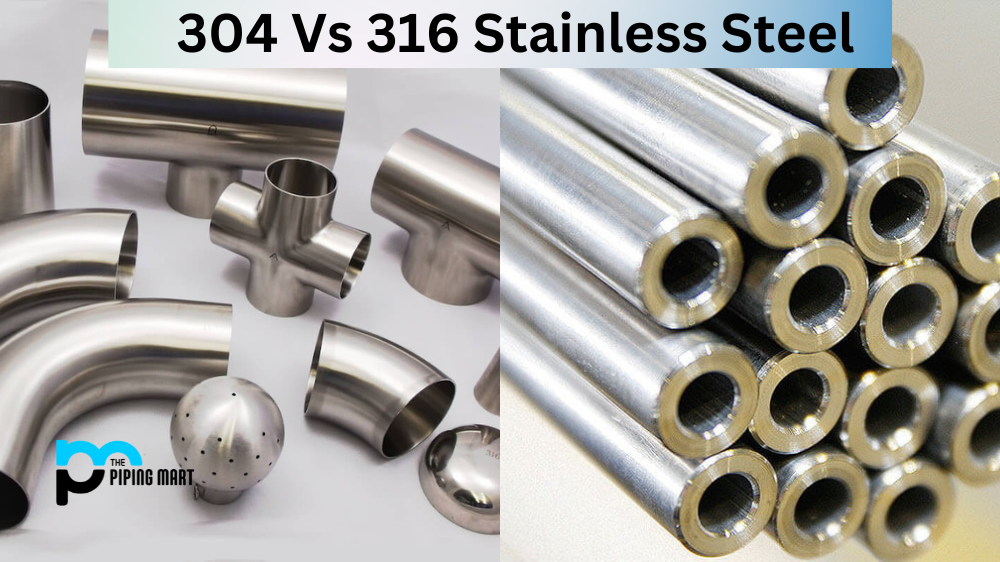
So, why should you care about this? Because it helps you make smarter choices! If you’re buying kitchenware, 304 is usually perfectly fine. It’ll last you ages. But if you’re investing in something that will be outdoors and exposed to the elements, or if you’re in a specific industry where corrosion is a major concern, then that little bit of extra money for 316 might just save you a headache (and a replacement cost!) down the line.
Here's a fun little quirk: the numbers themselves. They're not just random. They actually have a meaning in the world of metals. The '300' series, like 304 and 316, are part of the austenitic stainless steels. This is a specific crystalline structure that gives them their excellent properties. It's like a secret handshake for metals.
And the '04' and '16'? These are pretty much just identifiers. Think of them as model numbers. Like iPhone 14 Pro Max vs. iPhone 14. They’re both iPhones, but one has a few extra bells and whistles.
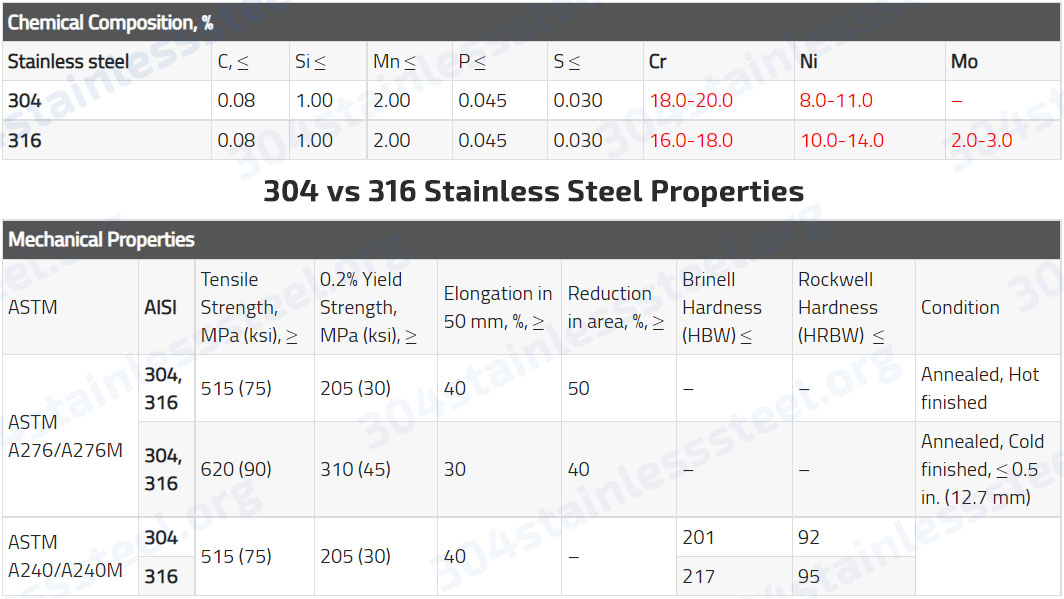
Another quirky fact: while 316 is superior in corrosion resistance, it's not significantly stronger than 304 in terms of sheer mechanical strength. It’s all about that resistance to environmental attack. So, it’s not like 316 can lift more weight. It’s more about surviving a tough environment without falling apart.
It's also worth noting that there are other stainless steel grades out there. We're just focusing on the two big players today. Imagine a whole stadium of different stainless steels, each with their own cheering section. But 304 and 316 are definitely the MVPs for most everyday situations.
So, next time you see "304" or "316" on something, you can nod knowingly. You’re in on the secret! You know that it’s not just a label; it’s a promise of performance. A little bit of engineering magic that keeps things looking good and working well.
It’s kind of fun to think about, isn’t it? How a few different elements, in slightly different amounts, can create such distinct properties. It’s like a recipe for durability. And understanding these little differences can make you a more informed consumer, and a more interesting conversationalist at your next BBQ. You can be the one explaining the marvels of molybdenum!
So, to recap: 304 is your everyday champion. Reliable, affordable, and great for most things. 316 is the corrosion-fighting king, especially when salt and harsh chemicals are involved. It's the upgrade, the super-powered version.
Both are fantastic. Both are stainless steel. But knowing the difference means you can pick the right tool (or grill, or sink) for the job. And that, my friends, is just plain smart. Happy steel spotting!