
409 Stainless Steel Vs 304 Stainless Steel
So, I was at this charming little café the other day, the kind with mismatched teacups and a resident cat who judges your pastry choices with a haughty flick of his tail. The owner, a lovely woman named Agnes, was showing off her brand-new espresso machine. It was a gleaming, industrial beast, all polished chrome and whirring parts. "Isn't she a beauty?" she beamed. "Cost me an arm and a leg, but the coffee… oh, the coffee!" I, naturally, was already imagining the caffeine rush. But then, my gaze drifted to the machine's construction. I noticed a little plaque, almost hidden, mentioning the type of stainless steel used. And a little bell went off in my head. You see, while Agnes was waxing lyrical about Italian beans, my brain was doing its usual nerdy thing, wondering about the metal that was brewing her magic. It got me thinking about the unsung heroes of our kitchens and beyond – the stainless steels.
We all know stainless steel, right? It's that shiny stuff that resists rust and looks perpetually clean (well, almost). It’s in our cutlery, our pots and pans, our appliances, even in some fancy car trims. But did you know there's not just one kind of stainless steel? Nope, it’s more like a whole family, each with its own little quirks and specializations. And two of the most common members of this shiny clan are 304 and 409. So, the question on my mind, and hopefully yours now too, is: what’s the difference, and when do you actually care?
Let's dive in, shall we? Think of this as a friendly chat over a cup of that amazing coffee Agnes makes, no dry textbook lectures here. We're just going to poke around and see what makes these two popular stainless steels tick.
The Usual Suspect: 304 Stainless Steel
Ah, 304. This is the guy you’ll see everywhere. Seriously. It’s like the reliable, do-it-all friend in the stainless steel world. You've probably got it in your kitchen right now without even realizing it. That shiny sink? Likely 304. Those gleaming mixing bowls? Yup, probably 304 too. Even the fancy railings on your balcony might be made of it.
Why is it so popular? Well, it’s a fantastic all-rounder. Its chemical composition is pretty standard: around 18% chromium and 8% nickel. This combination is the magic sauce that gives stainless steel its legendary corrosion resistance. It’s tough, it’s durable, and it plays well with pretty much everything. Food-safe is a big one here. You can slosh acidic tomato sauce in a 304 pot without worrying about weird metallic tastes creeping in. It’s also relatively easy to fabricate, meaning it can be bent, welded, and shaped without too much fuss. This makes it a go-to for manufacturers who need to produce a wide range of products.
Think about it: if you’re making something that’s going to be in constant contact with food, water, or just general household stuff, you want something that won’t degrade, won’t rust, and won’t leach nasty chemicals. That’s 304’s jam. It’s the definition of workhorse material. It’s not the absolute best at everything, but it’s really, really good at most things, and that’s a winning combination for a lot of applications.
The Perks of Being Popular (304 Edition)
Because 304 is so widely used, it tends to be more readily available and, importantly, more affordable. When you're talking about mass-produced items, cost is a huge factor. Manufacturers can buy 304 in large quantities at competitive prices. So, for your everyday kitchenware, appliances, and general architectural features, 304 is usually the smart and economical choice.
Another great thing about 304 is its aesthetic appeal. It has that classic, bright, polished look that most people associate with high-quality stainless steel. It’s clean, it’s modern, and it fits in almost any setting. You don’t need to be a material science expert to appreciate how it looks. It just looks good.
And from a maintenance perspective? A dream. A quick wipe down with a damp cloth and maybe some mild soap, and it’s usually good as new. It resists fingerprints pretty well too, though that can depend on the finish. So, for Agnes's espresso machine, if it were made of 304, it would be a solid, reliable, and good-looking choice. But Agnes’s machine… it wasn’t 304.
The New Kid on the Block (Sort Of): 409 Stainless Steel
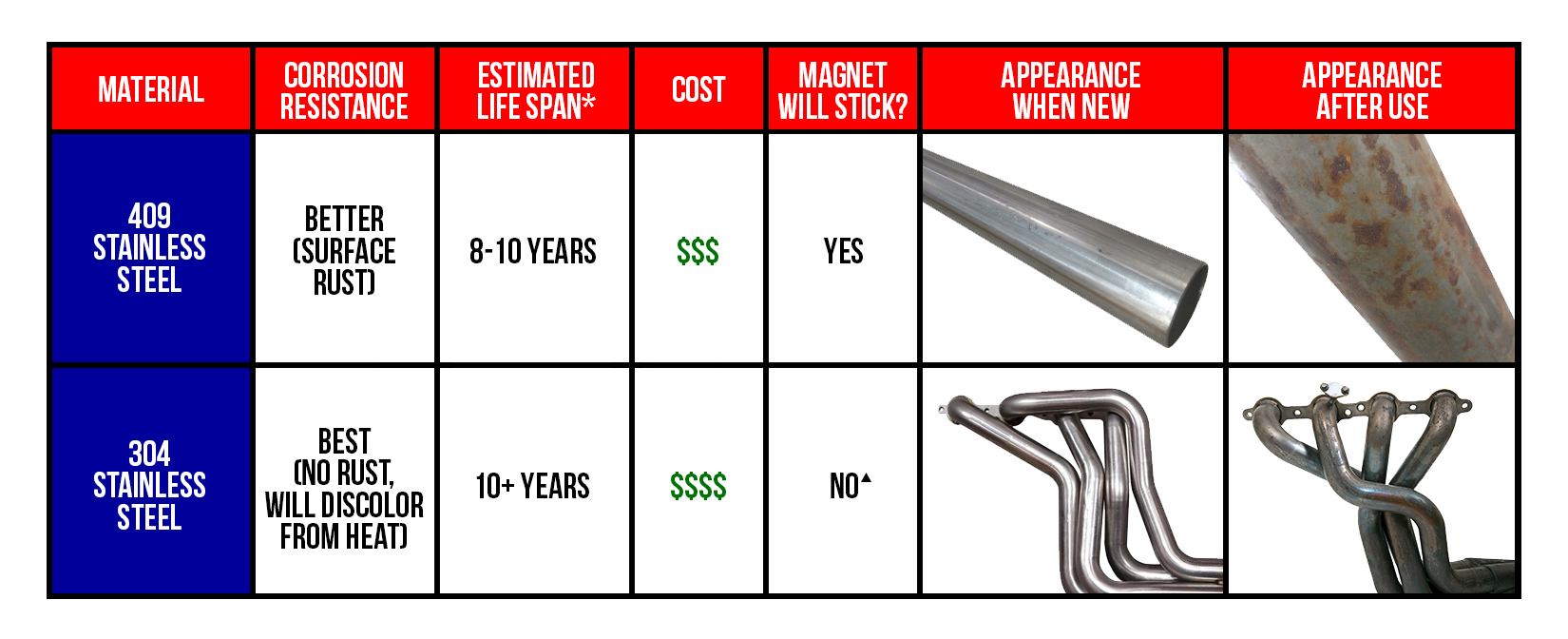
This is where things get a little more… specific. While 304 is the generalist, 409 stainless steel is more of a specialist. It’s also part of the broader stainless steel family, but its composition is a bit different. The key players here are still chromium (usually around 10.5% to 11.5%) and a dash of titanium. Notice the absence of nickel? That’s a big deal, and we’ll get to why in a sec.

So, what’s 409 good for? Its claim to fame is its excellent weldability and its resistance to certain types of corrosion, particularly at elevated temperatures. It’s often found in exhaust systems for cars and other vehicles. Think about it: car exhaust pipes are constantly subjected to heat, moisture, and corrosive gases. 409 stands up to this better than some other steels.
It’s also generally cheaper than 304. Why? Well, that missing nickel is a pretty expensive element. By using titanium as a stabilizer instead of nickel, manufacturers can keep costs down. This makes 409 a very attractive option for applications where cost is a major consideration, and where the absolute highest level of corrosion resistance isn't strictly necessary.
Now, here’s the slightly ironic part. While it's often found in things that are exposed to the elements and heat, it's generally less corrosion-resistant in general atmospheric conditions compared to 304. It's a trade-off. It’s great for its specific job, but you wouldn’t necessarily want it for your fancy teacups. It can develop surface rust if exposed to salt or harsh chemicals for extended periods, which isn't ideal for something you're eating off of.
The Trade-offs of 409
So, why would anyone choose 409 over the ubiquitous 304? As we mentioned, the cost factor is huge. If you’re making a large volume of something where extreme corrosion resistance isn't the absolute priority, 409 can save a significant amount of money. This is why it's so prevalent in automotive exhausts and industrial applications where durability and weldability at a lower price point are key.

The weldability is another major plus. The titanium content helps to prevent carbide precipitation at the grain boundaries during welding, which can lead to corrosion. This means you can weld 409 more easily and with greater confidence, which is a big deal for manufacturers. Less rework, fewer problems.
However, and this is important, the surface finish of 409 is often not as bright or as aesthetically pleasing as 304. It can sometimes have a duller, more utilitarian appearance. This is perfectly fine for an exhaust pipe hidden under a car, but probably not what you want for your stylish new kitchen splashback. It’s also generally not considered as food-grade as 304. While it might not immediately cause harm, it's not the first choice for direct food contact due to its lower overall corrosion resistance.
So, Which One is "Better"?
This is the million-dollar question, isn't it? And the answer, as with so many things in life, is: it depends.
If your priority is general-purpose use, excellent corrosion resistance, food safety, and a bright, polished appearance for everyday items like sinks, cookware, cutlery, appliances, and architectural elements, then 304 stainless steel is your champion. It’s the reliable, safe bet that will serve you well for years to come. It’s the material that Agnes should have probably used for her espresso machine if she wanted to impress me with its longevity and general appeal (though who knows, maybe the manufacturer had a good reason for choosing otherwise!).

If, on the other hand, you're looking for a more cost-effective solution for applications where high-temperature resistance and excellent weldability are more critical than pristine surface aesthetics or absolute top-tier atmospheric corrosion resistance – think automotive exhaust systems, industrial ducting, or certain types of mufflers – then 409 stainless steel is a very sensible and economical choice. It’s the specialist, doing a specific job really well at a lower price point.
It's like choosing between a trusty, all-purpose multitool (304) and a specialized wrench designed for a particular kind of bolt (409). Both are useful, but you wouldn't use the wrench for everything, and the multitool might not be the perfect tool for that one specific bolt.
When you’re shopping, especially for appliances or anything made of stainless steel, don't be afraid to look for those little labels or ask questions. Knowing the difference between 304 and 409 might seem like a niche piece of trivia, but it can actually help you understand the value and intended use of the product you're buying. It’s about getting the right material for the right job, and that’s always a win in my book.
Agnes’s espresso machine, by the way, turned out a spectacular shot. Maybe the 409 (if that's what it was) had some secret Italian engineering magic I wasn’t privy to. Or maybe it was just the anticipation of that first sip. Either way, it got me thinking, and that’s what matters, right? Now, if you’ll excuse me, I need another coffee.