
Alkaline Earth Metals Belong To Which Group
Hey there, fellow humans! Ever wonder about those little bits of science that pop up in our everyday lives, even when we're not exactly hitting the books? Today, we're going to chat about a family of elements that are a lot cooler and more involved in your life than you might think. We're talking about the Alkaline Earth Metals.
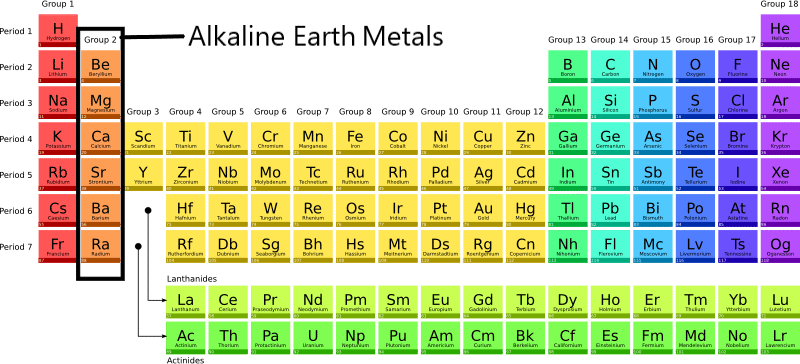
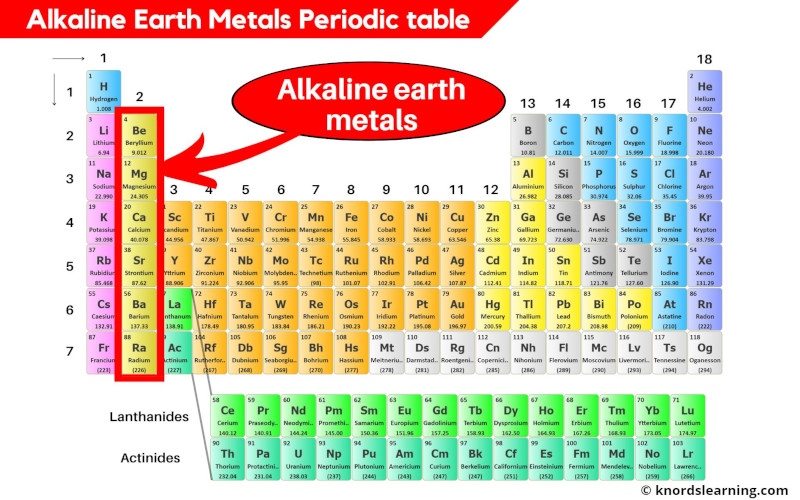
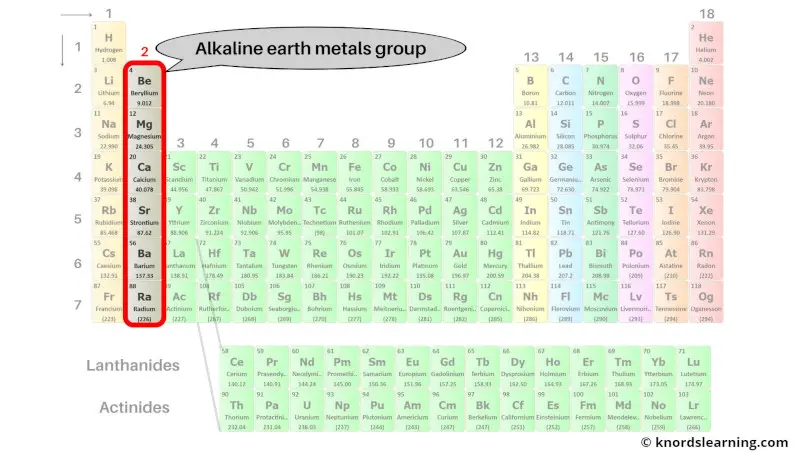
Now, the name itself might sound a bit... well, earthy. And you'd be right! But it's also a little like giving a nickname to a group of friends. These guys are all part of the same "neighborhood" on the periodic table, and they've got some pretty cool characteristics that make them special. So, where do they belong? Drumroll please... they belong to Group 2 of the periodic table!
Think of the periodic table like a giant, organized apartment building for all the elements. Each row is a floor, and each column is a set of apartments on the same side of the building. The Alkaline Earth Metals are all cozying up in the apartments of Group 2. It's like they all decided to rent apartments next to each other because they have similar vibes.
Why "Alkaline Earth"? The "earth" part comes from ancient times when people noticed that some of these elements, when combined with oxygen, formed what they called "earths" – substances that didn't really dissolve in water. The "alkaline" part? Well, when these "earths" did react with water, they made solutions that were a bit on the basic or alkaline side. Think of it like adding a pinch of baking soda to something to make it less sour. These guys are naturally inclined to be a bit on the basic side!
Meet the Neighbors: The Alkaline Earth Crew
So, who are these Group 2 celebrities? We've got:
- Beryllium (Be): The quiet, strong one.
- Magnesium (Mg): The energetic and surprisingly light one.
- Calcium (Ca): The architect of our bones and shells.
- Strontium (Sr): The one that brings a bit of sparkle.
- Barium (Ba): The heavier, somewhat mysterious one.
- Radium (Ra): The original superstar, now handled with extreme care!
They're all metals, but they're not the shiny, bendy kind you might picture for, say, a frying pan. These metals are generally a bit harder and more brittle than the metals in Group 1 (the Alkali Metals, a different bunch of party animals!).

Why Should You Care About These Earthy Buddies?
Okay, okay, you might be thinking, "That's nice, but how does this affect my Tuesday afternoon?" Well, my friends, these elements are literally all around you, supporting your life and making things happen. Let's dive into some everyday magic!
Calcium: The Bone Builder and Beyond!
If you've ever been told to drink your milk for strong bones, you're already best friends with Calcium (Ca)! This is the star player in our skeletal system. Imagine your bones as tiny, intricate LEGO structures. Calcium is like the essential building blocks that make them sturdy and resilient. Without enough calcium, those LEGOs can get a bit wobbly!
But Calcium isn't just about brawn. It's also crucial for your muscles to contract (yes, even your heart muscle!), for your nerves to send messages, and even for your blood to clot. So, that time you scraped your knee and it eventually healed? Thank calcium!

And it's not just us humans. Think about seashells on the beach, the chalk you might use for a drawing, or even the limestone that builds some of our most majestic buildings. All of these are powered by calcium compounds. It's a true foundational element for life and the world around us.
Magnesium: The Energy Booster and Sparkler
Next up, let's talk about Magnesium (Mg). This little element is a powerhouse when it comes to energy. In your body, magnesium is involved in over 300 biochemical reactions. That's like having 300 tiny helpers running around, making sure everything works smoothly! It helps convert food into energy, keeps your muscles and nerves functioning properly, and even helps maintain a steady heartbeat.
Ever seen a really bright, almost blinding flare from something burning? Chances are, magnesium was involved! It burns with an incredibly intense white light, which is why it's used in fireworks and flares. Imagine the excitement of a fireworks display – that brilliant flash is thanks to magnesium putting on a show!
Magnesium is also surprisingly light. This makes it useful in alloys (mixtures of metals) for things like aircraft and bicycle frames, where you need strength without a lot of weight. So, that sleek airplane soaring through the sky? Magnesium might be playing a supporting role!
Strontium: The Colorful Contributor
Now, let's introduce Strontium (Sr). This one might be a little less famous than calcium or magnesium, but it's got some cool tricks up its sleeve. Have you ever looked at the vibrant red in a firework? That fiery red hue is often thanks to strontium compounds! It's like strontium is the artist of the group, adding pops of color to our celebrations.
Strontium also plays a role in toothpaste! Specifically, some toothpastes designed for sensitive teeth use strontium chloride to help block the tiny tubules in your teeth that can lead to pain. So, that cool, refreshing feeling when you brush? Strontium might be helping out behind the scenes.
Barium: The Medical Marvel
Barium (Ba) is a bit of a heavier metal in the group, and it's known for its use in medical imaging. Because barium compounds are opaque to X-rays, a "barium meal" or "barium swallow" can be used to help doctors get a clearer picture of your digestive system. It's like giving your insides a temporary coating so the X-rays can highlight all the nooks and crannies. Pretty neat, right?
It's important to note that pure barium is quite reactive and can be toxic, so it's the compounds of barium that we find useful in controlled environments.
The Takeaway: They're More Than Just Names!
So, the next time you hear about the Alkaline Earth Metals belonging to Group 2, I hope it doesn't just sound like a bunch of abstract chemical terms. These are real elements, with real properties, that are woven into the fabric of our lives. They build our bodies, power our energy, add color to our festivities, and even help doctors see inside us!
They're a testament to how even the most seemingly distant scientific concepts are, in reality, incredibly close to home. So, give a little nod to Group 2 the next time you see a firework explode or enjoy a glass of milk. They're the quiet, steady, and sometimes spectacular backbone of our world.