
Aluminum Vs Copper Thermal Conductivity

Hey there, fellow humans! Let’s talk about something that’s surprisingly more exciting than it sounds: heat and how it zips around. We’re not talking about the kind of heat that makes you sweat through your favorite band t-shirt at a summer festival, though that’s definitely a thing. We're diving into the science of how easily different materials let that heat take a joyride. Specifically, we’re pitting two of the usual suspects against each other: aluminum and copper. Think of them as the Usain Bolt and the… well, maybe a slightly less Usain Bolt, but still pretty speedy athlete of thermal conductivity.
Now, before your eyes glaze over with visions of high school chemistry class, let’s reframe this. We’re not here to dissect molecular structures under a microscope. We’re talking about the stuff that makes your morning coffee stay warm (or delightfully chilled), the pans that perfectly sear your weeknight stir-fry, and even the cooling systems keeping your gaming rig from staging a fiery protest. It’s all about how well things conduct heat, and believe it or not, it impacts your daily grind more than you realize.
So, imagine you’ve got a steaming mug of your favorite brew. What makes it feel warm in your hands? It’s the heat transferring from the liquid to the mug, and then to your skin. This process, my friends, is called thermal conductivity. It’s basically a material’s ability to pass on heat energy. Some materials are like open highways for heat, letting it zoom through with minimal fuss. Others are more like winding country roads, slowing things down considerably.
The Contenders Enter the Ring
First up, let’s give a warm (pun intended!) welcome to aluminum. This guy is everywhere. From the foil you use to wrap leftovers to the sleek frames of your smartphone, aluminum is the reliable workhorse of the metal world. It’s lightweight, relatively inexpensive, and, importantly for our discussion, it’s a pretty decent conductor of heat. Think of aluminum as your cool, laid-back friend who’s always up for a chill afternoon. It gets the job done without making a huge fuss.
And then we have copper. Ah, copper. This metal has a certain je ne sais quoi. It’s got that rich, reddish-brown hue that just screams quality, doesn’t it? Think of vintage plumbing, those gorgeous copper kettles your grandmother might have owned, or the gleaming wiring in your home. Copper isn't just pretty; it’s a true powerhouse when it comes to conducting heat (and electricity, for that matter!). It’s like the star athlete, always pushing the limits.
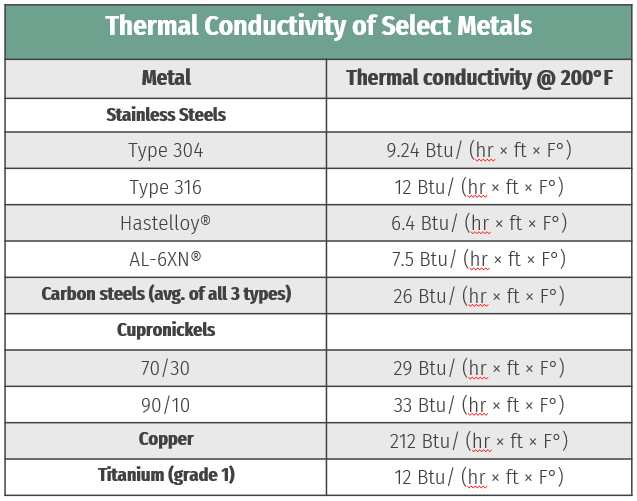
When we talk about their "conductivity," we're essentially assigning them a number. Higher numbers mean they’re better at passing heat along. And here’s where the plot thickens: copper generally blows aluminum out of the water in this department. We’re talking significantly higher. Copper’s thermal conductivity is roughly twice that of aluminum. So, if aluminum is a moderately busy street, copper is the Autobahn.
Why Does This Even Matter to You?
Okay, so copper is faster. Big deal, right? Well, it actually is. Think about your kitchen. If you’re a serious home chef, the material of your cookware is a big deal. A good frying pan needs to heat up evenly and quickly, and then maintain that heat to cook your food perfectly. If you’re searing a steak, you want that pan to get nice and hot, fast.
This is where copper truly shines. Because it’s such a fantastic conductor, pans made with a copper core or base will heat up incredibly evenly. No more hot spots where your food burns and cool spots where it’s barely cooking! This is why professional kitchens and serious home cooks often covet copper cookware. It’s an investment in precision and perfect results. Imagine the joy of a perfectly golden-brown grilled cheese, edge to edge, all thanks to the magic of copper’s heat distribution!
Aluminum, while not as stellar as copper, is still a very capable conductor. It’s often used in cookware, especially as a core layer sandwiched between stainless steel. This gives you the benefits of aluminum's heat conductivity without the drawbacks of its softness and reactivity. It’s a clever compromise, a bit like having your cake and eating it too, but in a kitchen-friendly way. It’s also much lighter than copper, which is a plus when you’re juggling pans full of bubbling pasta sauce.
![Specific thermal conductivity of copper [12], aluminum and magnesium](https://www.researchgate.net/publication/314783498/figure/download/fig3/AS:471272007180290@1489371410312/Specific-thermal-conductivity-of-copper-12-aluminum-and-magnesium-compared-to-the.png)
And what about your morning java? A good insulated mug or travel tumbler is designed to keep your coffee hot (or your iced tea cold). The materials used in these products play a crucial role. While metals like stainless steel are great at insulating (keeping heat from escaping), the internal layers that are closer to the liquid might utilize metals with better conductivity to help transfer that temperature to the outer layers. It’s a whole ecosystem of heat management going on!
Beyond the Kitchen: Where Else Does Heat Flow?
This isn't just about gourmet meals, though. Think about your computer. Inside that sleek casing, there are powerful processors generating a ton of heat. If that heat isn’t dissipated effectively, your computer can overheat, slow down, or even suffer permanent damage. This is where heat sinks come in. These are typically made of materials with excellent thermal conductivity, like aluminum. They are designed with fins to maximize surface area, allowing them to efficiently absorb heat from the processor and then release it into the surrounding air.
While copper is also used in some high-performance cooling solutions, especially in direct contact with chips, aluminum’s lighter weight and lower cost make it the go-to for most heat sinks. It’s like the unsung hero, working tirelessly behind the scenes to keep your digital life humming along smoothly. So next time you’re crushing it in an online game, give a silent nod to the aluminum heat sink keeping things from melting down.
And let’s not forget about electrical wiring. Both copper and aluminum are used as conductors for electricity. Copper, with its superior conductivity, is generally preferred for residential and most commercial wiring because it can carry more current with less resistance (and therefore less heat generation) for a given size. However, aluminum wiring was more common in the past due to its lower cost and lighter weight, especially in larger gauge applications where the cost difference was significant. It’s a trade-off between efficiency and economics, a constant dance in the world of engineering.

Fun Facts and Cultural Tidbits
Did you know that the Statue of Liberty is actually clad in copper? Over time, that iconic greenish patina has formed due to the oxidation of the copper, a beautiful testament to its exposure to the elements. It's a giant, slow-motion experiment in material science and art! If it were made of aluminum, it would look quite different today.
Copper has also held a special place in human history for millennia. It was one of the first metals to be smelted and used by early civilizations. Think Bronze Age – that "bronze" is a mix of copper and tin. So, in a way, copper is responsible for some of humanity's earliest technological leaps. It’s been a reliable friend for a very long time.
Aluminum, on the other hand, is a much more recent discovery in widespread use. It was once considered more precious than gold! Imagine that – a material now so common we barely give it a second thought. Its isolation in pure form was a significant scientific achievement, and its mass production in the late 19th and early 20th centuries revolutionized industries. From the Wright brothers' first airplane to modern architecture, aluminum transformed what was possible.
So, Which is the Reigning Champion?
If we're strictly talking about who’s the king of heat transfer, copper takes the crown. Its exceptional thermal conductivity makes it the choice for applications where maximum heat transfer is critical and cost isn’t the primary constraint. We’re talking high-end cookware, specialized electronics cooling, and certain industrial applications.
But that doesn't make aluminum a loser. Far from it! Aluminum is the champion of practicality, versatility, and affordability. Its good conductivity, coupled with its lightness and lower cost, makes it indispensable for a vast range of everyday items. It’s the unsung hero of efficient cooling in your gadgets and a reliable performer in your kitchen. It’s the metal that brought technological marvels within reach for more people.
The truth is, the "better" metal depends entirely on the job at hand. It's a bit like choosing between a sports car and a reliable SUV. Both are vehicles, both have their strengths, but you wouldn't take your Ferrari off-roading, and you wouldn't race an SUV at Le Mans.
A Little Reflection
Isn’t it fascinating how these seemingly simple metals, with their differing abilities to conduct heat, play such a significant role in our comfort, our convenience, and our technological advancements? From the warmth of our homes to the speed of our internet, the flow of heat is a constant, silent force. And understanding how materials like aluminum and copper manage this flow gives us a little peek into the clever engineering that surrounds us. It’s a gentle reminder that even in the mundane – the mug in your hand, the pan on the stove, the phone in your pocket – there’s a whole lot of science and ingenuity at work, making our lives just a little bit smoother, a little bit cooler, and a lot more comfortable. So, the next time you’re enjoying a perfectly cooked meal or a hot cup of coffee, maybe, just maybe, you’ll give a silent thank you to the metals working their thermal magic. It's a small thing, but it's those small things that make the everyday extraordinary.