
Behind The Scenes Of The Wizard Of Oz
:max_bytes(150000):strip_icc():focal(999x0:1001x2)/wizard-of-oz-112024-5-cb7f3f1a00cb4c90badb1c2ec4531eea.jpg)
Ever watched The Wizard of Oz and thought, "Wow, how did they do all that?" It’s one of those movies that feels like it’s always been around, right? Like a cozy blanket or your favorite pizza. But behind that magical world of munchkins, flying monkeys, and a dazzling Emerald City, there’s a whole lot of fascinating stuff going on. Let's pull back the curtain, shall we? Grab a metaphorical cup of tea and settle in, because this is going to be fun!
Think about it: this movie came out in 1939. Nineteen. Thirty. Nine. That’s practically the dark ages of filmmaking, and yet, they created a world that still blows our minds today. It’s kind of like finding out your grandma, who you thought only knew how to knit, was actually a secret master hacker back in her day. Mind. Blown.
The Technicolor Dream
Okay, first things first: the color! Remember how it starts in black and white, and then BAM! Dorothy opens the door and it’s like the world explodes into vibrant hues? That was a pretty big deal back then. Movies were mostly black and white, and they decided to go all out for Oz. It was a deliberate choice to show how much more wonderful and fantastical Dorothy's world became when she arrived in Oz.
Imagine the audience’s faces! They were probably like, "What sorcery is this?!" It was a visual feast, a total game-changer. And it wasn't just simple color; they used something called three-strip Technicolor. It involved a super complicated process of shooting three strips of black-and-white film, each sensitive to different primary colors (red, green, and blue). Then, they’d combine them to create this incredibly rich and saturated color. It took serious skill and a lot of light!
Think of it like baking a cake. Before, maybe they were just making plain white bread. Then, suddenly, they’re whipping up a rainbow layer cake with all the trimmings. It wasn't just a pretty picture; it was a narrative tool, emphasizing the stark contrast between Kansas and Oz.
The Little People of Oz
And then there are the Munchkins! So many of them, all so cheerful and organized. Did you know that the Munchkins were actually played by around 124 little people? These weren't just random actors; they were performers, many of whom had experience in vaudeville and circus acts. They were the tiny stars of the show!

It must have been quite a production to wrangle all of them. Imagine trying to get everyone to sing and dance in unison for "Ding-Dong! The Witch Is Dead." It’s like trying to herd a flock of very enthusiastic, very tiny, singing kittens. Impressive, right?
There were also some interesting stories about their treatment on set. While they were celebrated for their roles, the working conditions weren't always glamorous. But their energy and presence are absolutely essential to the magic of Oz. Without them, the world would feel so much emptier.
The Scarecrow's Charm and The Tin Man's Heart
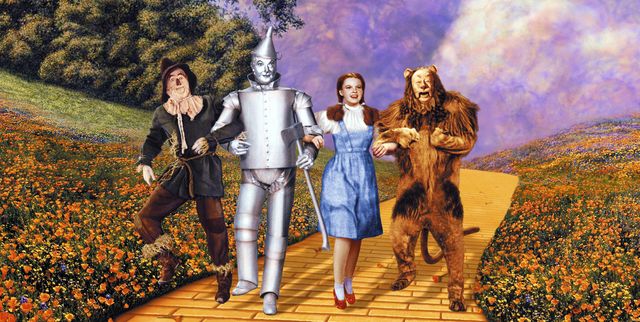
Let's talk about the iconic trio. Ray Bolger as the Scarecrow? He absolutely killed it. Did you know he actually had a contract with MGM that said he couldn't be in other musicals? But he loved the script for Oz so much that he took a huge pay cut to be in it! That's dedication, folks. He wanted to be that lovable, slightly clumsy, but ultimately wise scarecrow.

And Jack Haley as the Tin Man! His costume was legendary, made from actual tin. Can you imagine wearing that all day? It was heavy, it was noisy, and it was probably super hot. He ended up getting sick from inhaling aluminum dust from his makeup, which is a wild detail to think about.
He also famously said that his son, who was 4 years old at the time, didn't recognize him in the Tin Man costume and was scared of him. That’s a testament to how transformative the makeup and costume were, but also a bit heartbreaking for a dad!
The Wicked Witch of the West: Truly Wicked
Now, who could forget the Wicked Witch of the West? Margaret Hamilton brought her to life with such delicious villainy. She was genuinely terrifying to kids (and let’s be honest, a little bit to adults too). Her cackle alone is iconic!
But here’s a spooky tidbit: there was a dangerous moment during filming. When she was lowered through the trapdoor after being melted by Dorothy's water, there was a fire! The fire was supposed to be a visual effect, but it got a little too real. She was actually burned and had to be hospitalized. Yikes! Talk about commitment to the role. She really went through fire for Oz!
It makes you appreciate the danger actors sometimes put themselves in to create these unforgettable characters. It wasn't just a job; it was often a genuine risk.
The Lion's Roar (or Lack Thereof?)
And then there's Bert Lahr as the Cowardly Lion. His performance is so full of heart and humor. Did you know that the lion costume was made from real lion pelts? Yep. It weighed about 60 pounds. Can you imagine performing all those songs and dances in a heavy, furry, lion suit that's essentially a dead animal? Talk about a tough gig.
:max_bytes(150000):strip_icc():focal(999x0:1001x2)/wizard-of-oz-120424-9649d56fd4684f6487ff62a58ed315e1.jpg)
Lahr was a renowned stage actor, and he brought a gravitas and a comedic timing to the Lion that was just perfect. He was a true professional, making that character so endearing despite his fear.
Behind the Magic Curtain
The truth is, making a movie like The Wizard of Oz was a massive undertaking. It involved hundreds of people, incredible ingenuity, and a whole lot of trial and error. They faced challenges with special effects, costumes, and even the health and safety of the actors.
Think of it as building a giant, intricate LEGO castle. You’ve got the blueprint, you’ve got tons of pieces, and you’ve got a whole team of builders, some very careful and precise, others a bit more… enthusiastic. And sometimes, a piece breaks, or you run out of the right color brick, and you have to figure out a new way to make it work.
So, the next time you settle in to watch Dorothy skip down that yellow brick road, take a moment to appreciate the sheer magic that went into creating it. It’s not just a movie; it’s a testament to human creativity, hard work, and a little bit of Hollywood magic. And that, my friends, is pretty darn cool.