
Best Laser For Metal Engraving
So, picture this: I was at a local maker fair a while back, totally buzzing with inspiration. There was this one stall, and the guy had these incredible, impossibly intricate designs etched onto metal keychains. We're talking tiny, detailed filigree that looked like it was spun from pure light. Naturally, I was mesmerized. I leaned in, probably looking like a kid in a candy shop, and asked, "Wow! What kind of magic machine does that?" He just grinned, a little smudged with what looked like soot, and said, "Ah, that's the secret sauce, isn't it? It's all about the right laser." My mind immediately went to the big, clunky industrial machines I'd seen in movies, the ones that could probably slice through a tank. But he was talking about something… different. Something that could achieve that level of detail on something as stubborn as metal. That moment stuck with me, a little seed of curiosity planted about this whole world of laser engraving on metal.
Because let's be honest, metal is a tough cookie, right? It's not like wood where you can just gently scorch a pretty picture. Metal laughs at your flimsy CO2 lasers. It's dense, reflective, and generally seems to have a PhD in resisting any form of artistic alteration unless you bring the heavy artillery. And that's where the quest for the best laser for metal engraving really begins. It's not a one-size-fits-all situation, and if you've ever dipped your toes into this, you've probably realized that pretty quickly. You're not just buying a laser; you're entering into a relationship with a rather powerful tool.
Now, before we dive headfirst into wavelengths and wattages (don't worry, we'll keep it mostly jargon-free, I promise!), let's get one thing straight: "best" is a subjective beast. What's "best" for engraving intricate jewelry is probably going to be very different from what's "best" for marking serial numbers on industrial parts. So, consider this your friendly guide through the laser jungle, helping you figure out which path leads to your personal metal engraving paradise. No need to pack your survival kit just yet!
The Core Challenge: Why Metal is Tricky
Let's get a little technical, but I'll keep it light. Think of it like trying to paint on a mirror. Some lasers just… bounce off. Or, they reflect back in a way that can damage the laser itself. Reflectivity is a huge issue with metals. That shiny surface can send the laser beam right back where it came from, and that's generally a bad day for your laser's optics and potentially its power source.
Then there's the heat absorption. Metal is a fantastic conductor of heat. This is great for, say, a frying pan, but not so much for delicate engraving. You need a laser that can deliver enough concentrated energy to alter the metal without melting the whole darn thing into a puddle. You're aiming for precise vaporization or melting of tiny areas, not a general sauna session for your workpiece.
And finally, material hardness. Some metals are incredibly hard. Think of stainless steel or titanium. These guys aren't going to surrender their surface easily. You need a laser with the sheer power and the right wavelength to break those chemical bonds and vaporize the material effectively. It’s like trying to scratch a diamond with a fingernail versus a carbide bit – you need the right tool for the job!
The Usual Suspects: Fiber Lasers Rule the Roost
When you start looking at lasers for metal engraving, one type will keep popping up like a persistent pop-up ad: the fiber laser. And for good reason! These guys are the undisputed champions in this arena. They operate on a wavelength that's much better absorbed by metals than, say, the more common CO2 lasers you might find in hobbyist cutting machines. We're talking wavelengths typically around 1064 nanometers (nm). Compare that to a CO2 laser's 10,600 nm – it's a whole different ballgame when it comes to interacting with metal.
Fiber lasers work by using optical fibers doped with rare-earth elements to generate the laser beam. This means they're incredibly efficient, durable, and require very little maintenance. They're like the Energizer bunnies of the laser world, just keeping going and going.
The main advantages of fiber lasers for metal engraving include:
- Excellent Material Absorption: As we touched on, that 1064 nm wavelength is chef's kiss for metals. It gets absorbed efficiently, meaning less reflection and more focused power on the material.
- High Peak Power: Fiber lasers can deliver incredibly short, high-intensity pulses of energy. This is crucial for vaporizing material precisely without causing excessive heat buildup or distortion. Think of it like a super-fast, super-sharp tap rather than a prolonged, dull poke.
- Deep Engraving Capabilities: Need to engrave deeply? Fiber lasers have the power to do it, creating permanent marks that can withstand harsh environments.
- Fine Detail: Despite their power, they can also achieve incredibly fine details, making them perfect for intricate designs, serial numbers, and logos.
- Durability and Low Maintenance: These lasers are built to last. The solid-state design means fewer moving parts, leading to a longer lifespan and less time spent fiddling with replacements.
So, if your heart is set on serious metal engraving, from marking tools to creating personalized gifts on stainless steel or even anodized aluminum, a fiber laser is likely going to be your best friend. They're the workhorses of the industry for a reason.

But Wait, Are There Other Options? (Spoiler: Yes, But...)
Okay, so I've sung the praises of fiber lasers. But is that the only game in town? Well, not entirely. For certain applications, other lasers might be considered, though they come with significant caveats when it comes to engraving metal.
CO2 Lasers (The Hobbyist Staple): You've probably seen CO2 lasers everywhere for cutting and engraving wood, acrylic, and leather. They're fantastic for organic materials. Can they engrave metal? Technically, yes, but with a big asterisk. A standard CO2 laser cannot directly engrave bare metal. Why? Because, as we mentioned, metal reflects most of its wavelength. It's like trying to toast bread with a light bulb – it just doesn't have the right kind of energy.
However, there are workarounds:
- Marking Compounds/Sprays: You can use special compounds (like Cermark or Enduramark) that, when heated by the CO2 laser, chemically bond to the metal surface, creating a permanent, dark mark. It's not true engraving in the sense of vaporizing the metal, but it achieves a similar visual result. This is a popular method for creating durable marks on metal without a high-powered fiber laser. It's a clever hack, but it's not the same as directly altering the metal itself.
- Anodized or Coated Metals: CO2 lasers can engrave the coating off of anodized aluminum or other coated metals. This essentially "removes" the color layer, revealing the bare metal underneath. So, you can create designs on colored stainless steel or anodized aluminum, but you're not engraving the metal itself.
So, while a CO2 laser can get you some metal marking capabilities, it's not the direct, high-fidelity engraving you'd get from a fiber laser. If your goal is deep, detailed, or bare-metal engraving, a CO2 laser isn't the go-to. It's more of a specialized application.
UV Lasers: These are gaining traction for certain specialized applications, and they have some interesting properties for metals. UV lasers operate at a shorter wavelength (around 355 nm) and deliver very precise energy. They are excellent for marking on a wide range of materials without causing thermal damage. For metals, they can be used for marking and sometimes shallow engraving, particularly on sensitive alloys or where minimal heat is desired. They can achieve high contrast marks and are great for very fine details. However, they are generally more expensive than fiber lasers and might not have the same deep engraving capabilities. Think of them as the precision scalpel in the laser toolkit.
Green Lasers (532 nm): Similar to UV lasers, green lasers offer shorter wavelengths than fiber lasers and can be effective for marking certain metals, especially those that are highly reflective or sensitive to heat. They can also achieve fine details. However, they often have lower power output than fiber lasers, limiting their deep engraving potential. They're another option for specific, high-precision marking tasks.
For the average person looking to engrave metal in a meaningful way – whether for customization, industrial marking, or artistic purposes – the fiber laser is the undisputed king. The other options are more niche or require workarounds.
What to Look For: Key Features and Considerations
Alright, so you're leaning towards a fiber laser. Great choice! But the market is still vast. What should you be looking for to make sure you get the right fiber laser for your needs? Let's break it down:
Power Output (Wattage): More Isn't Always Better, But It Helps!
This is often the first spec people look at. Fiber lasers for engraving typically range from 20W up to 100W and even higher for industrial applications. What does this mean for you?
- 20W-30W: These are excellent for general-purpose engraving, marking serial numbers, logos, and creating detailed designs on most common metals like stainless steel, brass, aluminum, and coated metals. They're a great starting point for hobbyists and small businesses. You'll get good speed and detail.
- 50W-60W: If you're engraving frequently or need to speed up your production, a higher wattage can make a significant difference. These lasers can engrave faster and can also handle slightly tougher materials or achieve deeper engravings more easily.
- 100W+: These are your industrial powerhouses. If you need to engrave very hard metals, achieve very deep marks quickly, or process large volumes, you'll be looking at this range. For most personal or small-business use, this is overkill and comes with a heftier price tag.
Key takeaway: Don't just chase the highest wattage. For most common metal engraving tasks (jewelry, tools, personalized items), a 20W to 50W fiber laser will be more than sufficient and offer a better balance of cost, speed, and detail.
Beam Quality (M²): The Secret Sauce for Detail
This is a bit more technical, but super important for engraving quality. Beam quality is measured by M² (M-squared). A value close to 1 indicates a perfect Gaussian beam, which is ideal. Lasers with lower M² values (closer to 1) produce a tighter, more focused spot size. Why is this crucial for engraving?
A smaller, more focused spot size allows for:
- Finer detail: You can engrave incredibly intricate patterns and tiny text.
- Higher resolution: The engraved marks will appear sharper and clearer.
- Smoother lines: Less "dotty" or "stair-stepped" appearance on curved or diagonal lines.
For detailed metal engraving, aim for a fiber laser with a good beam quality, typically an M² value of 1.2 or lower. Some high-end lasers boast M² values closer to 0.8, which is fantastic for ultra-fine work.
Pulse Duration and Frequency: The Dance of Energy
Fiber lasers can operate in continuous wave (CW) mode or pulsed mode. For engraving, you'll almost always be using pulsed mode. The duration of each pulse (how long the laser is "on" for each burst) and the frequency (how many pulses per second) significantly impact the engraving process.
- Short Pulse Duration: Shorter pulses deliver more peak power, leading to cleaner engraving with less heat buildup. This is crucial for preventing melting or distortion, especially on thinner materials or detailed areas.
- Pulse Frequency: A higher pulse frequency allows you to engrave faster without sacrificing depth or quality. You can cover more area in less time.
Look for lasers that offer adjustable pulse duration and frequency. This flexibility allows you to fine-tune your settings for different metals and desired effects. It's about finding that sweet spot where you're vaporizing material efficiently without scorching the surroundings.
Marking Field Size: How Big Can You Go?
This refers to the area the laser can cover without needing to reposition the workpiece or the laser head. Common marking field sizes for desktop fiber lasers are 100x100mm, 150x150mm, or 200x200mm. Larger field sizes are available but often mean a larger, more expensive machine.
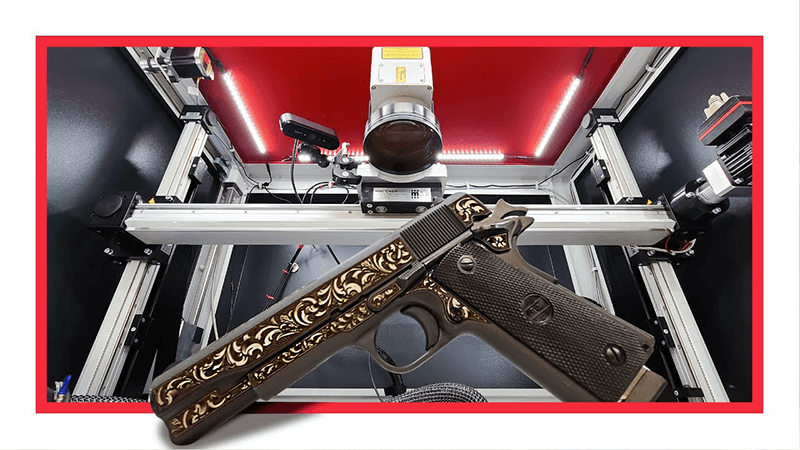
Consider what you'll be engraving most often. If it's small items like jewelry, tags, or pens, a smaller field might be fine. If you're marking larger tools, plaques, or even firearm components, you'll want a larger field. Some machines offer interchangeable lenses or scanning heads to achieve different marking field sizes, offering more versatility.
Software and Ease of Use: Your Creative Partner
The laser itself is only half the equation. The software you use to control it is your creative interface. Most fiber lasers come with dedicated software that allows you to import designs, adjust settings, and control the engraving process.
Look for software that is:
- Intuitive: Easy to learn and navigate, even for beginners.
- Feature-rich: Offers advanced options for controlling power, speed, frequency, and patterns.
- Compatible: Supports common design file formats (e.g., DXF, AI, SVG, BMP, JPG).
- Supportive: Comes with good documentation and customer support if you get stuck.
Some higher-end systems might integrate with popular CAD/CAM software, which can be a huge plus for professional users.
Build Quality and Safety Features: No Shortcuts Here
This is not the place to cut corners. A good laser engraver is a significant investment, and you want it to be reliable and safe.
- Robust Construction: Look for solid metal frames and high-quality components.
- Enclosure: A fully enclosed laser system is essential for safety. It contains the laser beam, preventing accidental exposure, and also helps manage fumes and debris.
- Ventilation/Fume Extraction: Engraving metal produces fumes, some of which can be harmful. A good system will have integrated ventilation or at least a port to connect an external fume extractor. Don't skip this! Your lungs will thank you.
- Interlock Switches: These ensure the laser can only operate when the enclosure is properly closed.
- Emergency Stop Button: A must-have for any powerful machine.
Seriously, safety first. Lasers are not toys, and metal dust and fumes are no joke. Invest in a system that prioritizes your well-being.
Choosing Your Champion: Budget vs. Needs
Now, let's talk brass tacks: budget. This is often the deciding factor. Fiber lasers can range from a few thousand dollars for basic desktop models to tens of thousands for high-power industrial systems.
Entry-Level / Hobbyist (Sub-$3,000 - $6,000):
You'll likely be looking at 20W-30W fiber lasers with smaller marking fields (e.g., 100x100mm or 150x150mm). These are perfect for individuals who want to engrave personalized items, jewelry, keychains, or small tools. You'll get excellent detail but might have slower engraving speeds compared to more powerful machines. Examples include brands like Atomstack, Sculp 3D (though check specific models for fiber lasers), and some Chinese manufacturers that offer direct sales.
Mid-Range / Small Business ( $5,000 - $15,000):
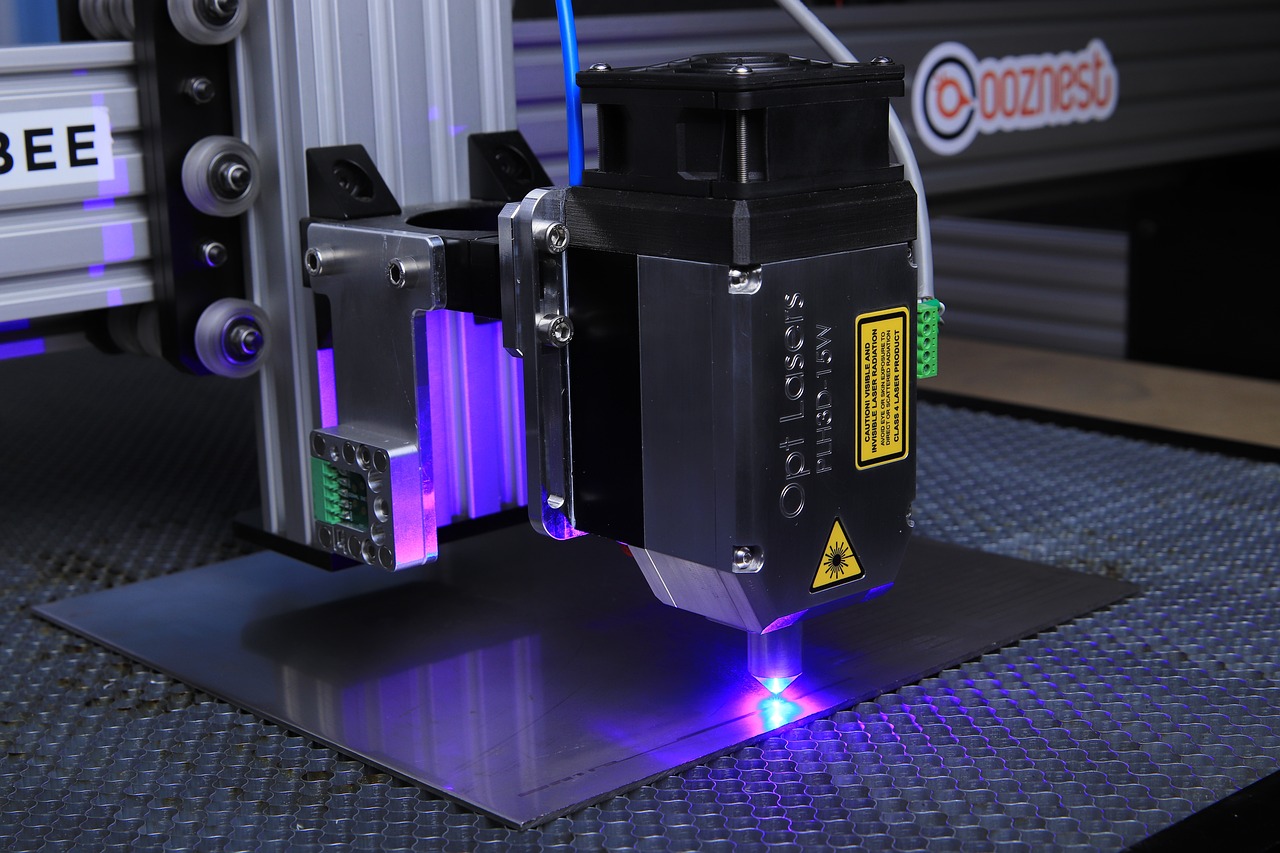
This is where you'll find more powerful lasers (30W-50W), larger marking fields (e.g., 175x175mm, 200x200mm), and often better beam quality. These are ideal for small businesses, makerspaces, or individuals who need to engrave a higher volume or work with slightly more challenging materials. Brands like JPT, Raycus (often the laser source within machines), and established Chinese manufacturers with better build quality and support often fall into this category. You might also find entry-level offerings from more recognized brands.
Professional / Industrial ( $15,000+):
Here, you're looking at high-power lasers (50W-100W+), very large marking fields, superior beam quality, and robust industrial build quality. These are for production environments, serious manufacturers, or those who need to engrave very hard metals or perform deep engraving quickly. Major laser manufacturers like TRUMPF, IPG Photonics (often supplying the core laser source), Gravotech, and Lightmark will be in this segment. You'll also get much more advanced software and support.
The Irony: The "best" laser for you isn't the most expensive one, it's the one that meets your specific needs without breaking the bank. It's a delicate balance. Do your research, watch reviews, and if possible, see machines in action or ask for sample engravings. And remember, sometimes a slightly less powerful but well-regarded machine from a reputable brand is a better bet than a high-wattage unknown.
Beyond the Laser: The Supporting Cast
You've got the laser. Fantastic! But what else do you need to consider for a smooth metal engraving experience?
- Fume Extraction: I cannot stress this enough. Get a good fume extractor. It's non-negotiable. Metal fumes aren't good for you or your laser's optics over time.
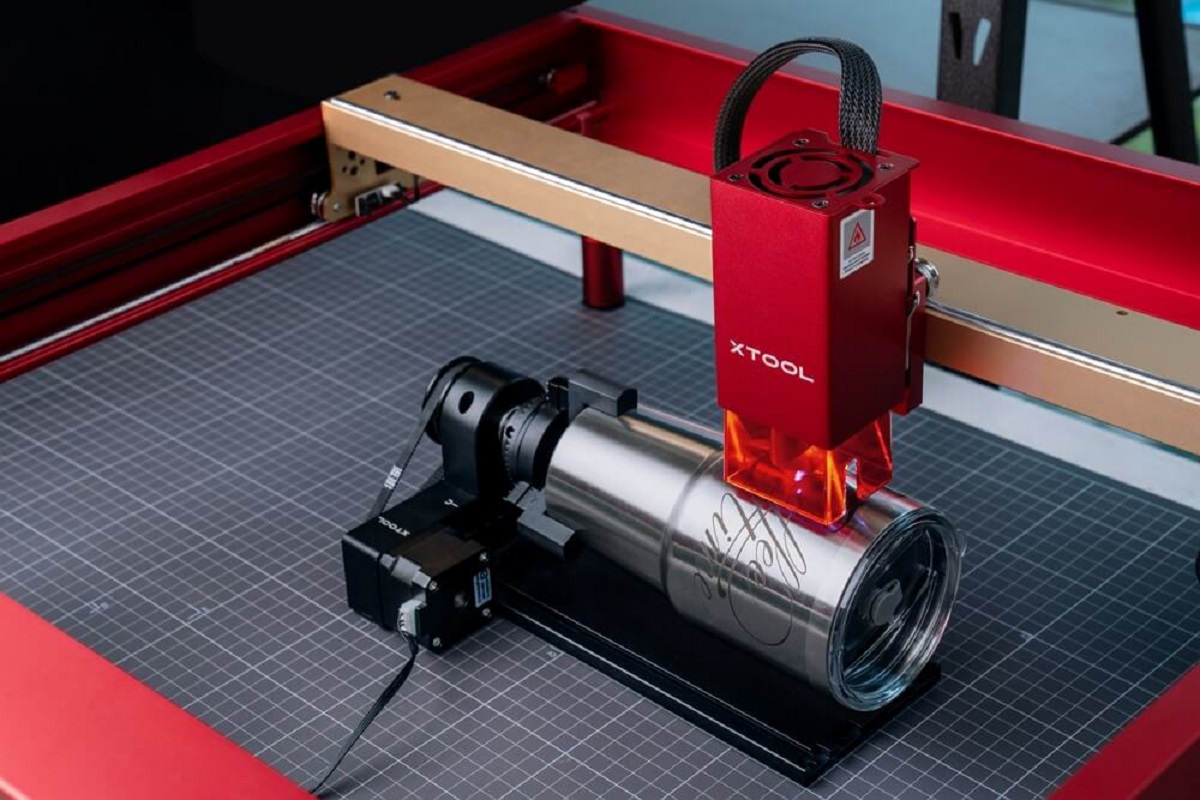
- Rotary Attachment: If you plan on engraving cylindrical objects like rings, bracelets, bottles, or pens, a rotary attachment is a must-have. It allows the laser to move along the curved surface smoothly.
- Fixturing and Workholding: You need a way to hold your metal pieces securely in place so they don't move during engraving. This could be clamps, vices, or custom jigs.
- Cleaning Supplies: After engraving, you'll often need to clean off any residue or oxidation. Isopropyl alcohol and a lint-free cloth are usually your friends here.
- Personal Protective Equipment (PPE): Always wear safety glasses specifically rated for the laser wavelength you're using. Even with an enclosure, it's a good practice.
Think of it like this: the laser is the star, but the supporting cast is crucial for a show-stopping performance. Don't neglect them!
The Final Engraving
So, there you have it. The world of metal engraving lasers, while initially daunting, becomes a lot clearer when you focus on the core technology: the fiber laser. It's the champion for a reason, offering the power, precision, and durability needed to leave your mark on metal.
Remember to assess your needs: what materials will you be engraving? What kind of detail do you require? How much volume do you anticipate? And, of course, what's your budget?
The "best" laser isn't a single model; it's the one that perfectly aligns with your projects and your wallet. Do your homework, ask questions, and be prepared to invest in quality. Because once you start engraving metal, you'll find it incredibly satisfying to turn a stubborn, unyielding material into something personal, functional, or beautiful. Happy engraving!