
Best Places To Find Scrap Metal
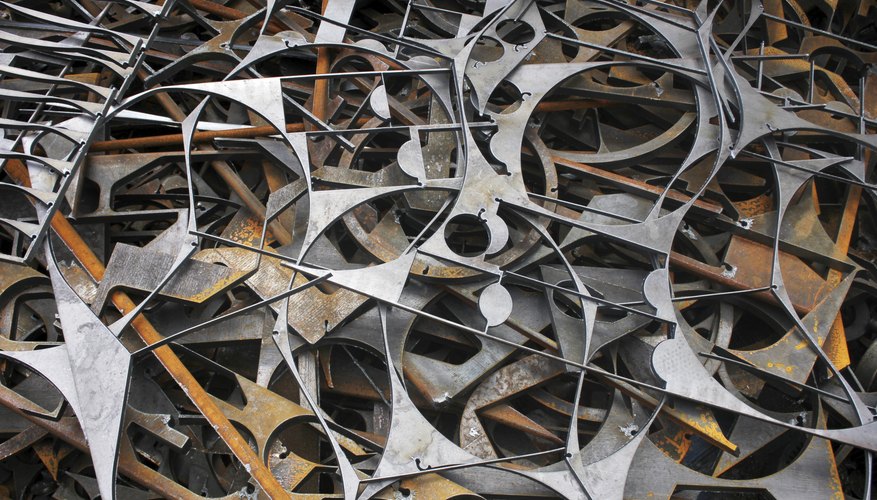
Alright, gather 'round, you budding metal moguls and treasure-hunting titans! Ever look at that rusty old washing machine on the curb and think, "That's not junk, that's potential!"? Well, my friends, you're not alone. The world of scrap metal is a surprisingly shiny, and often stinky, universe of forgotten riches. And today, we’re diving headfirst into the best places to unearth these metallic marvels. Forget dusty antique shops and stuffy auction houses; we’re talking about places where opportunity is literally lying around, waiting to be rescued.
Now, before you start picturing yourself as Indiana Jones with a magnet, let me preface this by saying: respect the land. We're not advocating for breaking and entering or turning local parks into your personal scrap yard. This is about finding the discarded, the forgotten, the things people are practically begging you to take off their hands. Think of it as a public service, with a surprisingly profitable side hustle. Who’s with me?
The Humble Curb: Your Everyday Treasure Chest
Let’s start with the absolute easiest, the most accessible, and frankly, the most thrilling place for the uninitiated: the curb on trash day. Yes, I'm talking about that magical moment when your neighborhood transforms into a temporary museum of discarded dreams. You know the drill. You see a bulky item, something that looks suspiciously like it once hummed or whirred, and your inner magpie kicks in.
Think about it. People are upgrading their appliances, decluttering their garages, or just plain giving up on that ancient lawnmower that sounded like a dragon with a sore throat. And where does all that stuff go? Right outside! It’s a veritable smorgasbord of potential profit. Old refrigerators, defunct washing machines, discarded car parts – these are the unsung heroes of the scrap metal world. You might even find a forgotten treasure trove of copper wiring inside an old TV, or a solid aluminum frame on a broken patio chair.
A word to the wise: know your days! Trash day schedules are like the tides of fortune. Get it wrong, and you’ll be staring at an empty sidewalk. Plus, always be polite. If you see someone struggling to haul something out, a friendly offer to “help” can sometimes turn into a generous donation. You never know, they might even tell you about other spots!
From the Driveway to the Ditch: The Unintentional Depository
Beyond the neatly placed curbside offerings, there are the slightly more… adventurously placed items. I'm talking about those forgotten piles behind garages, the derelict sheds that haven't seen daylight since bell-bottoms were cool, and yes, even the occasional roadside ditch that seems to have a gravitational pull for lost metal.

Farmers, bless their hardworking souls, often have an astonishing collection of retired farm equipment. Tractors that have seen better days, plows that have conquered more fields than most of us have eaten meals, and just general metal detritus that accrues over decades. If you can find a farmer who’s amenable to a bit of clearing out – perhaps in exchange for some of the scrap you collect – you’ve hit the jackpot. Just remember, a friendly chat and a genuine offer of help goes a long way. Nobody wants to be seen as a metal vulture.
And then there are the construction sites. Now, this is a tricky one. You absolutely, positively cannot just wander onto a construction site and start rummaging. Safety first, people! However, sometimes, at the end of a project, or at designated disposal areas, you might find yourself in a position to respectfully inquire. Think of it as offering a helping hand to clear away the leftover bits and bobs. A little charm and a lot of tact can sometimes open doors – or at least open up piles of discarded copper pipes and aluminum siding.
The Mechanics' Best Friend (and Your New Best Friend Too!)
Where do cars go to die? Well, sometimes they end up at the scrapyard, but before that, they often end up at auto repair shops and junkyards. And let me tell you, these places are goldmines for specific types of metal.

Think about all the parts that get replaced on a car: engines, transmissions, exhausts, body panels. Many of these are made of valuable metals like steel, aluminum, and even copper. The clever mechanics and savvy junkyard owners know this. They’ll often have designated areas for these old parts. Again, we’re talking about being polite and professional here. You’re not a looter; you’re a recycler with a discerning eye.
Sometimes, a friendly relationship with a local mechanic can be incredibly fruitful. They might have a regular stream of old parts that they’re happy to part with, especially if you’re willing to haul them away. Imagine, a steady supply of catalytic converters (yes, they’re valuable!) or hefty engine blocks. It’s enough to make a grown person weep tears of joy – or at least start calculating their potential profit margins.
And the sheer amount of aluminum in a car! From wheels to engine components, it’s everywhere. You can often find these parts at junkyards, sometimes already separated and ready for you. It’s a bit like a metal buffet, if that buffet was made of pistons and radiators.

The Ghost of Industries Past: Abandoned Factories and Warehouses
Now, this is where things get a little more adventurous, and a lot more dusty. For the truly dedicated, the thrill-seekers of the scrap world, there are abandoned industrial sites. These places are like time capsules, filled with the metallic ghosts of industries long gone. Imagine a factory that once churned out… well, something metal-related. They’re often littered with old machinery, pipes, wires, and structural remnants.
This is not for the faint of heart, or for those who haven't mastered their tetanus shots. These locations can be dangerous, unstable, and often require a good dose of research and permission to access legally and safely. Think of old textile mills, defunct metalworking shops, or even forgotten railway yards. They are often brimming with copper wiring, brass fixtures, and all sorts of ferrous and non-ferrous metals.
However, I cannot stress enough: safety and legality are paramount. Do your homework. Find out who owns the property. Get permission. And if it looks too risky, it probably is. A broken ankle is not a good way to start your scrap metal empire. But for those who can navigate these historical havens responsibly, the rewards can be substantial. It’s like archaeology, but instead of pottery shards, you’re digging up old gears and pulleys.
The Unsung Heroes: Businesses That Don't Want Their Metal Anymore
Beyond the obvious, there are often businesses that, through no fault of their own, end up with a surplus of metal they need to get rid of. Think of commercial dumpsters, manufacturing plants, and even electronics recycling centers.
Electronics recycling centers are particularly interesting. While many people focus on the circuit boards, the casings, the wires, and the internal components are often a great source of aluminum, copper, and steel. Again, approach these places with respect. They are there to recycle, and you are a potential partner in that mission.
Manufacturing plants can have off-cuts, damaged products, or old machinery that they’re looking to dispose of. A quick call or a polite inquiry might lead to a surprising opportunity. They might even have dedicated scrap metal bins that they’re happy for you to help empty. It’s a win-win: they clear out space, and you get to fill your truck.
So, there you have it! The world of scrap metal is vast, varied, and surprisingly accessible. Remember to be safe, be legal, be polite, and most importantly, have fun on your metallic adventures. Now go forth and find your fortune, one discarded bolt and forgotten pipe at a time!