
Can All Metals Conduct Electricity
Alright, so picture this: you're at a fancy dinner party, right? And someone, let's call her Brenda from accounting (no offense to Brenda, but she’s always asking the deep questions), pipes up and asks, "So, can all metals conduct electricity?"
My immediate thought? "Brenda, you've had too much of that sparkling elderflower cordial." But then, as the clinking of cutlery and hushed conversations faded, I realized… it's actually a cracking question! And the answer, my friends, is a bit of a shocking one. (See what I did there? I'm here all week.)
The "Yes, Duh!" Crew: The Usual Suspects
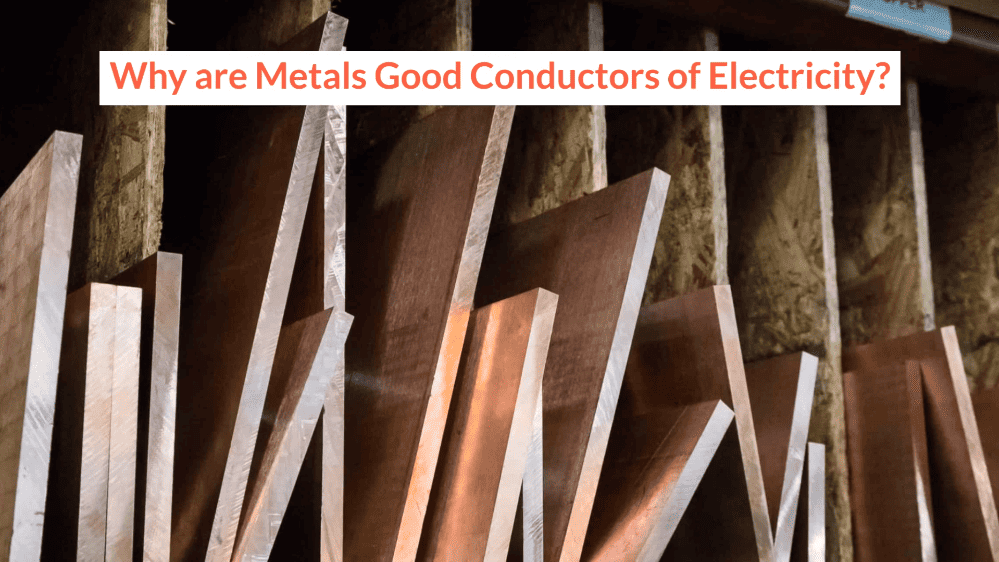
Most of the time, when we think of metals and electricity, our brains immediately go to the heavy hitters. We're talking copper, the unsung hero of your phone charger. That's the stuff that makes your gadgets hum and your Wi-Fi sing. Then there's aluminum, light and airy, doing its thing in everything from soda cans to airplane wings. And let's not forget gold! Oh, glorious gold. It's not just for bling, you know. It’s a fantastic conductor, which is probably why your fancy schmancy electronics have tiny flecks of it inside. It's like giving your circuits a tiny, ridiculously expensive spa day.
These guys are the rockstars of the conductivity world. They practically beg electrons to flow through them. It's like they have an open-door policy for electrical charge. "Come on in, electrons! Make yourselves at home! We've got plenty of room!"
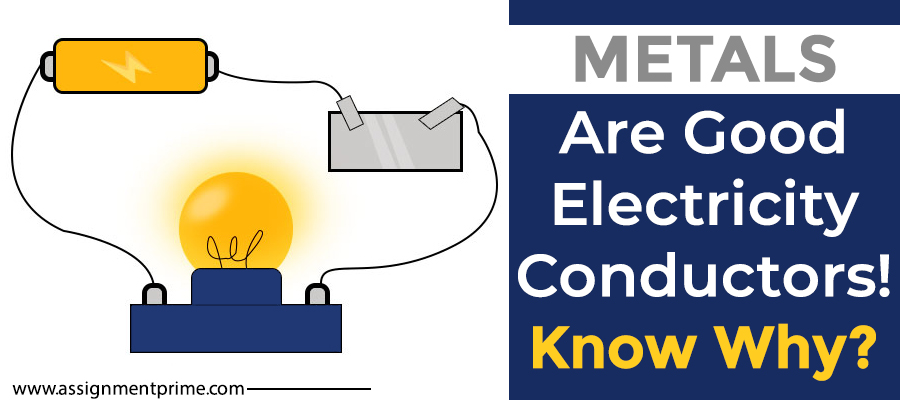
Why are they so enthusiastic? It all boils down to their electrons. Imagine metal atoms having a bunch of tiny little party guests – these are the electrons. In metals like copper and aluminum, a few of these party guests are super social and tend to wander off from their own atom to hang out with their neighbors. They’re the free spirits, the ones who aren't tied down to a specific atomic dance floor. When you zap them with electricity, it's like a disco ball turning on – these free electrons get a serious kick and start boogying their way through the metal. It's a veritable electron mosh pit!

The "Hmm, Not So Much" Squad: The Quirky Cousins
But here’s where Brenda’s question gets interesting. While most metals are practically screaming "Take my electrons, please!", there are a few metal-ish materials that are a bit more… reserved. They’re not exactly insulators, like plastic or rubber (which are the ultimate party poopers for electricity, keeping all the electrons firmly in their seats), but they’re not exactly conductors on par with copper either.
Think of them as the introverts of the metal world. They're still technically metals, but their electrons are a bit more clingy. They prefer to stay close to their home atom, like a teenager glued to their phone. It takes a bit more… persuasion to get them moving.
The main player in this category is called a semiconductor. You might have heard of silicon? Yep, that’s a big one. And germanium. These guys are the fence-sitters. They can conduct electricity, but only under specific conditions. It's like they’re saying, "Okay, fine, I'll let a few electrons through, but only if you're really nice about it and maybe offer me some snacks."

This is why they're so darn important in our modern world. They’re the brains behind your computer chips, your smartphones, your smart fridges that probably judge your late-night snacking habits. Without semiconductors, we wouldn't have the intricate circuits that make all our gadgets work. They're the master negotiators of the electrical world, allowing us to precisely control the flow of electricity.
The "Wait, Is That Even a Metal?" Surprises
Now, things get even weirder. Sometimes, we encounter materials that look like they should be good conductors, but they’re surprisingly mediocre. For example, have you ever seen graphite? It’s the "lead" in your pencil. It's made of carbon, which is technically not a metal. But here’s the kicker: graphite is actually a pretty decent conductor of electricity! It's like the cool kid who isn't in the official "metal" club but crashes the party and steals the show with their amazing dance moves.

So, while it's not a "metal" in the traditional sense, its conductive properties are fascinating. It's a reminder that the universe loves to throw us curveballs. The rules aren't always as clear-cut as we might think. It’s like finding out your grumpy Uncle Barry is secretly a world-class juggler. Mind. Blown.
And then there's the opposite end of the spectrum, though this is more of a theoretical playground. Scientists have discovered materials that are so incredibly resistant to electrical flow, they’re practically the opposite of a conductor. These are called insulators. Think of your rubber-coated wires. They're designed to keep electricity in its lane, preventing it from zapping you or causing a power surge that sets your cat’s tail on fire (hypothetically, of course… mostly).
The Verdict: It's Complicated, But Mostly Yes!
So, back to Brenda. Can all metals conduct electricity? The short, slightly sassy answer is: pretty much, but with some dramatic pauses and a few exceptions. All the true metals, the ones you'd find on that classic periodic table chart hanging in your old high school science lab, are fantastic conductors. They're the lifeblood of our electrical world.
But then you have those clever semiconductors, the fence-sitters that allow us to build the complex tech we rely on. And you have materials like graphite, which are carbon-based but decided to get in on the conductivity action anyway, just to keep us on our toes.
It’s not a simple "yes" or "no." It’s more of a "well, it depends on what you mean by 'metal' and how much you're willing to bribe those electrons to move." And isn't that just like life? A beautiful, complex, and occasionally shocking adventure.
So next time Brenda from accounting asks you about metals and electricity, you can confidently say, "Brenda, it’s a whole electrifying spectrum!" And then maybe offer her some of that elderflower cordial. She’ll probably appreciate it.