
Can You Drill Into Brick With A Regular Drill
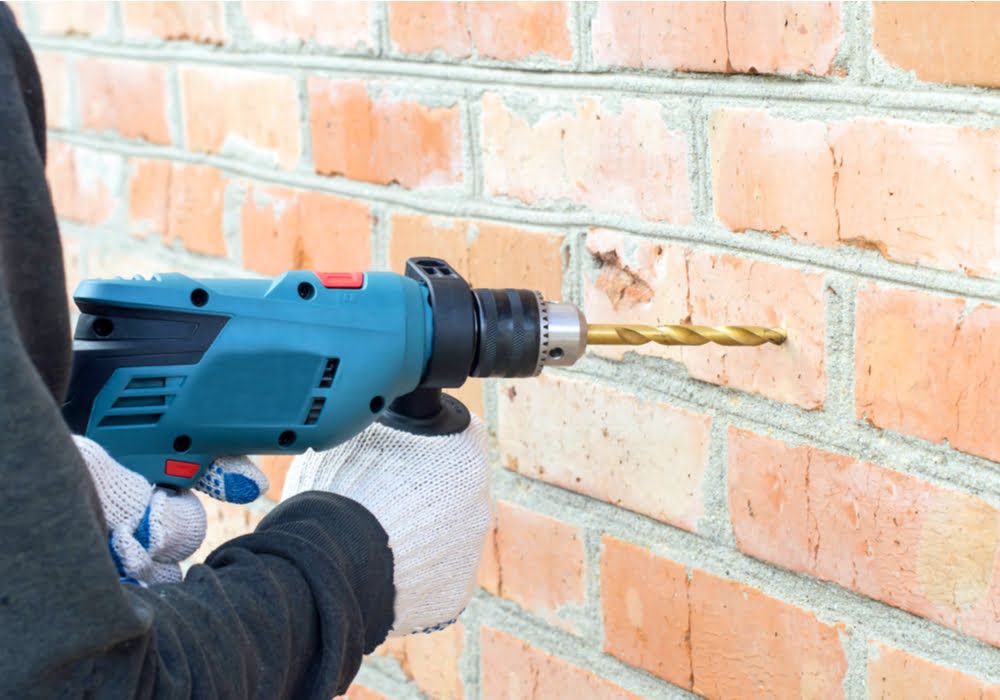
So, there I was, staring at a rather stubborn brick wall. I had this genius idea to hang a ridiculously heavy mirror. You know, the kind that looks like it belongs in a grand ballroom, not my humble abode. My trusty, albeit slightly battered, cordless drill was in hand. It’s seen its fair share of IKEA furniture assembly and the occasional rogue drywall screw, so I figured, “Piece of cake!” Famous last words, right?
I pressed the trigger, expecting that satisfying whirring sound and a clean hole. Instead, I got… well, let’s just say it sounded like a tiny, angry bee trapped in a rock concert. Dust flew everywhere, but the drill bit seemed to be performing a frantic, unproductive dance on the surface of the brick. It wasn’t going in. Not even a millimeter. My grand ballroom mirror was starting to feel like a very expensive paperweight, forever destined for the floor.
This, my friends, is where the burning question arises, the one that might be echoing in your own DIY-minded brain right now: Can you actually drill into brick with a regular drill? And if so, how? Because my initial attempt was less "DIY success story" and more "frustration fueled by dust and a whining drill."
The Brick Wall: A Surprisingly Tough Nut to Crack
Let's be honest, bricks are built to last. They're designed to withstand the elements, to hold up structures for decades, if not centuries. They're not exactly made of fluffy marshmallows, are they? So, the idea of just whacking a standard drill bit into one and expecting it to yield feels a bit… optimistic. It’s like trying to cut a steak with a butter knife. You might make some progress, but it’s going to be a long, messy, and ultimately unsatisfying experience.
A regular drill, the kind you probably use for putting up shelves or assembling flat-pack furniture, is generally designed for softer materials like wood, drywall, and even some softer metals. These materials are relatively forgiving. The drill bits are typically made of high-speed steel (HSS), which is great for those applications. But brick? Brick is a whole different beast.
Why Your "Regular" Drill Might Be Struggling
The main culprit is the drill bit itself. As I discovered with my mirror-hanging adventure, a standard HSS bit will likely just spin and grind against the hard surface of the brick. It might create a tiny bit of dust, but it won't effectively chip away at the material. You’re essentially just polishing the brick, which, while potentially a very niche hobby, isn't going to help you hang that mirror.
Then there’s the drill's motor and gearing. Drilling into brick requires significantly more torque and rotational force. A standard drill might not have the power to sustain that kind of effort for long, especially if it’s a smaller, lighter model. You risk overheating the motor, damaging the drill, or just plain giving up from the sheer effort.
And let's not forget the vibration. Or rather, the lack of it. When you're drilling into brick effectively, you're not just spinning a bit; you're often using a hammering action. This percussion is what breaks up the hard material. Your regular drill, without this feature, is missing a crucial component for tackling masonry.

Enter the Hammer Drill: Your New Best Friend (for Brick)
So, if a regular drill is out, what's the solution? Drumroll, please… the hammer drill!
Now, before you picture me lugging a sledgehammer around my house, let me clarify. A hammer drill isn't about brute force in the way you might imagine. It’s a specialized tool that combines the standard rotational action of a drill with a percussive hammering mechanism. This mechanism delivers rapid, short hammer blows forward as the drill bit rotates, effectively pulverizing the brick or masonry in its path.
Think of it this way: a regular drill is like a persistent but gentle poke. A hammer drill is like a very rapid, forceful tapping that breaks things apart. It’s the difference between trying to carve your name into a rock with a spoon versus using a chisel.
What Makes a Hammer Drill Different?
The magic lies in the internal mechanism of a hammer drill. It typically involves a series of cams or gears that create the hammering action. You can usually switch between a standard drilling mode and a hammer drilling mode, depending on your material. For brick, you'll absolutely want to be in hammer mode. It’s the secret sauce.
You'll also notice that hammer drills are generally more robust and powerful than their non-hammering counterparts. They're built to handle the tougher jobs. And, of course, you’ll need the right drill bits. More on that in a sec.

The Right Tool for the Right Job (and the Right Drill Bit!)
Even with a hammer drill, you can't just grab any old bit. Using the wrong drill bit in a hammer drill is like trying to win a Formula 1 race with bicycle tires. It's just not going to work, and you're likely to damage both the bit and the drill.
Masonry Drill Bits: The Brick Whisperers
For drilling into brick, stone, concrete, and other masonry materials, you need masonry drill bits. These are specifically designed for the job. They typically have a carbide tip that is much harder than the HSS used in regular drill bits. This carbide tip is shaped to efficiently cut through hard materials.
You can usually spot masonry bits by their distinctive tip, which might be slightly larger and have a flattened or chisel-like appearance. When paired with a hammer drill, these bits are absolute workhorses. They'll grind through brick like butter… well, maybe not exactly like butter, but you get the idea. It’s a satisfying transformation from futile grinding to purposeful progress.
When buying masonry bits, look for ones made by reputable brands. Cheap, unbranded bits might seem like a bargain, but they’ll wear out quickly and frustrate you to no end. Trust me, I've been there, and my patience is not infinite.
So, Can You Drill Into Brick With A Regular Drill? The Verdict
Okay, let’s circle back to that initial question. Can you drill into brick with a regular drill? The short answer is: it’s highly unlikely you’ll achieve satisfactory results, and you risk damaging your drill and yourself.
:max_bytes(150000):strip_icc()/how-to-drill-into-brick-5218509_20-fe3100965b394fb3b0e94210502ecdfb.jpg)
While you might be able to make a minuscule indentation with a lot of effort, a standard drill and bit combination is simply not equipped to handle the hardness of brick. You'll end up with a lot of dust, a lot of noise, a lot of frustration, and a hole that's probably too small to be useful anyway. Imagine trying to hammer a nail with a banana. Similar energy expenditure, significantly less effective outcome.
If your goal is to hang something on a brick wall, whether it's a shelf, a bracket, or that ridiculously heavy ballroom mirror, you’re going to need the right tools for the job.
When Bricks Get Tricky: Different Types of Bricks and Mortar
Now, it's worth noting that not all bricks are created equal. Some older, softer bricks might be slightly more forgiving than modern, dense, and hard-fired bricks. And the mortar between them can also vary in hardness. It’s a bit of a DIY gamble sometimes.
However, even with softer bricks, using a regular drill is still not ideal. You’re still fighting against the material without the benefit of the hammering action and the specialized bit. And if you hit a particularly hard spot, or a piece of aggregate within the brick, you’ll be back to square one.
Also, consider the age of the brickwork. Very old brick and mortar might be more fragile, and you could inadvertently cause more damage than intended if you're not careful, even with the right tools. It’s a delicate dance between power and precision.

Beyond Hammer Drills: Rotary Hammers and Diamond Bits
For serious masonry work, there are even more powerful tools than a standard hammer drill. Rotary hammers are designed for heavy-duty drilling and chiseling in concrete and masonry. They have a more powerful hammering mechanism and often use SDS (Slotted Drive System) bits, which are specifically designed for these high-impact tools.
And if you're dealing with extremely hard materials or need to cut through brick cleanly, you might even consider diamond drill bits. These are the absolute top tier for drilling through the hardest of materials. They are, however, considerably more expensive and usually overkill for most DIY projects. Unless you're planning to build a bunker in your backyard, you probably don't need these.
Tips for Drilling Into Brick (When You Have the Right Gear!)
Okay, so you’ve invested in a hammer drill and some masonry bits. Hurray! Now, let’s make sure you don’t mess it up. Here are a few pointers:
- Mark your spot: Use a pencil or a marker to indicate exactly where you want to drill.
- Start slow: Begin with a lower speed and gentle pressure to create a small pilot hole. This helps prevent the bit from wandering.
- Engage hammer mode: Make sure your hammer drill is set to the hammer function. This is the crucial part!
- Apply steady pressure: Once you’ve started, apply consistent, moderate pressure. Don’t force it; let the tool do the work.
- Clear the dust: Periodically pull the drill bit out of the hole to clear out dust and debris. This prevents the bit from overheating and improves drilling efficiency. Think of it as giving your drill a little breather.
- Use the right bit size: Ensure your masonry bit is the correct diameter for the anchor or screw you plan to use.
- Safety first: Always wear safety glasses to protect your eyes from flying debris. Gloves are also a good idea. Nobody wants a brick fragment in their eye. Ever.
- Be patient: Drilling into brick takes longer than drilling into wood. Take your time and don’t rush the process.
The Mirror is Up! (Eventually)
After my initial brick-drilling disaster, I went out and got myself a decent hammer drill and a set of masonry bits. The difference was night and day. The sound was still… energetic, but now it was accompanied by the satisfying thwack of the hammer action, and the brick was actually yielding. That ridiculously heavy mirror is now proudly displayed on my wall, a testament to the fact that sometimes, you just need the right tools for the job. And sometimes, those tools involve a bit of controlled percussive force.
So, to recap, while your regular drill is fantastic for many household tasks, when it comes to the formidable world of brick, it’s best to leave it on the shelf. For brick drilling, arm yourself with a hammer drill and some sturdy masonry drill bits. Your walls (and your sanity) will thank you.
Now, go forth and conquer those brick walls! And if you happen to have any leftover DIY triumphs or epic fails to share, I’m all ears (and eyes, when I’m not squinting through safety glasses).