
Can You Put A Metal Can In The Microwave

Ever stare into the microwave, a steaming cup of soup in one hand, a shiny metal can in the other, and wonder… "Hey, can I just zap this whole thing?" It's a question that pops into our heads, right? You're just trying to get your lunch sorted, and suddenly, you're a budding mad scientist debating the physics of electromagnetism with your tuna. Well, grab a comfy seat, because we're going to dive into this whole "metal in the microwave" thing, and trust me, it's more interesting than you might think.
So, what's the general consensus? Is it a big fat NO? Mostly, yes. But why? It’s not just some arbitrary rule cooked up by appliance manufacturers to make our lives more complicated. There's a whole science party happening in that little box.
The Sparky Show: What Actually Happens
Okay, picture this. Your microwave oven is basically a magic box that uses something called microwaves to heat your food. These waves are a type of electromagnetic radiation, kind of like radio waves or visible light, but at a specific frequency that's really good at making water molecules wiggle. When water molecules wiggle, they create heat. Simple enough, right?
Now, introduce metal. Metal is, well, metal. It’s a fantastic conductor of electricity. When those microwaves hit a smooth, flat piece of metal, they tend to bounce off. Think of it like throwing a super bouncy ball at a mirror – it just ricochets. This bouncing isn't the main problem, though. The real drama happens when the metal has sharp edges, points, or is in a specific shape, like the ridged edge of a can.
These little pointy bits become little antennas. The microwaves get concentrated at these points, and this can cause a build-up of electrical charge. When that charge gets too high, the air around it can't handle it anymore, and BAM! You get a spark. It's like static electricity, but on steroids. And not in a good, "my sweater is cozy" way. More like a "my appliance is about to have a really bad day" way.

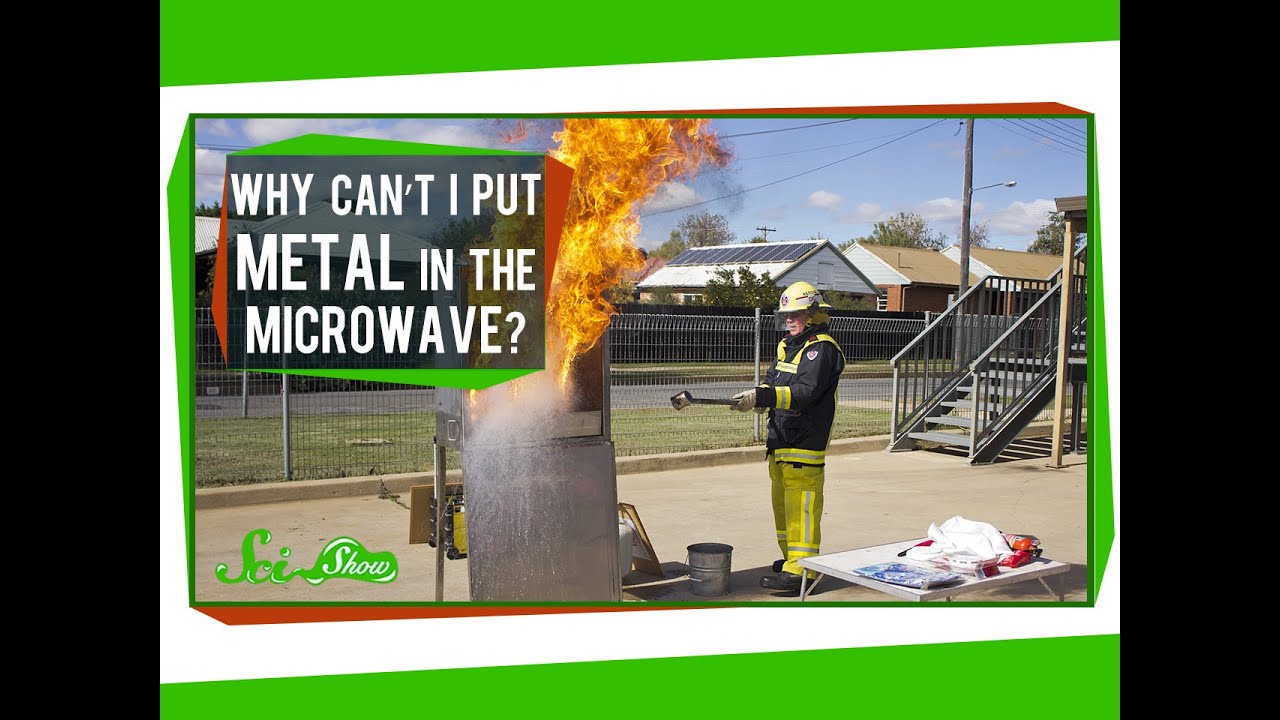
This sparking is what we call an arcing event. It can look pretty dramatic, with little flashes of lightning dancing around inside your microwave. It's definitely not good for your appliance. It can damage the magnetron, which is the part that actually generates the microwaves. Think of it as giving your microwave a nasty paper cut – it’ll likely heal, but it’s not ideal, and repeated incidents can lead to more serious injury.
Why Cans Are Particularly Tricky
Cans, especially food cans, have those lovely crimped edges. Those ridges are prime real estate for arcing. The metal is thinner and more exposed in those areas, making them perfect little lightning rods for stray microwaves. Plus, the whole can is enclosed, meaning those sparks can bounce around and potentially cause damage to the inside walls of your microwave as well.
And let’s not forget the foil wrapper scenario. You know, when you accidentally leave a bit of foil on your leftovers? That’s another classic arcing culprit. It's all about those edges and thin points. Even crumpled foil can create little sharp bits that get a microwave makeover.

But What About Those "Microwave Safe" Trays?
Now, you might be thinking, "But I've seen some plastic containers with little silver bits or shiny logos!" And you're right, you have. This is where it gets a bit nuanced and, frankly, a little cool. Not all metal is created equal when it comes to microwaves.
Sometimes, manufacturers will use very specific types of metal or design elements in a way that’s meant to be microwave-safe. Think of some of those fancy browning trays or crisping elements you can buy. They’re engineered with specific shapes and thicknesses to either allow microwaves to pass through or to interact with them in a controlled way. It’s like a carefully choreographed dance, not a chaotic mosh pit.
These aren't typical food cans, though. They are deliberately designed for the microwave environment. They’re the culinary equivalent of a stunt double – specially trained to perform safely in a dangerous situation. A regular soup can? Not so much.
The Exception That Proves the Rule (Sort Of)
So, are there any times you can microwave a metal container? Well, it’s a very, very narrow window. Some sources mention that a completely smooth, rounded metal bowl, with no sharp edges, might be okay for very short periods. But even then, the risk of arcing is still there, especially if the metal is thin or the microwave is old. It's like trying to walk a tightrope – possible for a professional, but probably not a good idea for the average person.
The bottom line is, unless the packaging explicitly states it's microwave-safe (and we're talking about the entire container, not just a tiny part), it's best to err on the side of caution. It's just not worth the potential fireworks show and a trip to the repair shop.

So, What’s the Coolest Takeaway?
It’s fascinating, isn't it? How these invisible waves can interact with different materials in such dramatic ways. The fact that a simple metal can can turn into a miniature lightning storm is pretty wild. It’s a constant reminder that even the most mundane objects have hidden properties that can be unleashed, for better or worse, by science.
It’s a testament to the ingenuity of engineers that we can have microwave-safe containers, often incorporating metal elements in a safe and beneficial way. They understand the microwave's quirks and have figured out how to work with them. It’s like learning the secret handshake of the microwave universe.
Next time you're heating up your meal, take a moment to appreciate the simple elegance of pouring your food out of that metal can and into a proper microwave-safe dish. It's a small act of defiance against potential arcing, and a little nod to the science that makes our modern kitchens tick. And who knows, maybe one day they’ll invent a microwave-safe tuna can. Until then, we’ll stick to the tried and true method of emptying it out. Happy heating!