
Canon Extension Tubes For Macro Photography

Hey there, fellow shutterbugs! Grab a mug of your favorite brew, because we're about to dive into something super cool, something that unlocks a whole new world of tiny wonders. We're talking about Canon extension tubes, my friends. Ever looked at a little ladybug or a delicate dewdrop and thought, "Man, I wish I could get closer to that"? Yeah, me too. And guess what? These little gizmos are your secret weapon!
Seriously, these things are like magic wands for your camera. They’re not some complicated, scary piece of tech. Nope. They’re actually surprisingly simple, and that’s part of their charm. Think of them as spacers. That’s it. Just little tubes that go between your camera body and your lens. Revolutionary, right?
So, why would you even bother with these extra bits? Well, it all comes down to one glorious word: magnification. Your regular lens is great, don't get me wrong. It takes lovely pictures. But when you want to get into the nitty-gritty, the teeny-tiny details that most lenses just can't reach, that's where extension tubes shine. They literally move your lens further away from the camera sensor. And when you do that, your lens can focus closer. Boom! Instant macro magic.
Imagine this: you're at your local park, and you spot the most incredible flower. The petals are intricate, and there's a tiny bee happily buzzing around. With your normal lens, you might get a decent shot of the flower, maybe even the bee if you're lucky. But with extension tubes? Suddenly, you're not just taking a picture of the flower; you're capturing the velvety texture of its petals, the intricate patterns on the bee's wings. It's like you’ve stepped into a secret, miniature universe. Mind-blowing, I tell you.
Canon offers them in a couple of handy sets. You've got your EF 12mm and your EF 25mm. Sometimes you can even stack them. Yes, you heard that right. You can put the 12mm on, then the 25mm on that, and then your lens. Talk about getting close! Though, fair warning, stacking them can get a little… complicated. More on that later, perhaps.
The cool thing about the Canon ones is that they’re electronic. This is a big deal. It means that your camera still talks to your lens through the tubes. So, your autofocus usually works (we’ll discuss the "usually" part in a bit), and more importantly, your aperture settings are still controlled by the camera. That’s crucial for getting that creamy, blurred-out background, the bokeh we all adore. Without electronic contacts, you'd be stuck with whatever aperture the lens was set to, which is often not ideal for macro.

Let’s talk about magnification ratio. This is the fancy term for how much bigger your subject appears in the picture compared to its actual size. A 1:1 ratio means your subject is captured life-size on the sensor. With extension tubes, you can easily achieve ratios of 1:2, 1:1.5, or even 2:1 and beyond, depending on your lens. So that ant, which is tiny in real life, can fill your entire frame. It’s like you’ve got a magnifying glass built right into your camera. Pretty neat, huh?
Now, the biggest question on everyone’s mind, I bet: Will my autofocus still work? The answer is… it’s a bit of a mixed bag. With extension tubes, especially longer ones or when stacking, your lens’s focusing range gets squished. It can only focus at very close distances. So, while the camera tries to autofocus, it might hunt around a lot or just give up. For me, and for most macro photographers, manual focus becomes your best friend. Embrace it! It’s actually a really rewarding way to compose your shots. You get to be really deliberate, really precise.
Think of manual focusing with extension tubes as a dance. You’re gently turning the focus ring, inching closer and closer to that perfect sharpness. It requires patience, a steady hand, and maybe a tripod. Oh yeah, definitely a tripod. When you're that close, even the tiniest tremor can ruin your shot. So, my advice? Invest in a decent tripod. Your back (and your photos) will thank you.
What kind of lenses work best with extension tubes? Honestly, most lenses can benefit from them. However, you’ll get the best results with lenses that have a longer focal length. Think 50mm, 85mm, 100mm, or even longer. Why? Because with a longer focal length, you can stand further away from your subject while still achieving high magnification. This is super helpful when you’re photographing shy critters, like insects. You don’t want to scare them away by creeping too close, right? So, a 100mm lens with extension tubes can give you amazing magnification without being right in the bug’s face.
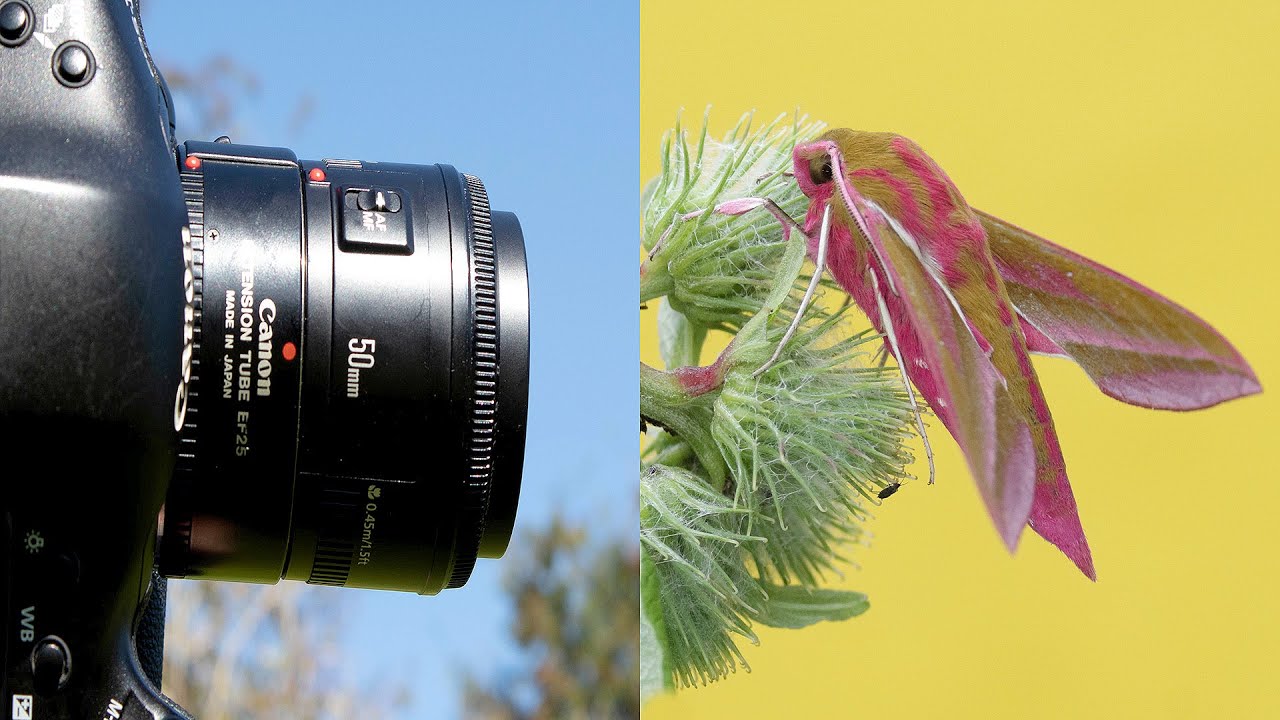
Prime lenses tend to be sharper than zooms, and they often have wider maximum apertures, which can be helpful. But honestly, don’t feel like you need to buy a fancy new lens to get started. Your trusty 50mm nifty fifty can be a fantastic starting point for macro with extension tubes!
Now, let's talk about the trade-offs. Because nothing in photography is perfect, right? When you add extension tubes, you're essentially making your lens "slower." What does that mean? It means less light reaches your sensor. This can be a challenge, especially in dimmer conditions. You might find yourself needing to increase your ISO, which can introduce noise, or use slower shutter speeds, which, as we mentioned, really benefit from a tripod.
The shallower depth of field at macro distances is another "challenge" that also happens to be one of macro photography’s greatest joys. With extension tubes, your depth of field becomes incredibly thin. We’re talking paper-thin. So, getting both eyes of a bee in focus might be impossible. You might have to choose to focus on just one eye. It’s about deciding what’s most important in your tiny world.
But don't let these sound like deal-breakers. They're just things to be aware of. Every type of photography has its quirks and challenges, and macro is no different. The reward is so worth it.

So, how do you actually use them? It's ridiculously easy. You detach your lens from your camera body. Then, you attach the extension tube to the camera body. After that, you attach your lens to the extension tube. Make sure everything clicks securely into place. You’ll hear a little click when it’s locked. Then you’re good to go! Just remember to reattach your lens the normal way when you’re done.
When you're shooting, look through your viewfinder or at your LCD screen. You'll notice that your focusing distance has changed dramatically. You’ll be able to get much, much closer to your subject. Experiment! Play around with the focusing ring. See what happens. Try different subjects. A crumpled piece of paper, the texture on your couch, a salt shaker – even everyday objects can look fascinating up close.
What about stacking? Ah, the advanced move. You can attach the 12mm tube, then attach the 25mm tube to the 12mm tube, and then attach your lens to the 25mm tube. This gives you a whopping 37mm of extension! Your magnification will go through the roof. However, with each added tube, you lose more light, autofocus becomes even more unreliable, and your working distance gets shorter and shorter. You might find yourself practically nose-to-nose with your subject. It’s a bit of a wild ride, and definitely not for beginners, but the results can be spectacular if you’re willing to put in the effort.
The cost. This is where extension tubes really win. Compared to buying a dedicated macro lens, which can set you back hundreds, even thousands, of dollars, extension tubes are incredibly affordable. You can usually get a set of Canon tubes for a fraction of the price of a macro lens. This makes them the perfect entry point into macro photography. You can test the waters, see if you love it, and then decide if you want to invest in more specialized gear down the line.

For anyone looking to dip their toes into the world of macro photography without breaking the bank, Canon extension tubes are an absolute no-brainer. They’re simple, effective, and open up a whole universe of detail that you’ve probably been missing.
Think about the little things. The intricate patterns in a leaf. The iridescent shimmer on a fly’s wing. The way a tiny spider meticulously weaves its web. These are the stories that macro photography tells. And extension tubes are your ticket to telling those stories.
Don't be intimidated. Seriously. It's just a tube. A fancy, electronic tube, but a tube nonetheless. Give it a go. You might be surprised at what you discover. And who knows, you might just fall in love with the miniature world. I know I did.
So, next time you're out and about, or even just looking around your own home, remember these little guys. They’re waiting to help you see the world in a whole new, incredibly detailed way. Happy shooting, and may your macro adventures be ever so sharp!