
Capillary Tube In Refrigeration System
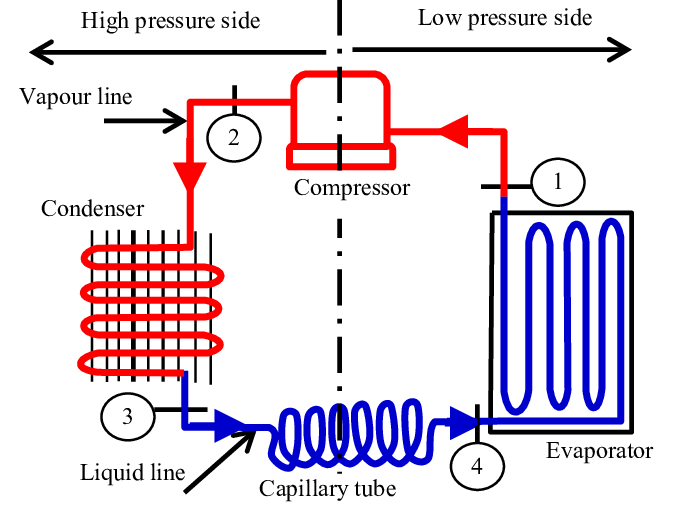
Let's talk about something that's probably been chilling your drinks or keeping your food fresh for ages, but you've never really thought about. I'm talking about the unsung hero of your refrigerator, the tiny titan, the… well, let's just call it the Capillary Tube. Yeah, I know. Sounds like something you'd find in a very fancy science lab or maybe a questionable plumbing job. But trust me, this little guy is working overtime so you don't have to. And honestly, I think it deserves a standing ovation. Or at least a gentle pat on the back. Preferably a cold one.
Think about it. Your fridge is basically a magical box that makes things cold. And this skinny little tube, barely thicker than a straw, is a huge part of that magic. It's like the bouncer at the super exclusive club of "coldness." It controls who gets in and who doesn't, and more importantly, how they get in. It's got this incredibly important job, and it does it without any fanfare. No flashing lights, no applause, just silent, diligent work. It’s the ultimate introvert of the appliance world, and I, for one, am here for it.
You see, in a refrigerator, there's this stuff called refrigerant. It’s the lifeblood of the coldness, the secret sauce that makes your ice cream stay frozen. Now, this refrigerant has to go on a bit of a journey. It starts off all cozy and high-pressure, then it needs to shed that pressure and become nice and… well, less pressurized. And that's where our friend, the Capillary Tube, steps in. It's like a tiny, super-long hallway that the refrigerant has to squeeze through. It's a bit of a tight fit, and as it's forced through this narrow passage, its pressure drops dramatically. It’s the ultimate stress test for a gas, and the capillary tube is the gentle (or not so gentle, depending on how you look at it) enforcer of this pressure-reducing ordeal.
Imagine a crowded concert. Everyone's packed in, buzzing with energy, high pressure. Now, picture a single, narrow exit. Suddenly, the crowd has to slow down, spread out, and the energy level drops. That’s kind of what’s happening inside the capillary tube, but with refrigerant. It’s a masterclass in controlled chaos. And the best part? It does this without any moving parts. No whirring gears, no clanking levers. Just a simple, elegant tube doing its thing. It’s so wonderfully uncomplicated. In a world full of complex gadgets, this little tube is a breath of fresh air. Or, rather, a breath of cold air.
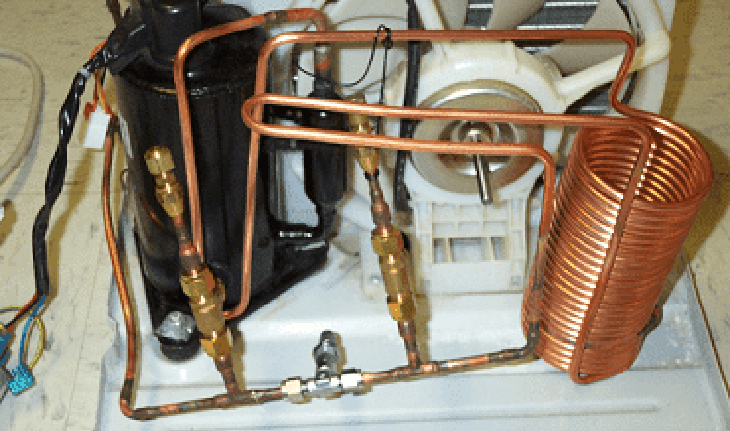
Now, you might be thinking, "Is that it? It's just a skinny tube?" And to some extent, yes! But it's also its simplicity that makes it so brilliant. There's less to go wrong. Unlike some of the more flamboyant components in your fridge, the capillary tube doesn't have a lot of moving parts that can break or get worn out. It’s the reliable old workhorse. The one you can always count on. It’s like that friend who’s always there for you, never asking for much, just quietly doing what needs to be done. I’m starting to feel emotional. This is getting intense.
I have a sneaking suspicion that if refrigerators could talk, they'd dedicate a whole chapter of their memoirs to the Capillary Tube. It's the unsung legend, the quiet achiever, the reason your leftovers don't turn into science experiments.
The length of this tube is also super important. It's not just randomly long. It's precisely calibrated. It's like a secret recipe. Too short, and the refrigerant doesn't lose enough pressure. Too long, and, well, who knows? It could get all flustered and decide to take a nap. But engineers, bless their clever hearts, figured out the perfect length. It’s a testament to the power of precision engineering, all packed into something that could easily be mistaken for a stray piece of wire. It’s the James Bond of refrigeration components: small, discreet, but incredibly effective. And probably doesn’t have a martini preference, which makes it even more admirable.
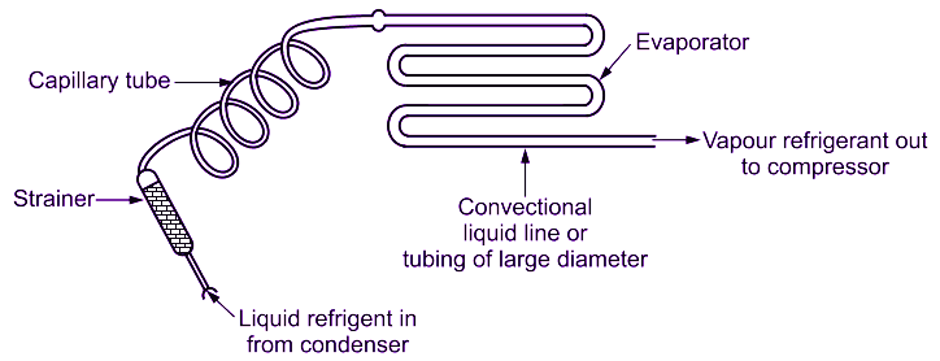
So, the next time you open your fridge and feel that rush of cool air, take a moment. Give a little nod of appreciation to the humble Capillary Tube. It’s working tirelessly, performing its crucial role in the grand theatre of cold. It’s a reminder that sometimes, the most important jobs are done by the smallest, most unassuming things. It’s a bit like those people who are always quietly getting things done behind the scenes. They’re the real MVPs. And this capillary tube? It’s definitely on my list of appliances I’d like to give a high-five to. If only it had hands. And, you know, wasn't filled with pressurized gas.
I feel like I’ve said its name enough times now that we’re practically friends. Capillary Tube, you’re doing great, sweetie. Keep up the excellent work. And maybe next time, could you send a tiny blast of extra cold air my way? Just kidding. Mostly. But seriously, hats off to you, little tube. You’re the real MVP.