
Car Sounds Like Metal Scraping When Driving
Hey there, fellow road warrior! So, you’ve got a car that’s decided to audition for a starring role in a heavy metal concert every time you hit the gas, huh? That distinctive screeeech or grind that sounds suspiciously like someone’s dragging a bag of spare keys across a chalkboard? Yeah, I’ve been there. It’s not exactly the soundtrack we envisioned for our daily commute, is it? Makes you wonder if your car is secretly a robot trying to communicate its displeasure, or perhaps it’s just channeling its inner industrial sound engineer. Whatever it is, that metal-on-metal symphony is definitely a signal that something’s up.
First off, don’t panic! While it might sound like your car is on its last leg and about to spontaneously disassemble itself into a pile of shiny bits, a scraping metal sound usually means there’s a specific culprit, and often, it’s a fixable one. Think of it as your car giving you a little, albeit noisy, heads-up. It’s like when your tummy rumbles before dinner – a clear indication that it needs some attention. And just like you wouldn't ignore a rumbling tummy, it’s wise not to ignore this auditory alarm.
So, what’s making all this racket? Let’s dive into the nitty-gritty, but in a way that won’t make you feel like you need a PhD in automotive engineering. We’re going to break it down into the usual suspects. Imagine we’re detectives, and this scraping sound is our enigmatic clue. Our mission? To solve the mystery and get your car purring (or at least humming) again!
The Usual Suspects: Where the Metal May Be Grinding
When you hear that metallic scraping, your brain probably jumps to the worst-case scenarios. “Is it my transmission falling out?” “Did a squirrel stash a toolbox under my hood?” Deep breaths. While those are… creative… possibilities, the reality is usually much more grounded, though still important to address.
Brake Time Blues
This is probably the most common culprit for scraping sounds, especially when you’re braking. You know those little metal tabs on your brake pads? They’re called wear indicators. When your brake pads are getting low, these little guys start to scrape against the brake rotor. It’s their way of screaming, “Hey! I’m almost gone! Please replace me before I cause more expensive damage!” It’s like a smoke alarm for your brakes. A loud, metallic smoke alarm.
So, if the scraping happens primarily when you’re applying the brakes, especially if it’s a high-pitched squeal or a more insistent grind, your brakes are probably feeling a bit worn out. This is a critical safety issue, folks. Worn brake pads can lead to reduced stopping power, and in a worst-case scenario, damage to your rotors, which are a bit pricier to replace than pads. Think of your brakes as the superhero cape of your car – essential for saving the day (and yourself!).
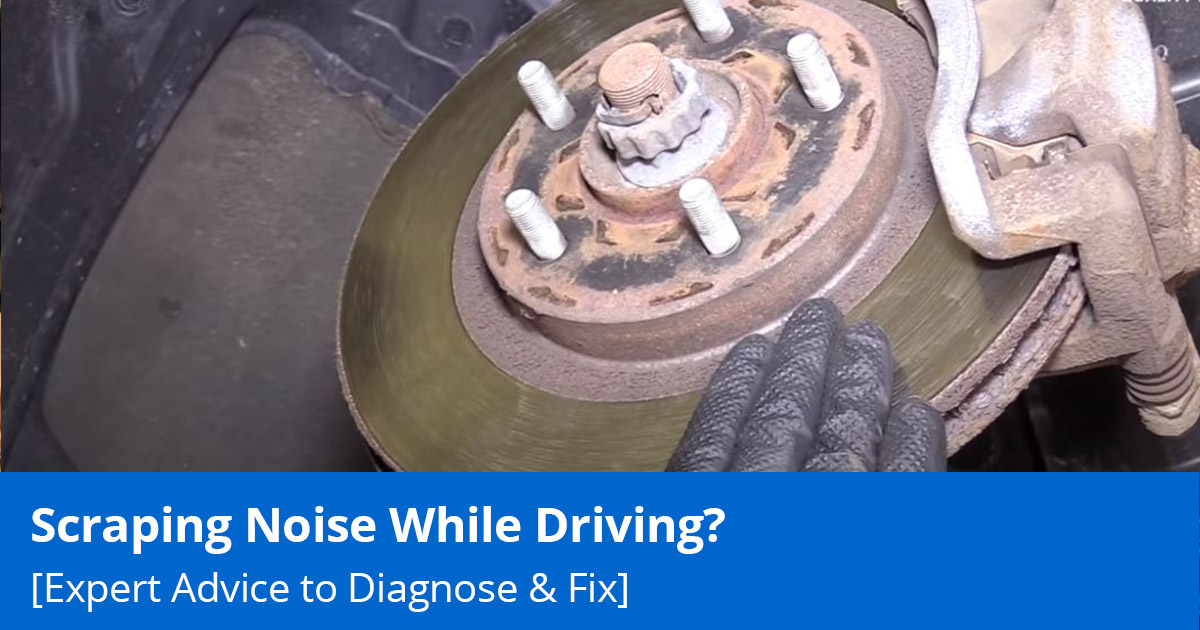
Sometimes, it’s not just the pads. Debris, like a small stone or a piece of road grit, can get lodged between the brake pad and the rotor. This can cause a temporary, annoying scraping sound. It might even feel like your car is dragging its feet. A quick visual inspection (if you’re feeling brave and have a safe place to do it) might reveal something obvious. But generally, for brake issues, a trip to your mechanic is the safest bet. They have the tools and know-how to properly assess and fix them. It’s like taking your pet to the vet – you wouldn’t try to perform surgery yourself, right?
Wheel Bearing Woes
Another common troublemaker is a bad wheel bearing. These little guys are pretty important; they allow your wheels to spin freely. When they start to go, they can make all sorts of noises, including a grinding or scraping sound. This noise often gets louder with speed and might change pitch when you turn your steering wheel. You might even feel a bit of looseness or vibration in the steering wheel.
Imagine your wheel bearing as the smooth operator of your wheel's dance. When it starts to get grumpy, the dance becomes… less graceful. It can sound like a rusty hinge on a haunted house door, but originating from one of your wheels. If you suspect this might be the issue, especially if the sound is more of a humming or grinding that escalates with speed, it’s definitely time to get it checked. A failing wheel bearing can eventually lead to the wheel becoming unstable, which is, you guessed it, another major safety concern. We don’t want any rogue wheels making solo escape attempts!
Exhaust System Escapades
Believe it or not, your exhaust system can also be the source of some metallic drama. If a clamp comes loose, a hanger rusts through, or a shield gets bent, parts of the exhaust system can start to scrape against the undercarriage of your car. This is especially noticeable when you go over bumps or when the engine is running and vibrating. It might sound like a metallic rattle or scrape coming from underneath your vehicle.

Think of your exhaust system as the car’s sophisticated plumbing and ventilation system. When a pipe or a support gets a bit wobbly, it can start to kiss the chassis. It's not a loving embrace; it's more of an unwelcome, noisy flirtation. If you’re brave enough to get under your car (safely, of course, with proper jack stands!), you might be able to spot a dangling exhaust pipe or a loose heat shield. However, exhaust work can be tricky, and sometimes involves working with hot components, so again, your friendly neighborhood mechanic is your best bet. They’ll sort out your car’s plumbing woes.
CV Joint Shenanigans
If your car makes a clicking or scraping sound specifically when you’re turning, particularly at lower speeds, it could be a worn-out Constant Velocity (CV) joint. These are part of your car’s drive axles and allow the wheels to turn while still receiving power from the engine. When the protective boot around a CV joint tears, dirt and debris can get in, and the grease can get out, leading to wear and that telltale noise.
Imagine the CV joint as the car's elbow, allowing for flexible movement. When that elbow starts to complain, it can sound like a rusty robot attempting a ballet. A torn CV boot is like a gaping wound for this crucial joint, and it needs attention sooner rather than later. If ignored, a completely failed CV joint can leave you stranded. And nobody wants to be stranded, especially when they could be enjoying their favorite playlist instead of listening to their car’s metallic lament.
Something’s Not Right with the Rotation
Sometimes, the scraping can be related to things that rotate with your wheels, but aren’t necessarily brakes. This could include things like dust shields (the metal plate behind your brake rotor that helps protect it from road debris), or even a bent fender liner that’s just barely touching the tire when it spins. These are often less critical than brake or bearing issues, but they’re still annoying and can sometimes indicate a minor collision or a bit of road rash your car sustained.

Think of these as minor annoyances in the grand symphony of your car. A bent dust shield might just be having a brief, noisy disagreement with the tire. A fender liner that’s a bit too friendly with the wheel can cause a constant, irritating scrape. These might be easier for a DIYer to spot and potentially bend back into place, but if you’re unsure, it’s always best to err on the side of caution. A little nudge from a professional can often silence the scraping.
What to Do When Your Car Sounds Like a Metal Monster
Okay, so you’ve got a better idea of what might be causing the symphony of scraping. What’s the next step? Well, it’s time to put on your “car detective” hat and gather some more clues, or, more realistically, to call in the professionals.
Pay attention to the details. When does the sound happen? Is it all the time? Only when you brake? Only when you turn? Does it get louder or softer? Where does it seem to be coming from – front, back, left, right? The more information you can give your mechanic, the faster and more accurately they can diagnose the problem. It’s like telling your doctor your symptoms – the more precise you are, the better they can help!
Don’t ignore it. Seriously, even if the sound is intermittent or not too loud, it’s a sign that something isn’t quite right. Ignoring a car problem is like ignoring a leaky faucet. It might seem minor at first, but it can lead to bigger, more expensive issues down the line. And nobody wants a surprise water bill… or a surprise car repair bill!

Schedule a mechanic visit. This is the most important step. Unless you're a seasoned gearhead with a fully equipped garage, taking your car to a trusted mechanic is the safest and most effective way to get that scraping sound diagnosed and fixed. They have the expertise, the tools, and the experience to pinpoint the problem and make sure it’s repaired correctly. Think of them as the car whisperers, ready to calm your car’s metallic nerves.
When you go to the mechanic, be descriptive. Tell them exactly what you’re hearing. They might even ask you to demonstrate the sound if it’s safe to do so. They’ll likely take your car for a spin to try and replicate the noise themselves. It’s a team effort, you and your mechanic, against the scraping sound!
The Joy of a Quiet Ride
And then, my friend, comes the glorious moment. The moment when you drive away from the mechanic, and… silence. Blissful, beautiful, non-scraping silence. Your car is no longer performing its avant-garde metallic opera. It’s just… driving. Smoothly. Quietly. It’s like going from listening to a rock concert in your living room to enjoying a peaceful meditation session. The contrast is, well, heavenly.
That feeling of relief, of knowing your car is safe and sound, and of enjoying a quiet drive, is truly wonderful. You can finally turn up your actual music without it competing with your car’s internal distress signals. You can have a conversation with your passengers without shouting over the din. It’s a small victory, but a significant one in the life of a car owner. So, don’t let that scraping sound get you down. It’s just a temporary hiccup, a little bump in the road (literally and figuratively!). With a little attention, your car will be back to its smooth-running self, and you’ll be cruising in peace and quiet, with a smile on your face. Happy (and quiet!) driving!