
Carbon Film Vs Metal Film Resistor
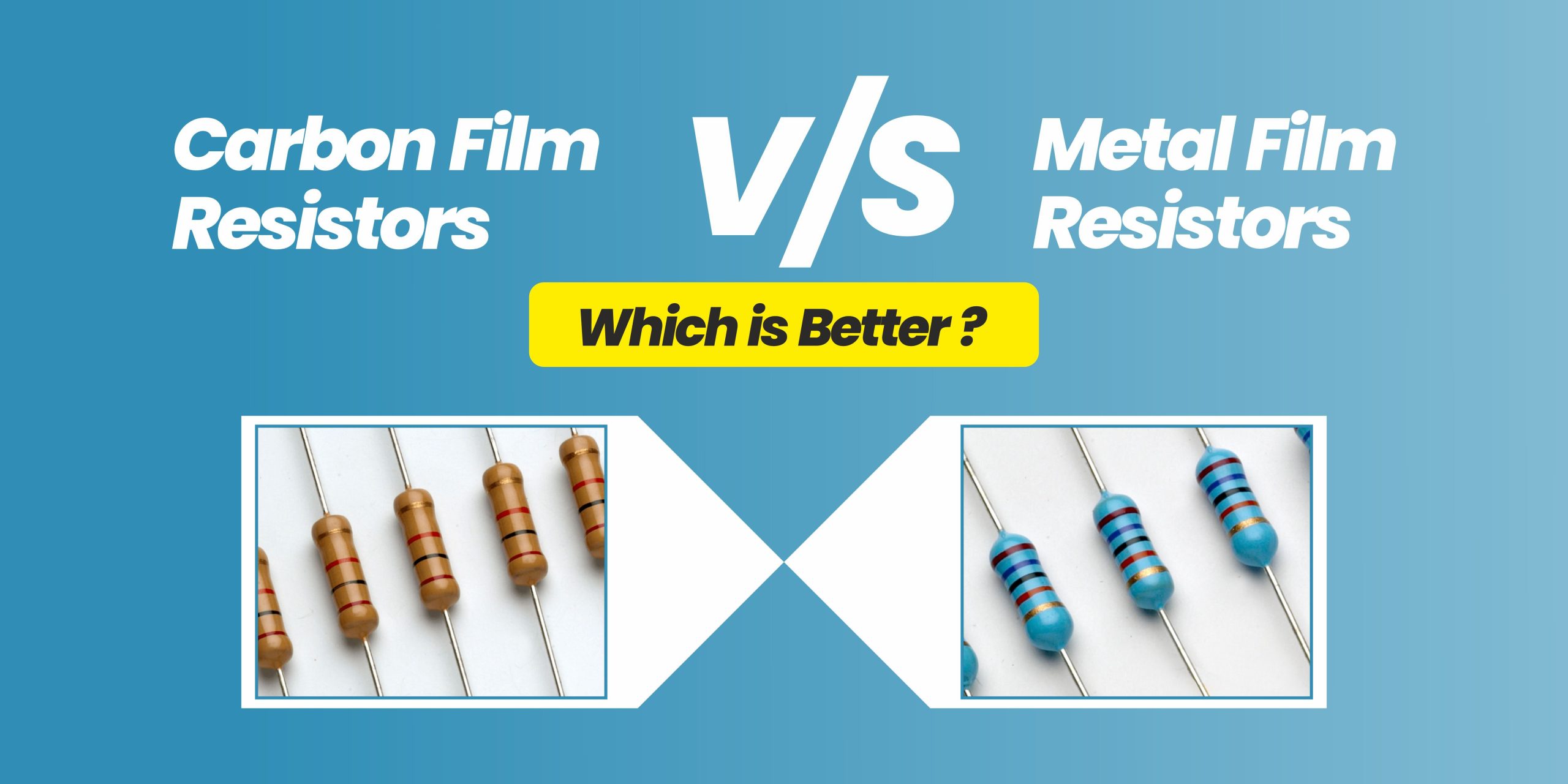
Hey there, fellow humans! Ever fiddled with a gadget, maybe an old radio or a blinking Christmas light string, and wondered about those little doodads inside that look like tiny ceramic cylinders with colorful stripes? Those, my friends, are resistors. Think of them as the quiet, unsung heroes of our electronic world, like the traffic cops of electricity, making sure things flow just right and don't get too rowdy.
Now, just like there are different kinds of coffee beans for your morning brew, there are different kinds of resistors. Today, we're going to chat about two common ones: the carbon film resistor and the metal film resistor. Don't worry, we're not going to dive into any super-technical jargon. We're just going to get a feel for what they are and why, believe it or not, they matter in our everyday lives.
Imagine electricity as a river. Sometimes, you want that river to flow at a gentle, steady pace, like a lazy Sunday afternoon. Other times, you might need a bit more oomph, like when your phone is charging in a hurry. Resistors are like the dams, sluice gates, and even strategically placed rocks in that river, controlling the flow. They resist the flow of electricity, essentially making it a little bit harder for the electrons to zip through.
So, why do we even need to resist? Well, in electronics, too much of a good thing can be bad. Too much electricity zipping around without any control can lead to things overheating, breaking down, or just not working properly. It's like trying to push too many people through a narrow doorway at once – it gets chaotic and nothing gets through smoothly. Resistors help keep everything in line, ensuring the right amount of electricity goes where it needs to go.
The Humble Carbon Film Resistor: The Reliable Workhorse
Let's start with the carbon film resistor. Think of this guy as the trusty, no-nonsense pickup truck of the resistor world. It's been around for ages and is incredibly popular because it's affordable and gets the job done for a lot of common tasks.
How does it work? Well, it’s pretty neat. Imagine taking a ceramic rod, like a tiny little foundation, and then spraying a thin layer of carbon onto it. This carbon layer is what does the resisting. The thicker or wider the carbon path, the less resistance you get. The thinner or narrower the path, the more resistance. It’s like walking through a wide-open field versus trying to squeeze through a dense forest – one is easier than the other!

These little fellas are fantastic for everyday uses. Think of them in your TV remote, your old-school alarm clock, or even in the simple circuits that make your fairy lights twinkle. They're great for basic tasks where extreme precision isn't the absolute top priority. They're the kind of resistors you might find in a beginner's electronics kit, perfect for learning the ropes.
Why should you care about them? Because they are the backbone of so many of the devices you use every single day. Without them, your appliances would be a hot, messy, and likely very smoky mess. They're the unsung heroes that keep your toaster from becoming a flamethrower and your radio from emitting nothing but static.
However, there's a little catch with our carbon film friends. They can be a bit sensitive to temperature changes. If things get hot, their resistance might drift a little. Also, their accuracy isn't always spot-on. Think of it like a baker whose oven temperature fluctuates a bit – their cookies might turn out great most of the time, but occasionally they're a little too done or a little too pale. For most general purposes, this is totally fine, but for super sensitive applications, we might need something a bit more refined.

The Sleek Metal Film Resistor: The Precision Performer
Now, let's meet the metal film resistor. If the carbon film is a pickup truck, the metal film is more like a sleek sports car. It's a bit more advanced, a bit more precise, and generally a bit more expensive.
Instead of carbon, these resistors use a thin film of metal alloy, like nickel-chromium, deposited onto a ceramic core. This metal film is then "trimmed" with a laser to achieve the exact resistance value needed. This laser trimming is like a surgeon carefully carving out the perfect shape – it allows for incredibly precise control over the resistance.
Why is this precision so important? Well, imagine you're baking a very delicate cake, where even a tiny difference in ingredient measurement can ruin the whole thing. In electronics, certain circuits are like that. They need components that behave in a very predictable and consistent way. That's where metal film resistors shine.
You'll find these precision performers in more demanding applications. Think about the motherboard of your computer, the graphics card that makes your games look amazing, or the precision instruments used in science labs. They are crucial in circuits where accuracy and stability are paramount. They help ensure your computer runs smoothly, your medical equipment gives accurate readings, and your high-fidelity audio equipment sounds crystal clear.
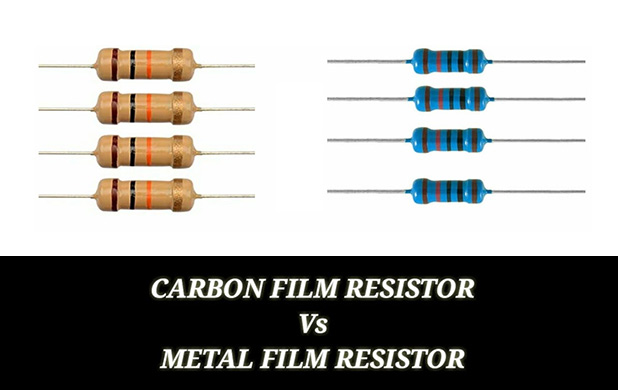
The beauty of metal film resistors is their low temperature coefficient. This means they are much less affected by changes in temperature. So, whether your laptop is getting a little warm from gaming or your hi-fi system is running for hours, these resistors will maintain their resistance value much more reliably. They are also generally more accurate right out of the box than their carbon counterparts.
Think of it like this: If the carbon film resistor is a reliable friend who's always there for you, the metal film resistor is that friend who's also a meticulous planner and always on time for everything. Both are great, but they have different strengths.
So, Why Should You Care (Really)?
You might be thinking, "Okay, that's interesting, but why should I care about the difference between carbon and metal film resistors?" It's a fair question! You're not likely to be soldering these in yourself anytime soon (unless you're bitten by the electronics bug, which is awesome!).
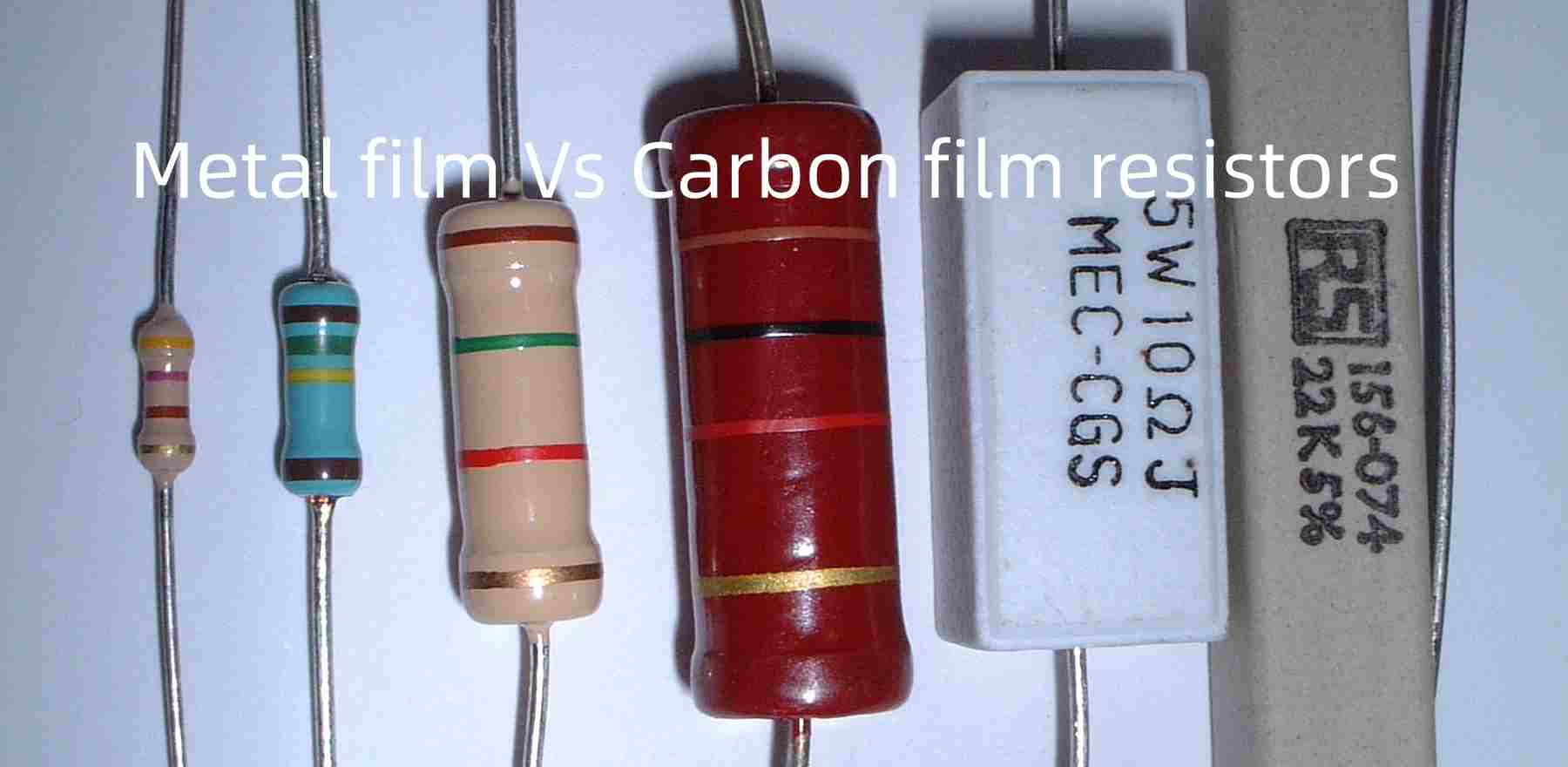
The reason to care, in a fun, everyday way, is that these tiny components are the invisible architects of your modern life. The reason your smartphone doesn't overheat while you're scrolling through cat videos, the reason your car's infotainment system responds instantly when you tap the screen, the reason your smart home devices actually "listen" to you – all of it relies on the careful work of countless resistors, including our carbon and metal film friends.
Understanding that there are different types of components, each with its own strengths, gives you a little peek behind the curtain of the magic that is modern technology. It's like knowing that different spices bring different flavors to your food – a pinch of salt here, a dash of chili there. Each resistor plays its part to create the perfect "flavor" of electronic performance.
The next time you're using a gadget, take a moment to appreciate the complex symphony of components working together. Those humble resistors, whether they're carbon film or metal film, are doing their silent, essential job. They're keeping the electricity flowing just right, making sure your digital world works smoothly, and ultimately, making your life a little bit easier, a little bit more connected, and a lot more fun.
So, next time you see those little striped cylinders, give a little nod of appreciation. They're the quiet giants of our electronic age, and we owe them a silent "thank you" for all they do!