
Cathode Ray Tube Experiment Explanation
Imagine a world without video games, without your favorite shows flickering on a big screen, without even the simple satisfaction of seeing a text message appear in an instant. It’s hard to picture, right? Well, all that magic, the very foundation of so many things we love, started with some curious scientists and a fancy glass tube.
We're talking about the humble, yet groundbreaking, Cathode Ray Tube, or CRT for short. Think of it as the grandparent of all your modern screens, from your phone to your giant TV. It might seem old-fashioned now, a bit bulky and maybe even a little bit retro-cool, but this contraption was a real game-changer.
So, what was this mysterious tube all about? Well, at its core, it was about discovering invisible forces and making them do something visible. It sounds a bit like magic, but it was pure science. And the journey to understanding it was filled with more "aha!" moments than you might expect.
Let's rewind a bit. Back in the late 19th century, scientists were like kids with a new toy, poking and prodding at electricity. They were particularly fascinated by what happened when you zapped electricity through a vacuum. What they found in these glass tubes was something truly astonishing.
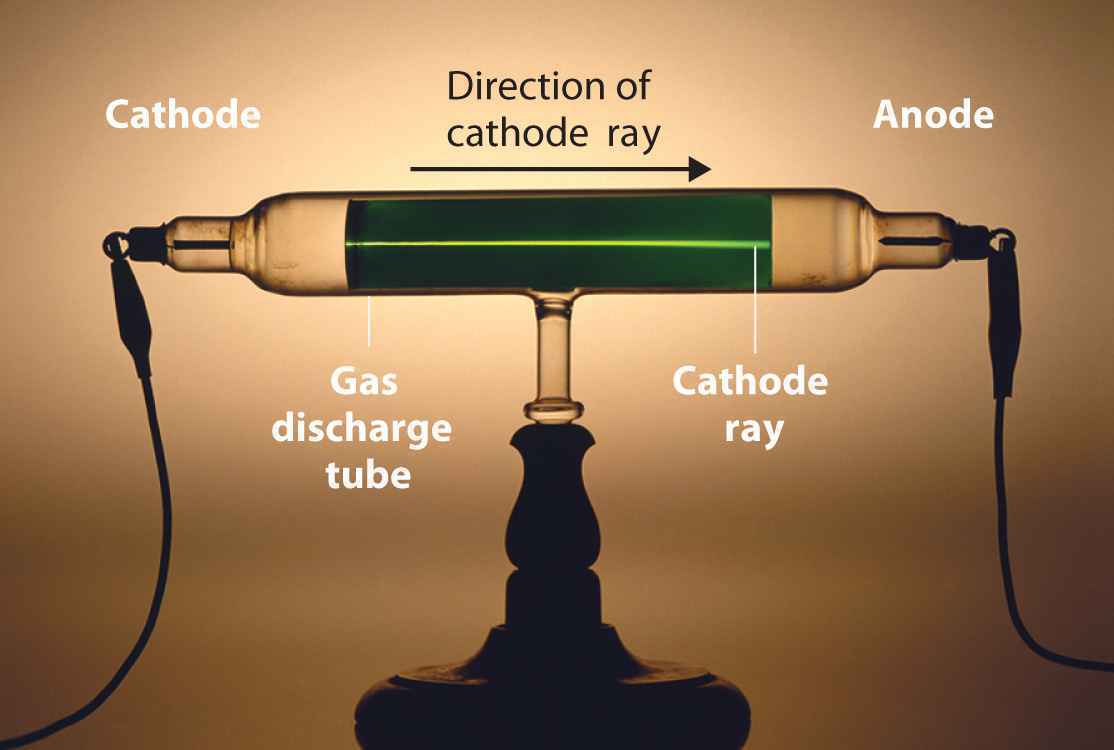
One of the main players in this exciting drama was a chap named Sir William Crookes. He was a bit of a science celebrity back then, always tinkering. He made these special glass tubes, kind of like fancy light bulbs, and pumped all the air out. Then, he'd zap them with electricity.
What he saw was pretty wild. Inside the tube, a faint glow would appear, and sometimes, shadows would be cast by objects placed inside. It was like there were invisible rays zipping around, and they could even interact with the world! Crookes called these "cathode rays" because they seemed to come from the negative end, the cathode, of his setup.
Now, these rays were a bit shy. They were invisible, which made them tricky to study. It was like trying to catch a whisper in a noisy room. But scientists are a persistent bunch, and they kept at it.

The next big step came from a fellow named J.J. Thomson. He was a brilliant mind, curious about the very nature of atoms. He took Crookes's tubes and did some clever experiments. He was essentially trying to figure out what these mysterious cathode rays were made of.
Thomson did something genius. He used magnets! He would bend the path of these invisible rays with magnetic fields. This told him something very important: these rays weren't just light or some weird energy; they were actually made of tiny particles. And these particles were negatively charged.
He even managed to measure how much charge these particles had and how much they weighed. He discovered that these particles were incredibly small, much, much smaller than even the smallest atom known at the time. He called these new little guys "corpuscles," but we know them today as electrons. Talk about a scientific bombshell!
This discovery was HUGE. It meant that atoms, which scientists thought were the fundamental building blocks of everything, weren't so fundamental after all. They could be broken down into even smaller pieces! It was like finding out that your LEGO bricks were actually made of even tinier LEGO bricks.

But how did this all lead to your TV screen? Well, the cathode ray tube wasn't just for discovering electrons. It turned out that these controllable beams of electrons could be used for more than just scientific pondering. They could be used to create images!
Imagine painting a picture, but instead of brushes and paint, you're using a super-fast, invisible beam of light. That's essentially what happened with the CRT. Scientists realized they could aim this electron beam at a special screen inside the tube.
This screen was coated with a material that would glow when hit by electrons. It was like a special kind of glitter that lit up when you shone a flashlight on it. By controlling the electron beam very precisely, scientists could make that glowing spot move around.
And how did they control it? With more clever use of electricity and magnets, of course! They could steer the electron beam left, right, up, and down, incredibly quickly. They would essentially "paint" the image line by line, across the entire screen.

It was a bit like a very, very fast artist drawing a picture with a single, glowing dot. They would draw one line, then jump back to the start and draw the next line, and the next, and the next, until the whole screen was filled with a picture. Your eyes, tricked by the speed, would see a solid, moving image.
This is how early televisions worked! That bulky box in your living room, with the slightly curved screen? That was a CRT, filled with this amazing technology. It was the window to the world, bringing news, entertainment, and even the occasional silly cartoon right into your home.
Think about the sheer wonder of it all. Here were these invisible particles, discovered through dedicated scientific inquiry, being harnessed to create pictures and stories. It’s a testament to human curiosity and ingenuity.
The CRT wasn't just about black and white shows either. As technology advanced, they figured out how to use three electron beams, each a different primary color (red, green, and blue). By blending these beams in different intensities, they could create millions of colors on the screen!

So, next time you see an old CRT television, maybe at a retro gaming convention or in a museum, don't just see a clunky old device. See a marvel of science. See the culmination of decades of experiments and brilliant minds.
See the ancestor of your sleek smartphone and your vibrant flat-screen TV. It's a reminder that even the most advanced technology has humble, and often surprisingly simple, beginnings. It’s a story of discovery, of pushing boundaries, and of making the invisible visible.
And the legacy of the CRT lives on, not just in the technology it inspired, but in the very spirit of scientific exploration that brought it to life. It reminds us that with a little curiosity and a lot of hard work, we can illuminate the world in ways we never thought possible.
So, the next time you're engrossed in a movie or a game, take a moment to appreciate the journey. Think of those early scientists, their glass tubes, and the invisible beams that paved the way for so much of the joy and connection we experience today. It’s a pretty heartwarming thought, don't you think?