
Celestron Starsense Explorer 114mm Newtonian Reflector Telescope Reviews
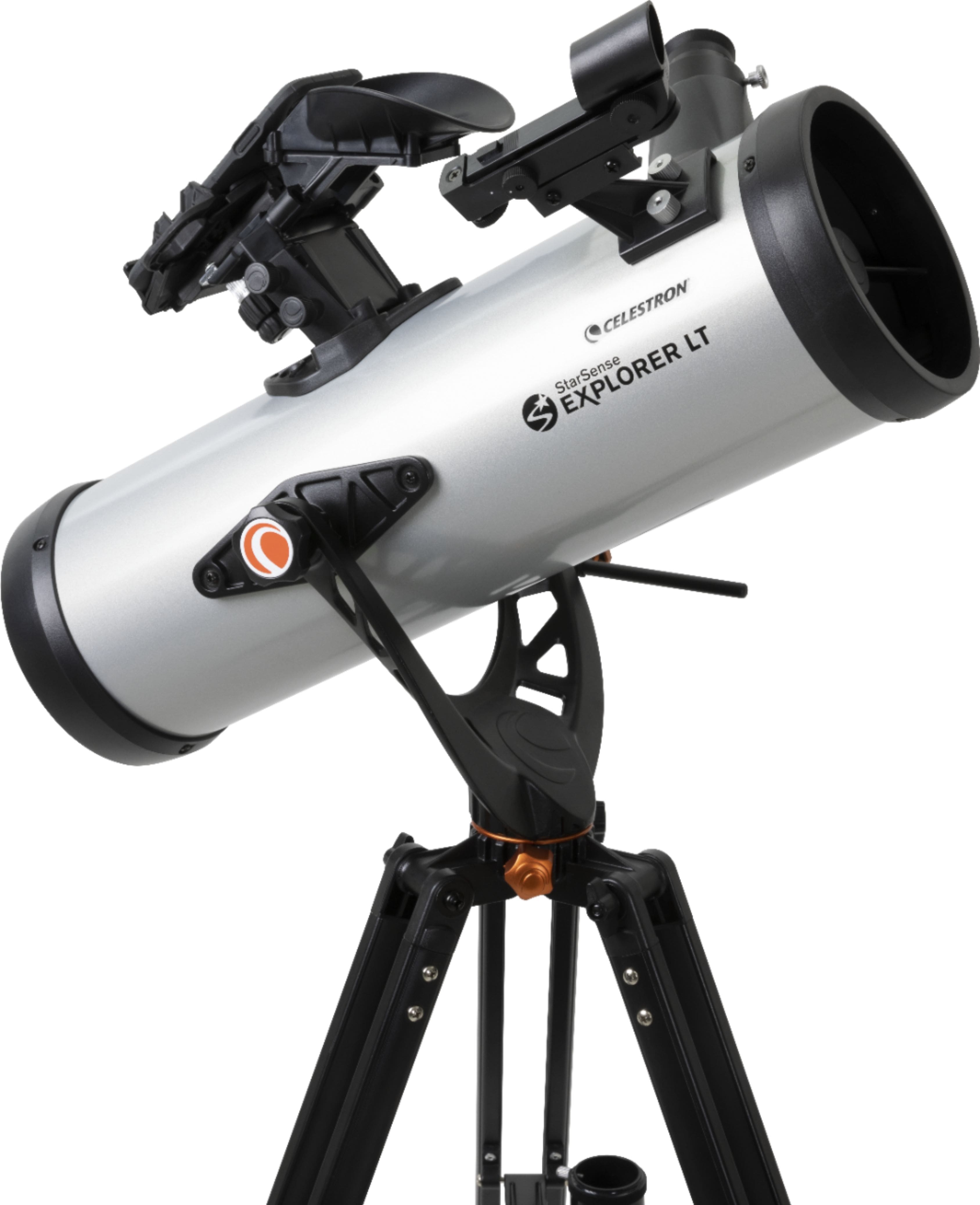
Ever found yourself gazing up at the night sky, feeling a pang of wonder, maybe even a touch of cosmic FOMO? You know, the feeling that there's a whole universe out there, and you're just… here? For a long time, diving into astronomy felt like needing a physics degree and a secret handshake. But what if I told you it doesn't have to be that complicated? Enter the Celestron StarSense Explorer 114mm Newtonian Reflector. This isn't your grandpa's clunky telescope; this is your gateway to the cosmos, made surprisingly easy. Think of it as your personal celestial concierge, guiding you through the dazzling array of stars and planets with a surprising amount of sass and simplicity. And trust me, after a long day of adulting, a little stargazing is the ultimate chill-out.
We’re talking about a telescope that’s been designed with us in mind – the curious souls who want to see more than just a few twinkles, but don't necessarily want to spend hours fumbling with charts and complicated alignment procedures. The StarSense Explorer line, and specifically the 114mm Newtonian Reflector, has been making waves for its innovative approach to making amateur astronomy accessible. It’s like the sourdough starter of telescopes – intimidating at first glance, but surprisingly rewarding once you get the hang of it, and it yields something truly beautiful.
So, what's the big deal with this particular scope? Well, let's break it down. The "114mm" refers to the diameter of its main mirror. In the telescope world, bigger generally means you can gather more light, which translates to seeing fainter objects and more detail. This 114mm mirror is a sweet spot for beginners, offering a significant step up from smaller, toy-like telescopes, without becoming unwieldy or prohibitively expensive. It’s enough power to get you hooked, to see those rings of Saturn or the craters on the Moon in crisp detail. Think of it as going from a fuzzy black and white TV to a vibrant HD screen – the difference is stunning.
The StarSense Magic: Your Smartphone is the Key
The real game-changer, the secret sauce that elevates the StarSense Explorer from a good telescope to a great one, is its StarSense technology. Remember those clunky finderscopes you had to spend ages aligning? Forget them. This system uses your smartphone. Seriously. You attach your phone to a special dock, download the StarSense Explorer app, and then… you let your phone do the heavy lifting.
Here’s how it works, and it’s honestly kind of like magic, but with algorithms. You point your phone’s camera at the sky, and the app, using your phone's camera and built-in sensors, recognizes the star patterns. It’s like a celestial fingerprint scanner. Once it knows where you're pointing, it overlays a map of the sky onto your screen, highlighting exactly what you're looking at and where to go next. It's like having a personal, super-powered tour guide whispering directions into your ear.
The app then guides you by showing you on your phone screen where to move the telescope. You literally just follow the on-screen arrows until your target is centered in the eyepiece. It’s so intuitive, it makes you wonder why this wasn’t invented sooner. It’s the kind of technology that makes you feel incredibly smart, even if all you’re doing is moving a tube around. It’s like using a GPS for the sky, and it takes the frustration out of finding anything.

No more "is that Jupiter or a really bright star?" dilemmas. The app knows. And it’s not just about finding things; it's about learning. The app provides information about the objects you’re observing, turning your stargazing session into an educational adventure. It’s like a Wikipedia for the cosmos, delivered right to your phone.
Newtonian Simplicity: Power Meets Ease
Now, about the "Newtonian Reflector" part. Don't let the fancy name scare you. Newtonian reflectors are a classic design. They use a curved mirror at the bottom of the tube to collect light and bounce it up to a smaller secondary mirror, which then directs the light into your eyepiece. They're known for offering a lot of aperture (that's the size of the mirror) for the money, making them a popular choice for serious amateur astronomers.
The 114mm Newtonian in the StarSense Explorer is mounted on a sturdy equatorial mount. Now, this might sound a bit technical, but think of it this way: an equatorial mount is designed to track celestial objects as they move across the sky. This means once you’ve found something, you can lock onto it and watch it drift gracefully without having to constantly adjust. It’s like setting your cruise control for the cosmos. This is a huge advantage for observing planets or the Moon, as they move relatively quickly.
The mount itself is generally considered quite robust for its price point. It’s designed to be stable, minimizing vibrations that can blur your view. A shaky telescope is like trying to read a book while someone is constantly jostling your arm – not ideal. The StarSense Explorer's mount aims to prevent that, giving you a clearer, steadier view. It's the kind of thoughtful design that shows Celestron really thought about the user experience.
What Can You Actually See?
This is the million-dollar question, isn't it? With the StarSense Explorer 114mm, you're not just looking at blurry smudges. You're opening up a whole new visual dimension.
The Moon: This is your initial "wow" moment. You'll see craters, mountains, and valleys in incredible detail. It's like having a front-row seat to a lunar landscape. Imagine seeing the Sea of Tranquility, where Apollo 11 landed, with your own eyes. It's a humbling and awe-inspiring experience that puts history into perspective. You’ll probably find yourself spending more time on the Moon than anywhere else initially, just mesmerized.
Planets: Saturn's rings will be a definite highlight. Yes, you'll see them! You might even catch a glimpse of its largest moon, Titan. Jupiter will show its cloud bands and, with good seeing conditions, you might even spot a couple of its Galilean moons (Io, Europa, Ganymede, and Callisto) as tiny pinpricks of light dancing around it. It's like watching a cosmic ballet, and these moons have been fascinating astronomers for centuries. Think of Galileo peering through his early telescope and seeing these same celestial bodies – you’re part of that grand tradition.
Deep Sky Objects (DSOS): This is where things get really interesting. While you won't be seeing the Hubble-quality images you see in magazines (those are taken with much larger telescopes and long exposure times), you can still see beautiful fuzzy patches that are galaxies and nebulae. You'll be able to spot the Orion Nebula, a stellar nursery where new stars are being born. It’s a cosmic cloud, and seeing it with your own eyes is like peeking into the very beginnings of stellar life. You might also see the Andromeda Galaxy, our closest large galactic neighbor. Imagine seeing light from over 2.5 million years ago! It's mind-boggling.

Star Clusters: Open clusters like the Pleiades (the Seven Sisters) will be a sight to behold, appearing as a sparkling cluster of diamonds. Globular clusters, denser collections of stars, will also be visible as fuzzy balls of light. These are ancient star cities, and seeing them is like looking back in time.
It’s important to manage expectations, of course. You're not going to see the Horsehead Nebula in all its fiery glory with this scope (that requires much more aperture and darker skies), but the objects you can see are absolutely captivating and more than enough to ignite a lifelong passion.
Practical Tips for Stellar Success
So, you've got your Celestron StarSense Explorer 114mm. Now what? Here are a few tips to make your stargazing adventures even better:
- Find a Dark Sky: This is paramount. Light pollution is the enemy of stargazing. Even a moderately dark sky will make a huge difference. Try to get away from city lights if you can. A local park or even a dark spot in your backyard can be a good starting point. Think of it as finding your own personal sanctuary from the artificial glow.
- Let Your Eyes Adjust: Give your eyes about 20-30 minutes to adapt to the dark. Avoid looking at bright lights, including your phone screen (unless it's in red-light mode, which the app provides!). This will significantly improve your ability to see fainter objects. It’s like letting your senses wake up to the wonders around you.
- Use the Red Light Mode: The StarSense Explorer app has a red light mode. This is crucial! White light ruins your night vision. Red light allows your eyes to stay adjusted to the darkness, so you can keep your celestial bearings. It's a small detail, but it makes a huge difference.
- Start Simple: Don't try to find the most obscure object on your first night. Start with the Moon, then Jupiter and Saturn. Get comfortable with the app and the telescope’s operation. Rome wasn't built in a day, and neither is a comprehensive knowledge of the night sky.
- Join a Community: Consider finding a local astronomy club. These folks are passionate and knowledgeable, and they often have viewing nights where you can meet other enthusiasts and learn from their experience. It’s a great way to share your discoveries and get advice.
- Dress Warmly: Even on a mild evening, temperatures can drop when you're out for extended periods. Layers are your friend. Think of it as preparing for a mini-expedition into the night.
- Celestron’s App is Your Best Friend: Explore all the features of the StarSense Explorer app. It’s your primary tool for navigating the sky. Familiarize yourself with its database, tours, and viewing suggestions. It’s your digital Rosetta Stone for the cosmos.
A Nod to the Cosmic Community
The Celestron StarSense Explorer 114mm Newtonian Reflector has really democratized astronomy. It’s part of a growing trend to make complex hobbies more accessible through technology. It’s akin to how the internet has made learning virtually anything accessible from our homes. Suddenly, that distant galaxy isn't just a point of light in a book; it's something you can see and interact with, all thanks to a clever blend of optics and your smartphone.
It reminds me of the early days of photography, where bulky equipment and complex processes made it a niche hobby. Now, with our phones, we're all photographers, capturing moments and sharing our perspectives. The StarSense Explorer is doing something similar for astronomy, inviting everyone to become a stargazer, a cosmic explorer in their own right.
It’s a bridge between the everyday and the extraordinary, a reminder that wonder is not confined to dusty textbooks or expensive expeditions. It’s right there, above our heads, waiting to be discovered. And with tools like this, the discovery is no longer an insurmountable challenge, but an enjoyable journey.
A Little Reflection
In our hyper-connected, always-on lives, it's easy to feel a bit overwhelmed. We're bombarded with information, notifications, and demands. Sometimes, we just need to… unplug. And what better way to do that than by looking up? The Celestron StarSense Explorer 114mm Newtonian Reflector offers that opportunity. It’s an invitation to slow down, to reconnect with something ancient and vast, and to find a sense of perspective.
Looking at the Moon, you realize how small our earthly worries can seem. Gazing at Jupiter, you’re reminded of the sheer scale and grandeur of the universe. It’s a humbling, grounding, and ultimately, incredibly uplifting experience. It’s a reminder that we are part of something much, much bigger, and that there is beauty and mystery in every direction, if only we take the time to look. And with this telescope, looking is easier and more rewarding than ever before.