
Choke Tube Chart Steel Shot

Hey there, you gun-slinging friend! Grab your coffee, let's spill some tea, or should I say, shot, about something that might sound a little… intense. We're diving into the nitty-gritty of choke tube charts and, specifically, the mysterious world of steel shot. Sounds a bit technical, right? Don't worry, we're going to break it down like we're dissecting a perfectly cooked Thanksgiving turkey. No feathers flying, just smooth sailing.
So, you've got a shotgun, which is awesome, obviously. And you're thinking about what kind of shells to feed it. Maybe you're hitting the duck blind, or perhaps you're out chasing pheasants. Whatever your game, the ammo choice is kinda a big deal. And nestled within that choice is the whole choke tube thing. It's like the shotgun's way of saying, "Hey, I can be gentle or I can be a total laser beam!"
The Choke Tube Conundrum: What's the Big Deal?
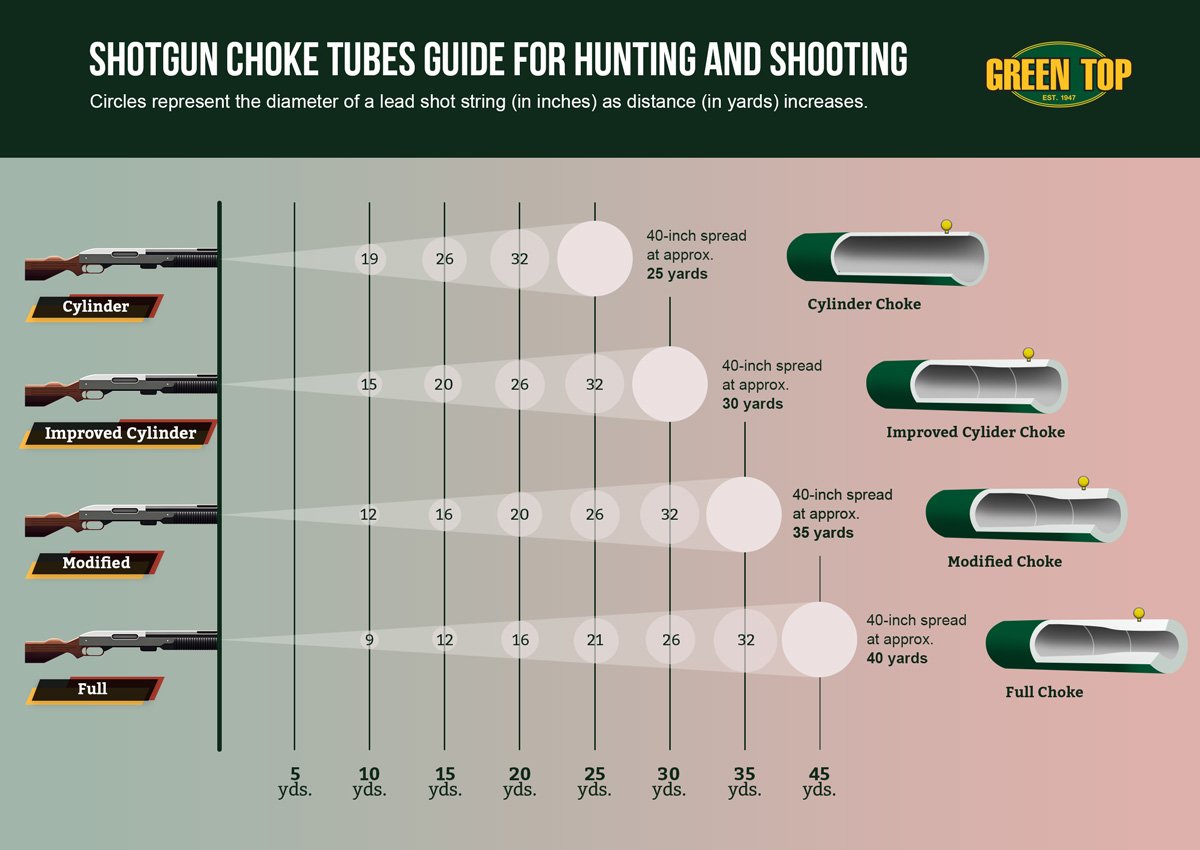
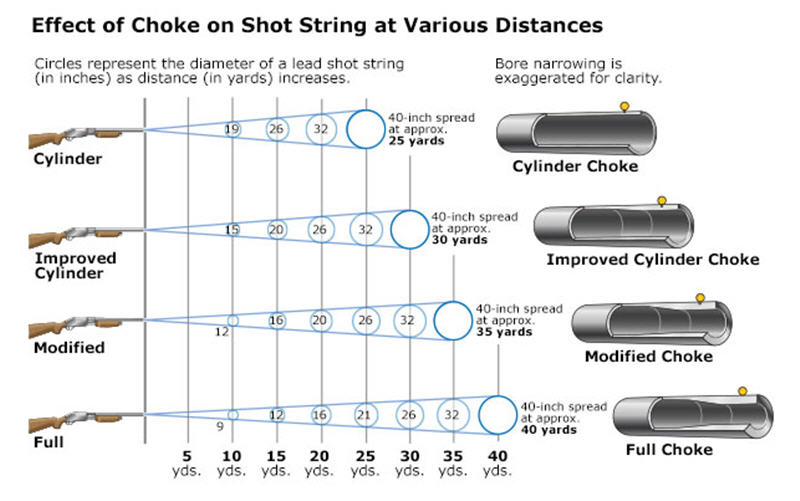
Alright, first things first. What even is a choke? Imagine the barrel of your shotgun. The very end of it. That's where the magic happens. A choke is basically a constriction at the muzzle. Think of it like the neck of a bottle. It squeezes the shot pellets together as they exit, which, surprise, surprise, affects how tightly they pattern. Makes sense, huh?
Why does this matter? Because different types of hunting, or even just shooting at different distances, require different spreads of shot. You don't want your pellets fanning out like a disco ball for a long-range shot, do you? That’s just silly. And you don't want them all clumped up like a grumpy toddler's fists for a close-up surprise party either. Variety is the spice of life, and a choke tube is the shotgun's way of offering that variety.
Now, chokes come in all sorts of flavors. There are fixed chokes, which are permanently part of the barrel. These are the OG. Then you have interchangeable chokes, which are these little screw-in doodads. These are the rockstars of the choke world, letting you swap 'em out on the fly. Super convenient, especially if you're a hunter who's always on the move and adapting to changing conditions. Who has time to carry five different shotguns, right?
Steel Shot: The Feathered Fiend's Nemesis
Okay, so we've got chokes. Now, let's talk about steel shot. You might have heard whispers, or maybe even full-blown pronouncements, about steel shot being a no-go in certain shotguns. And that's where things can get a little… sticky. Historically, lead shot was the king. It's soft, it deforms, and it patterns beautifully. But, environmental concerns and regulations have pushed us towards alternatives, and steel shot has become a popular kid on the block. Especially for waterfowl hunting, where lead is often a big no-no.
Here's the thing about steel shot: it's hard. Like, really hard. Unlike lead, which squishes a bit, steel pellets tend to hold their shape. This can be great for penetration, but it's also where the choke tube becomes super important. If you try to shove steel shot through a really tight choke, especially an older one designed for lead, you might be asking for trouble. It’s like trying to force a square peg into a round hole, but with potentially more dramatic consequences.
Why the Fuss About Steel and Tight Chokes?
So, why the drama? Well, when those hard steel pellets are forced through a very constricted choke, they can do a few things. One, they might not pass through cleanly, potentially causing some stress on the barrel. Think of it as a mild case of indigestion for your shotgun. Two, and this is the bigger concern for some folks, the pellets can actually deform or even shatter inside the choke. This can lead to inconsistent patterns and, in extreme cases, damage to the choke itself or even the barrel. Nobody wants a cracked shotgun barrel, right? That’s an expensive oopsie.
This is where the choke tube chart for steel shot swoops in like a superhero in slightly ill-fitting spandex. These charts are designed to be your trusty sidekick, guiding you through the wild west of choke constrictions and steel shot compatibility. They're not just suggestions; they're pretty much essential if you want to keep your beloved scattergun in tip-top shape and your hunting success rate ticking upwards.
Navigating the Chart: Decoding the Mysteries
Let's crack open one of these magical charts, shall we? You'll typically see a few key players. First up, you'll have the choke types. These are usually listed by their constriction, often in inches or millimeters. Think of them on a spectrum, from the widest to the tightest. You'll see things like Cylinder (no constriction, like a straight tube), Improved Cylinder (a little squeeze), Modified (more of a squeeze), and Full (a serious squeeze). And then there are the super-tight ones, like Extra Full, which are basically designed to turn your shotgun into a single-shot sniper rifle for clay pigeons… or maybe a very confused duck.
Then you’ll have your shot sizes. This is where steel shot enters the scene. You’ll see designations like F, T, BB, BBB, TTT, and even 00 Buck. These refer to the diameter of the individual steel pellets. Smaller numbers usually mean smaller pellets, and larger numbers mean bigger, heavier pellets. It’s like comparing a sprinkle to a pebble. And guess what? Different shot sizes behave differently when they're forced through a choke.
The chart then does the Herculean task of matching these two elements. It will tell you, in no uncertain terms, which choke constrictions are generally considered safe for steel shot of a particular size. It’s like a compatibility test for your shotgun's innards. You’ll notice that for steel shot, especially the smaller, harder shot sizes, you’ll often be steered towards the more open chokes. Cylinder and Improved Cylinder are usually the safest bets, especially for a lot of modern shotguns. Modified might be okay for certain larger steel shot sizes, but you’re generally looking at wider openings for the best results and safest operation.
The Golden Rule: When in Doubt, Stay Open!
Here’s a little nugget of wisdom that’s worth its weight in gold: When in doubt, use an open choke. Seriously. It’s always better to err on the side of caution. A slightly wider spread at a distance is a lot less damaging than a potentially compromised barrel. Think of it as preventative maintenance for your firearm. You wouldn’t chug a gallon of super-concentrated cleaning fluid in your engine, would you? Same principle applies here.
The charts often have little footnotes and asterisks, which are like the secret whispers of gunsmiths. They might mention specific barrel types, like shotguns with back-bored barrels or those with advanced barrel technologies. These can sometimes handle slightly tighter chokes with steel, but you always want to double-check. Don't assume! Your shotgun's manual is your best friend here, alongside the choke manufacturer's recommendations. They're the wise elders of the firearms world, and they’ve seen it all.
Beyond the Chart: Practical Tips and Tricks
So, you've consulted the chart, you've chosen your choke, and you're feeling confident. But there's a little more to this dance. The quality of your choke tubes matters. Aftermarket choke tubes from reputable brands are often designed with steel shot in mind. They might have different porting or internal designs that help with shot flow and reduce stress. If you're using the factory-provided chokes, definitely cross-reference them with the manufacturer's recommendations.
And what about your shotgun's barrel? Some older shotguns simply weren't designed to handle steel shot, even with open chokes. If your gun predates the widespread adoption of steel shot, or if it has a very thin-walled barrel, you might want to consult a qualified gunsmith before you even think about loading steel. They can give you the definitive word on what your particular firearm can handle. They’re like the doctors for your guns, and they know all the medical history.
.png)
Then there's the shot size and velocity. Hotter loads of steel shot, especially smaller sizes, can be more prone to deformation in tighter chokes. So, if you're shooting lighter, faster loads, you might want to be even more conservative with your choke selection. It’s a delicate balance, and sometimes experimentation (within safe limits, of course!) is key.
And let's not forget about the pattern testing! This is the fun part, really. Once you've got your choke and your ammo sorted, take some time at the range to see how your shotgun is patterning. Get a big piece of paper, step back to your intended hunting distance, and let loose. You want to see a nice, even distribution of shot. If you're seeing weird gaps or dense clumps, it might be time to tweak your choke. It’s like a taste test for your shotgun’s accuracy.
The Bottom Line: Safety First, Fun Always!
Ultimately, the choke tube chart for steel shot is there to ensure you have a safe and enjoyable shooting experience. It’s not meant to be a barrier, but a guide. Think of it as the instruction manual for your shotgun’s personality. By understanding how different chokes interact with steel shot, you can make informed decisions that protect your firearm and improve your success in the field.
So, the next time you're staring down a box of steel shot, don't panic. Just pull up that handy-dandy choke tube chart. Take a deep breath, consult the wise words on the page, and choose wisely. Your shotgun will thank you, and hopefully, that duck or pheasant will too. Now go out there and make some memories! And remember, always, always prioritize safety. Happy shooting!