
Cost Of Stainless Steel Vs Aluminum
Hey there, DIY dynamos and kitchen wizards! Ever stared at a shiny new appliance or a fancy set of cookware and wondered, "What's the deal with all these metals?" Today, we're diving headfirst into the dazzling world of stainless steel and aluminum, trying to figure out which one is your wallet's best friend and which one might make you do a little happy dance when you see the price tag. Think of this as your super-chill, no-pressure guide to metal-onomics. No confusing jargon, just good ol' chat, like we’re sipping coffee and dissecting the pros and cons of, well, shiny things!
So, you're eyeing that sleek toaster, or maybe dreaming of a new set of pots and pans. Chances are, it's going to be either stainless steel or aluminum. They’re the dynamic duo of kitchenware and so much more, but they’ve got their own personalities, and importantly, their own price points. Let’s break it down, shall we? It’s not rocket science, just a little peek behind the curtain of your everyday objects.
First up, let’s chat about our ever-popular friend, stainless steel. It’s the reliable, slightly-more-expensive cousin in the metal family. You know, the one who always shows up on time, looks good in a suit, and probably has a savings account. When we talk about stainless steel, we're generally talking about an alloy, which is basically a fancy word for a mix of metals. The star of the show here is iron, but it gets a superhero upgrade with the addition of chromium. That chromium is the real MVP, giving stainless steel its legendary rust-resistance and its beautiful shine. It's like adding a cape and superpowers to regular iron!
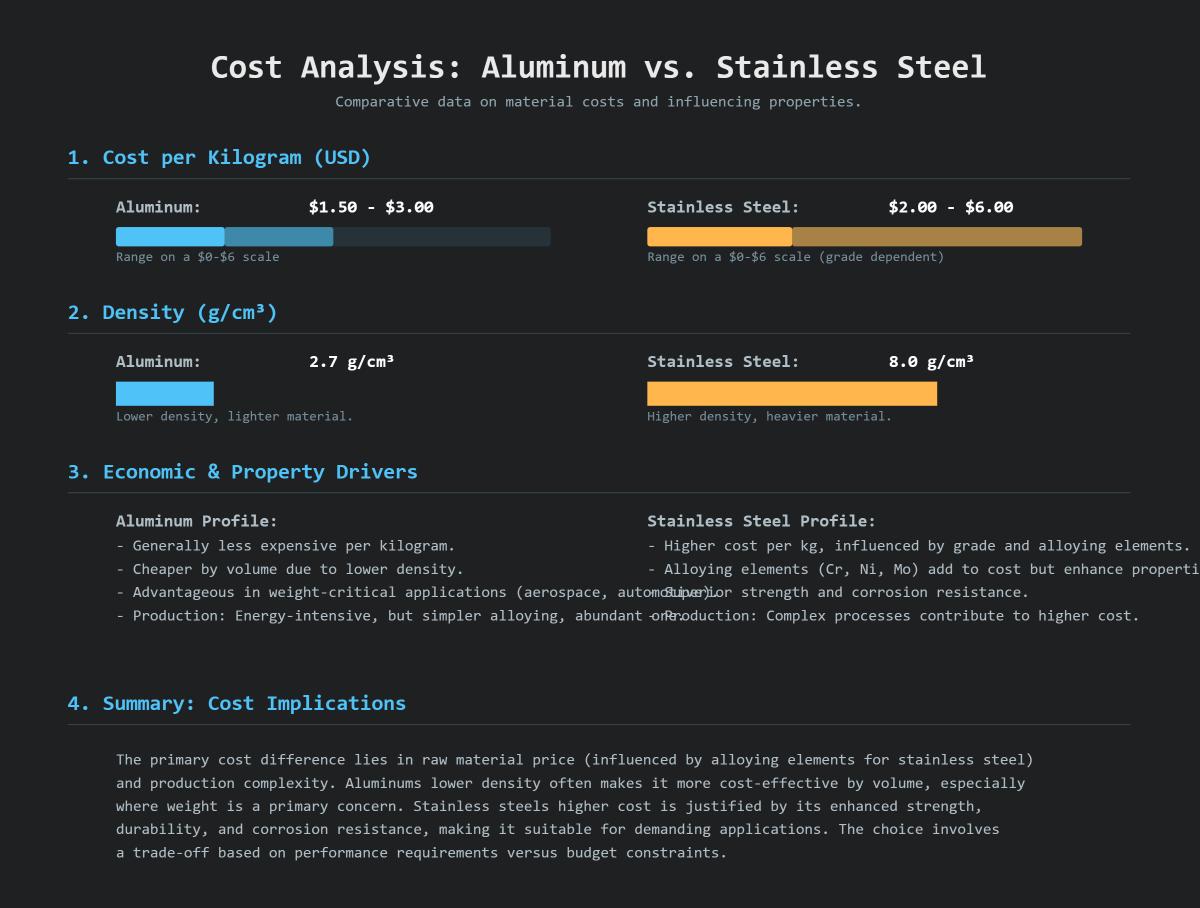
Now, about the cost. Generally speaking, stainless steel is going to set you back a bit more than its aluminum counterpart. Think of it this way: you’re paying for that extra oomph, that durability, and that resistance to all the gunk and grime that life (and your cooking experiments) can throw at it. It’s an investment, really. You buy a good stainless steel pot, and chances are, your grandkids will be fighting over it. It's built to last, which is a big part of why it costs more.
Why does it cost more, you ask? Well, a few reasons. The raw materials for stainless steel, particularly the chromium and nickel (which is often added to make it even more corrosion-resistant and give it that lovely ductile quality), are generally more expensive than the materials needed for aluminum. Plus, the manufacturing process for stainless steel can be a bit more involved and energy-intensive. It’s not just melting and molding; there’s often more precision and higher temperatures involved to get that perfect blend and finish. So, when you see that stainless steel kettle, you’re not just paying for the metal; you’re paying for the craftsmanship and the quality ingredients, so to speak.
But oh, the benefits! The durability of stainless steel is second to none. It’s tough. It’s not going to dent easily if you accidentally drop it (though please, try not to! We don’t want any kitchen casualties). It’s also fantastic at resisting scratches, although not entirely invincible. And the hygienic aspect? Amazing! It's non-porous, meaning it won't absorb flavors or odors. So, your garlic-infused olive oil won't suddenly taste like yesterday's fish fry. Score!
Think about your kitchen sink. Chances are, it’s stainless steel. Why? Because it can handle water, soap, scrubbing, and all sorts of kitchen chaos without getting all rusty and sad. It’s the workhorse of the kitchen, and for good reason. It’s also often preferred for cookware because it distributes heat pretty evenly, though sometimes it needs a little help from an aluminum core for super even cooking. More on that later!
Now, let’s switch gears and talk about our other metal buddy, aluminum. This is the friendly, lightweight, and generally more budget-friendly option. Think of aluminum as the energetic younger sibling who’s always up for an adventure and doesn’t cost a fortune to bring along. It’s super common, and you'll find it everywhere, from your soda cans to airplane parts (which is pretty cool, right?).
In terms of cost, aluminum usually wins the race to your wallet. It's significantly cheaper than stainless steel, which is a huge win for folks on a budget or those who just like to get more bang for their buck. You can often get more aluminum items for the same price as fewer stainless steel ones. It’s like buying in bulk, but for your kitchen gadgets!
Why is it so much cheaper? Well, for starters, aluminum is much more abundant in the Earth's crust than the elements needed for stainless steel. This means it’s easier and less costly to mine and extract. The processing of aluminum is also generally less energy-intensive compared to stainless steel production. So, from the ground up, it’s a more economical material to work with. Less fancy ingredients, less complicated recipe, and voilà – a lower price tag!
One of the biggest advantages of aluminum is its lightweight nature. Seriously, you can practically flick an aluminum pot across the room (again, please don't!). This makes it super easy to handle, especially for larger items like roasting pans or pots. Moving heavy cookware around can be a workout, and aluminum spares you that extra bit of effort. Your wrists will thank you!
Aluminum is also a fantastic heat conductor. This means it heats up really fast. Like, "oops, I forgot about that simmering sauce" fast. This can be a great thing for quick cooking, but it also means it can heat unevenly if not designed properly. You might get hot spots where your food burns, while other parts are still barely warm. It’s like a sprinter – super fast, but sometimes a bit erratic.
However, pure aluminum can be a bit reactive. This means it can sometimes interact with acidic foods (think tomatoes or lemon juice), potentially leaching a bit of aluminum into your food and giving it a metallic taste. Not ideal for that perfectly seasoned marinara. This is why you often see aluminum cookware with a non-stick coating or anodized. Anodizing is a process that makes the aluminum surface harder and more non-reactive, sort of like giving it a protective shield. It’s a clever way to get the benefits of aluminum without the drawbacks.

So, we’ve got our cost-conscious, lightweight aluminum, and our durable, rust-defying stainless steel. What’s a consumer to do? Well, it really depends on your needs and your budget. For everyday cooking where budget is a major concern, or if you prioritize lightweight ease of use, aluminum (especially anodized or coated) can be a fantastic choice.
But for those who are looking for something that will last a lifetime, resists stains and rust like a champ, and offers a premium look and feel, stainless steel is often the way to go. It’s the workhorse that you can rely on, day in and day out, without worrying about it falling apart or looking shabby.
Here’s where things get really interesting, though. Have you ever noticed pots and pans that look like they have a bit of both metals? That’s often because manufacturers know the strengths and weaknesses of each. Many high-quality stainless steel cookware pieces have an aluminum core or base. Why? Because aluminum is such a great conductor of heat! By sandwiching a layer of aluminum between layers of stainless steel, you get the best of both worlds: the durability, non-reactivity, and hygiene of stainless steel on the outside, and the fast, even heating of aluminum on the inside. It’s like having your cake and eating it too, but in cookware form! This combination is often more expensive than pure aluminum but can be a fantastic compromise if you’re looking for excellent performance without the absolute top-tier stainless steel price tag.
Think about it: a stainless steel frying pan with an aluminum core will heat up quickly and evenly, preventing those dreaded hot spots, while still being easy to clean and resistant to scratches. It’s a smart design that leverages the strengths of both materials. This is where you really see the value in understanding the differences. You’re not just buying a metal; you're buying a performance characteristic.
So, to sum it up: Stainless steel is generally more expensive because of the cost of its components (chromium, nickel) and its manufacturing process, but it offers superior durability, rust resistance, and a premium, hygienic finish. Aluminum is cheaper due to its abundance and simpler processing, and it’s lightweight and a fantastic heat conductor, but it can be more reactive and prone to scratching or denting if not treated or designed properly (like through anodizing).
When you’re out shopping, don’t be afraid to pick things up. Feel the weight. Read the labels. Is it pure aluminum? Is it stainless steel? Does it have an aluminum core? These little details can make a big difference in both price and performance. And hey, if you’re just starting out or need some affordable basics, don’t discount good quality aluminum! It’s a perfectly valid and often excellent choice for many applications.
Ultimately, whether you’re building a dream kitchen from scratch or just looking to replace that one wobbly spatula, understanding the difference between stainless steel and aluminum can help you make a smarter purchase. You’ll get what you need, at a price you’re comfortable with, and with a little knowledge, you might just find yourself appreciating those shiny objects a whole lot more.
So, next time you’re admiring that gleaming cookware or choosing a new appliance, you’ll know you’re not just looking at metal; you’re looking at a decision, an investment, and a little piece of engineering designed to make your life a bit easier and a lot tastier. Go forth, fellow metal mavens, and shop with confidence! May your pots be ever non-stick (if you want them to be) and your wallets always a little bit happier!