
Define Metals And Non Metals
Hey there, science explorers! Ever looked around your house and wondered what makes all the amazing stuff we use work? Well, get ready for a super fun adventure into the world of elements! Think of elements as the alphabet of the universe, the fundamental building blocks of everything. And today, we're going to talk about two of the coolest "letters" in that alphabet: metals and nonmetals!
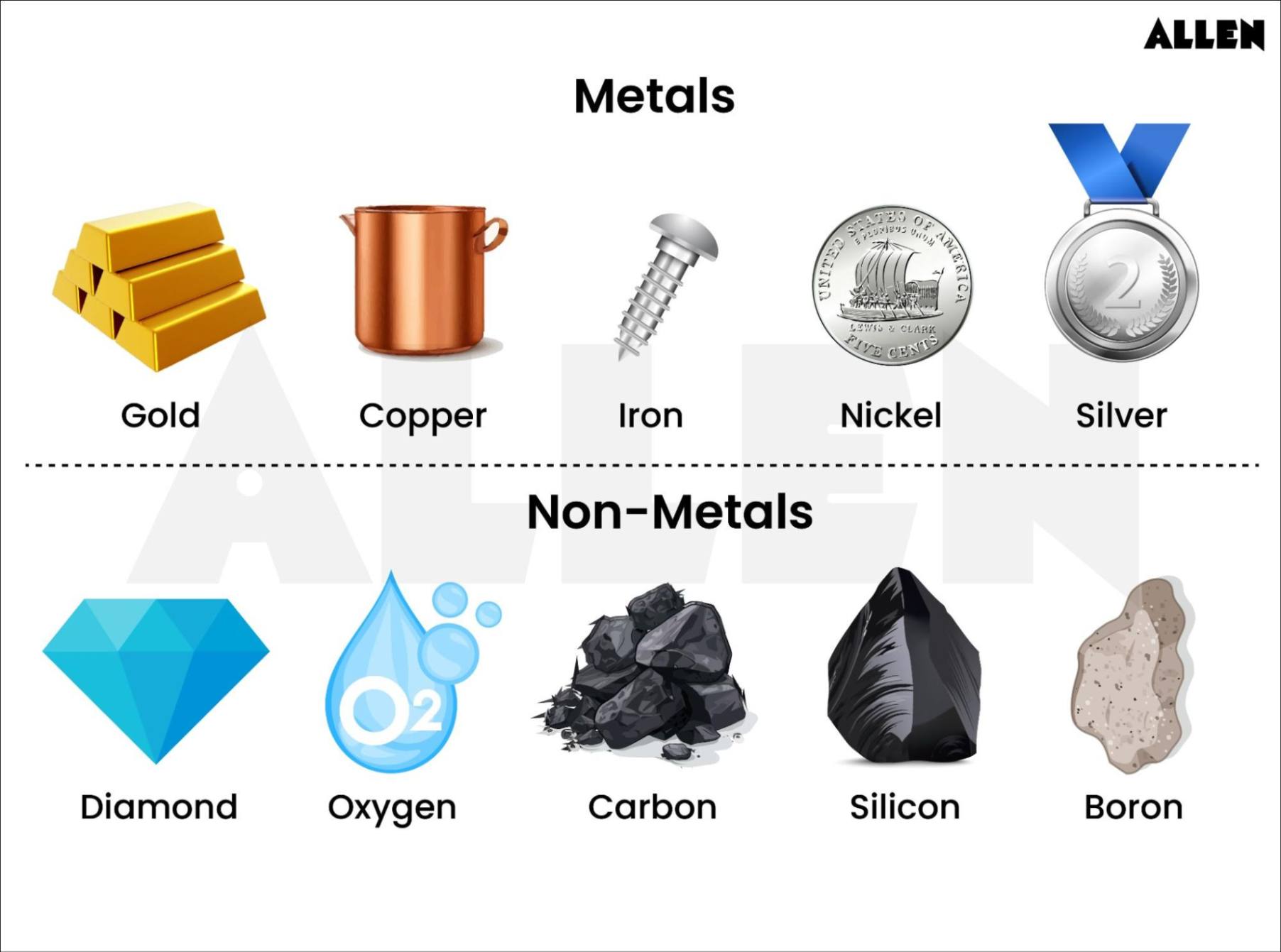
Imagine the universe threw a massive party, and all the elements showed up. The metals? Oh, they're the life of the party! They’re like the shiny, energetic dancers who can't help but share their sparkle. They love to get together, form bonds, and create all sorts of awesome things. Think of your trusty spoon, your bike frame, or even the wires that bring electricity to your video games – yep, that’s the magical work of metals!
What makes a metal so special? Well, for starters, they’re usually shiny. Like, really shiny. Think of a polished silver coin – dazzling, right? They're also fantastic at conducting heat and electricity. That's why your pots and pans (made of metals, of course!) get hot so quickly, and why we use metal in electrical cords to safely guide that power. Plus, most metals are super malleable, meaning you can hammer them into thin sheets (like tin foil for your lunch!), and ductile, meaning you can stretch them into long wires (like those amazing headphone cords that never seem to tangle… okay, maybe sometimes).
Metals are the ultimate multi-taskers of the element world. They're strong, they're flashy, and they're always ready to lend a hand (or a current!) to make our lives easier.
Let's talk about some famous metal personalities. You've got iron, the strong, silent type that builds our skyscrapers and bridges. Then there's copper, the friendly conductor that’s all over our electrical systems. And who can forget gold and silver? The glamorous superstars that adorn our jewelry and have been prized for millennia. Even the seemingly ordinary aluminum in your soda can is a metal, making it light, strong, and recyclable. These guys are everywhere, working tirelessly behind the scenes to keep our world humming.
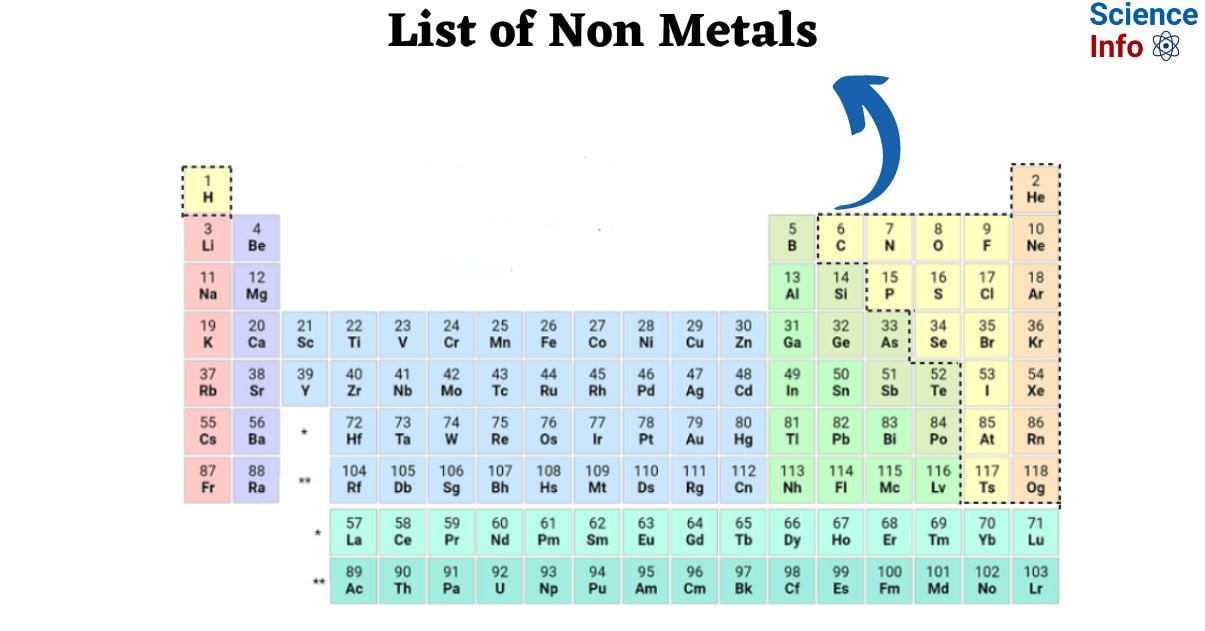
Now, let's switch gears and meet the nonmetals. If metals are the flashy dancers, nonmetals are the thoughtful organizers, the quiet thinkers, and the essential breath of fresh air. They’re often a bit more reserved, but don't underestimate their importance! Without them, life as we know it wouldn’t exist.
Think about oxygen – the stuff you're breathing in right now! That's a nonmetal. Or carbon, the building block of all living things, from your own body to a giant redwood tree. These guys are the quiet heroes.
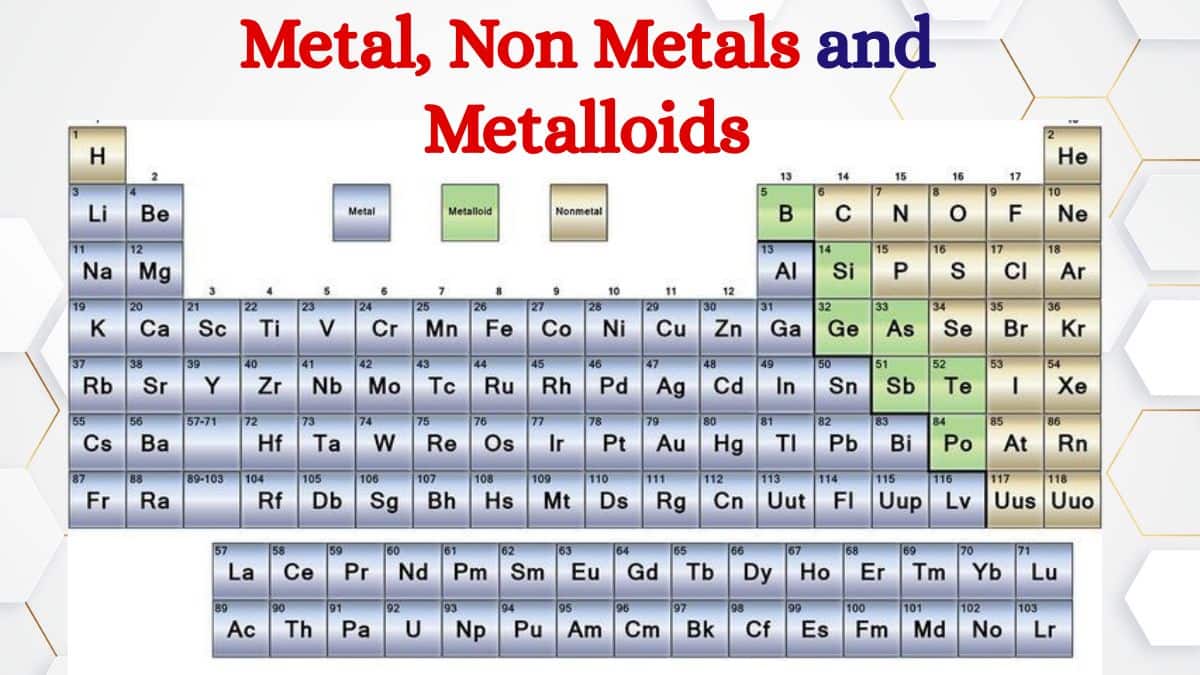
Nonmetals come in all sorts of shapes and sizes, and they don’t always look as glamorous as metals. Some are gases, like that vital oxygen or the noble gas helium that makes balloons float. Others are solids, like the brittle sulfur that gives matches their distinctive smell, or the dark, mysterious carbon in your pencil lead. And some are even liquids at room temperature, like the famously spooky bromine. Unlike metals, nonmetals aren't usually shiny, and they're not great at conducting heat or electricity. In fact, they’re often quite the opposite – they’re insulators, meaning they're good at keeping heat and electricity from zipping through them. This is super useful for things like the plastic coating on your electrical wires, which stops you from getting a shock!
Nonmetals might not be as flashy, but they are the absolute essentials. They are the air we breathe, the foundations of life, and the silent guardians that protect us.
what are metals and non metals?

Let's shine a light on some nonmetal superstars. We’ve got hydrogen and oxygen, the dynamic duo that form water – the elixir of life! Then there's nitrogen, which makes up most of the air around us and is crucial for plant growth. And let's not forget silicon, which, while technically a metalloid (a sort of in-between element), is incredibly important in our digital world, forming the basis of computer chips. Even the colorful chlorine in your swimming pool is a nonmetal, keeping things clean and safe.
So, there you have it! Metals and nonmetals: two incredible groups of elements that work together in perfect harmony to create the amazing world we live in. Metals bring the sparkle, the strength, and the conductivity, while nonmetals provide the essential ingredients for life, protection, and the very air we breathe. Next time you pick up a metal spoon or take a deep breath, give a little nod to these fundamental building blocks. They're the unsung heroes of our everyday adventures, making everything possible with their unique brilliance!