
Definition Of Metalloid In Physical Science
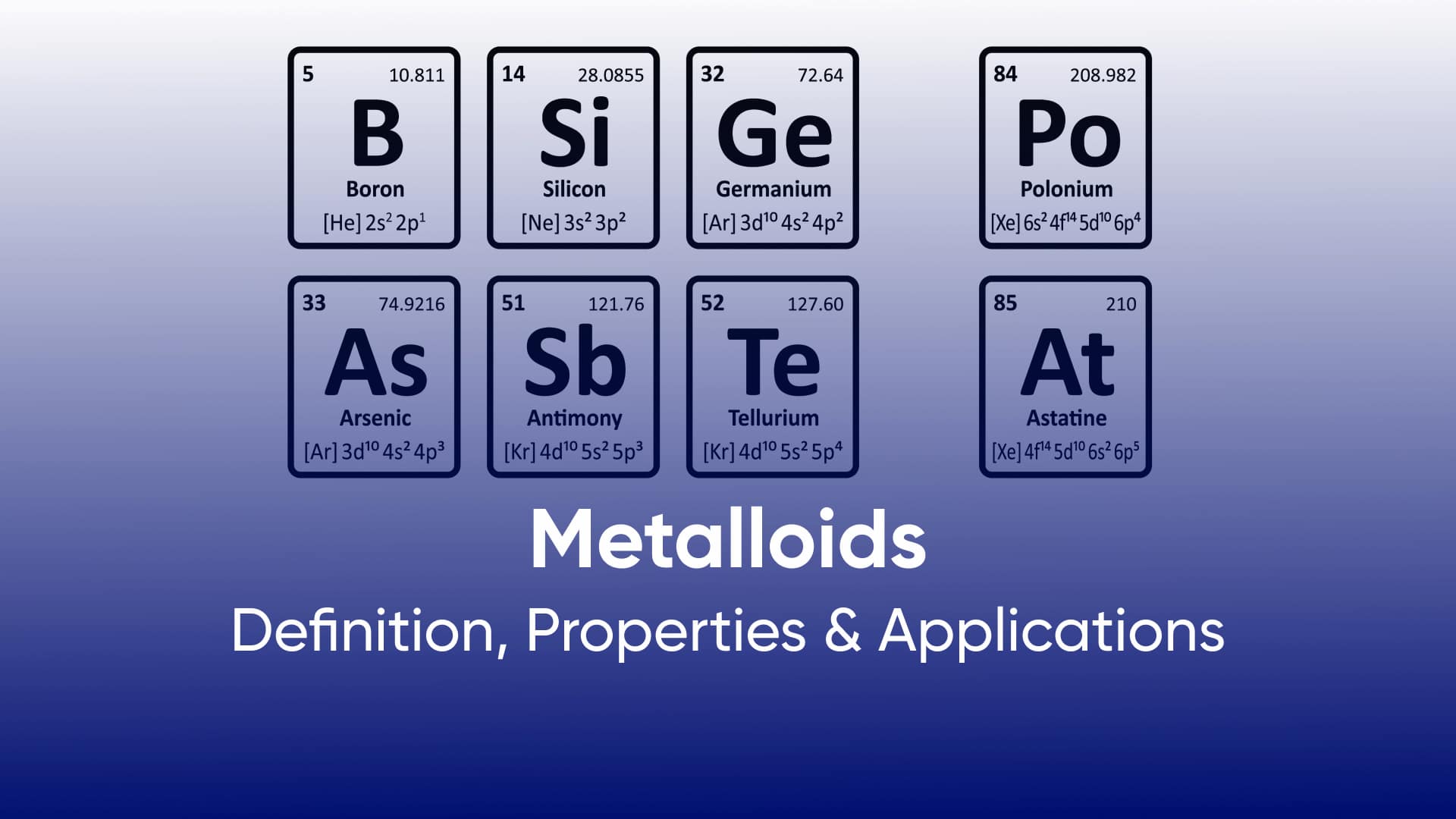
Hey there, science curious folks! Ever feel like you're stuck in the middle of two things? Like you can't decide if you want pizza or tacos for dinner? Well, guess what? The universe has its own versions of those indecisive eaters, and in the wild and wonderful world of physical science, we call them metalloids!
Now, before you start picturing tiny robots with tiny identity crises, let's break it down. You've probably heard of metals, right? Think of your shiny silverware, your sturdy car parts, the bling on your favorite jewelry. Metals are the rockstars of the periodic table. They're usually solid, super shiny, conduct electricity like a superhero's power line, and are generally a bit… well, metallic. They love to share their electrons, making them great conductors.
Then you have the nonmetals. These guys are a bit more reserved. Think of the air you breathe (mostly nitrogen and oxygen), the carbon in your pencil, or that rubber ducky floating in the bath. Nonmetals are all over the place – some are gases, some are solids, they might be colorful or dull, and they're not exactly jumping at the chance to conduct electricity. They're a little more particular about their electrons.
So, where do our fabulous metalloids fit in? They’re the ultimate trendsetters, the bridge builders, the ultimate "it's complicated" members of the elemental family! They’re like that friend who can totally rock both a fancy dress and ripped jeans. They borrow a little bit from the metals and a little bit from the nonmetals, creating a unique blend of properties that makes them super special.
Imagine a playground. You've got the super-fast kids zooming around (metals) and the kids happily building sandcastles (nonmetals). The metalloids? They're the ones who can do both! They can run really fast if they feel like it, but they’re also pretty good at the detailed sandcastle building. It’s all about context, you see!
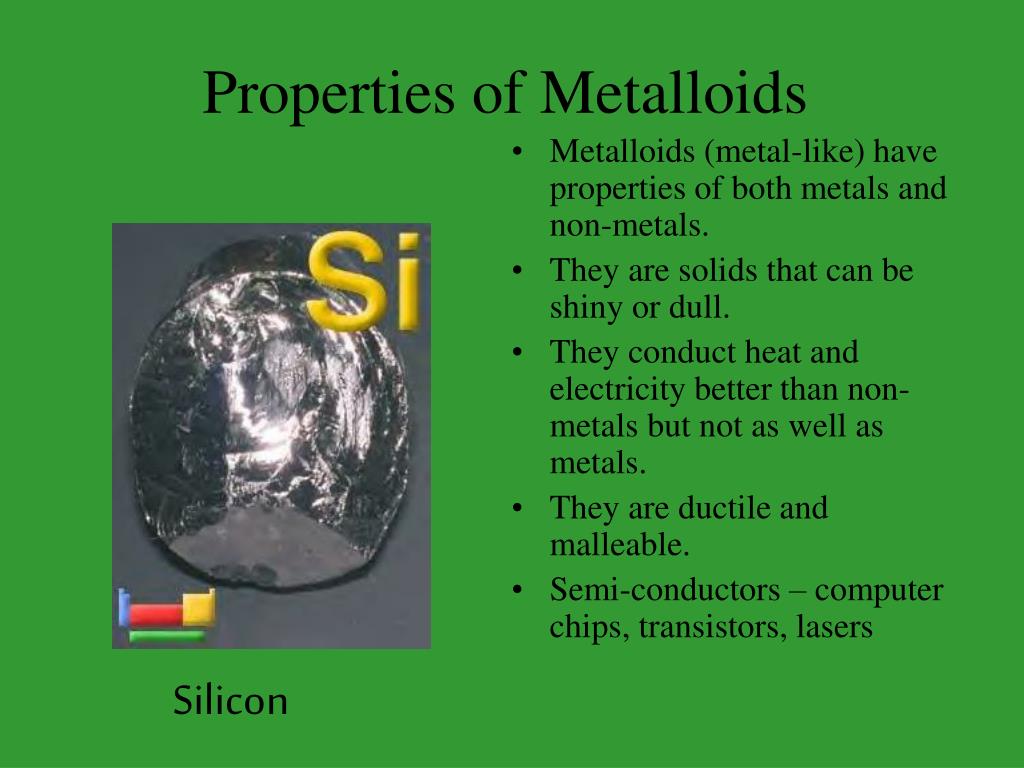
Let’s get a bit more specific, but keep it fun! We’re talking about elements like Boron, Silicon, Germanium, Arsenic, Antimony, and Tellurium. Don't worry about memorizing them all right now, unless you're planning a chemistry-themed party (highly recommended!).
Take Silicon, for example. This is the rockstar of the computer chip world. Your smartphone? Your laptop? The smart fridge that judges your late-night snack choices? All powered by tiny little silicon chips. Silicon, by itself, is a solid and looks a bit shiny, much like a metal. But it's not quite as enthusiastic about conducting electricity as, say, copper. This "just enough" conductivity is precisely what makes it perfect for electronics. It's like having a dimmer switch for electricity, allowing us to control the flow of information. Without our versatile metalloids, our digital lives would be stuck in the dark ages!

And then there's Arsenic. Now, Arsenic has a bit of a reputation. It can be quite poisonous in large amounts, which is a characteristic sometimes associated with nonmetals. However, in smaller, controlled doses and in specific compounds, it can be incredibly useful, even having some metallic-like behaviors. It’s like a chef who can handle super-spicy peppers – dangerous in the wrong hands, but a culinary genius in the right ones! Arsenic pops up in things like semiconductors and even some lasers. Who knew something so… potent could be so useful?
Think about it this way: Metals are like a full-on, blazing campfire – lots of heat and light! Nonmetals are like a cool, refreshing drink – sometimes you need them, sometimes you don't. Metalloids? They're like a perfectly regulated fireplace. You can control the warmth, the glow, and the flames. They offer a balance, a middle ground, a bit of control that’s absolutely crucial for a zillion modern technologies.
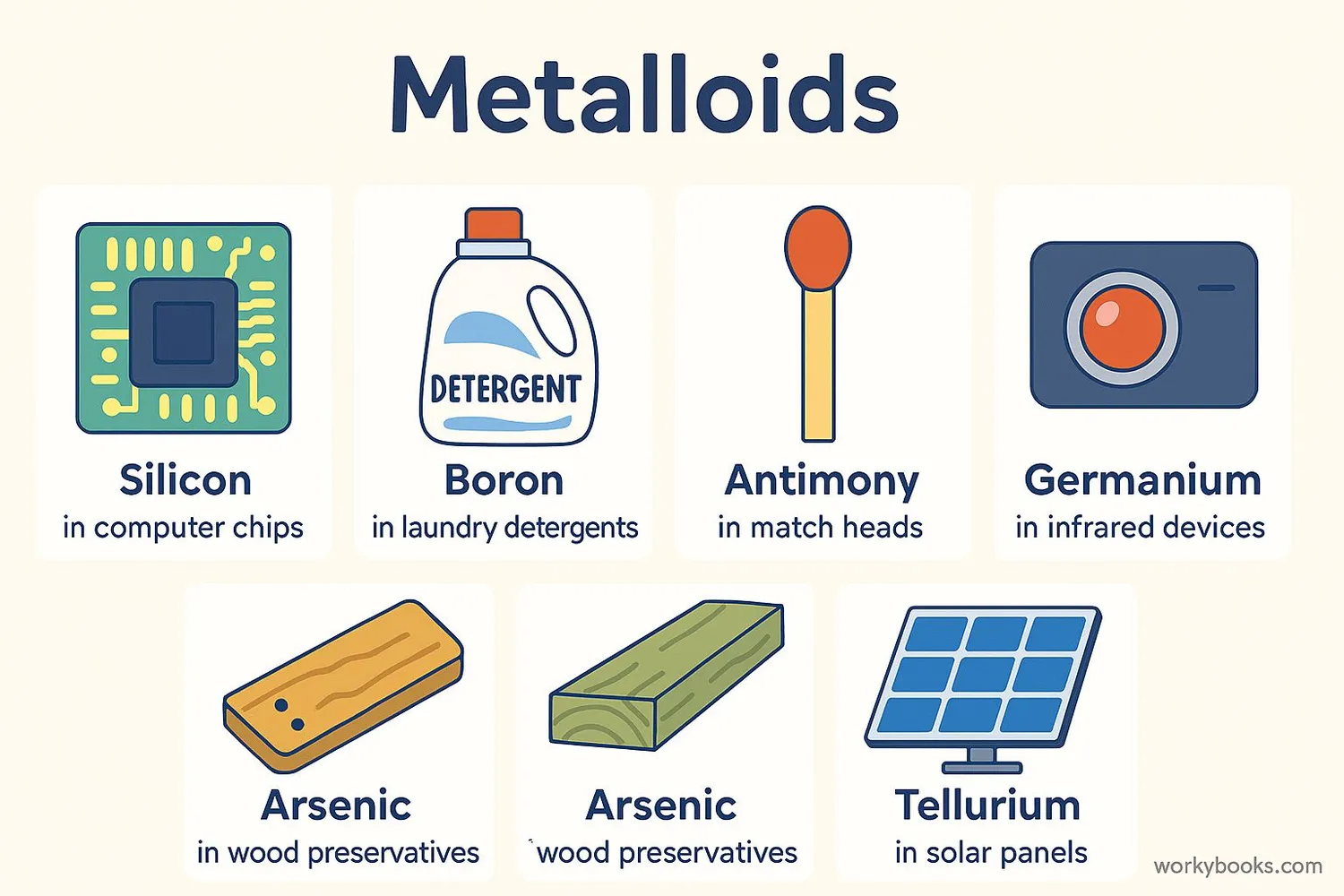
So, the next time you’re using your phone, marveling at a computer screen, or even just admiring some pretty glass (many metalloids are used in glassmaking!), give a little nod to our amazing metalloids. They might not be as flashy as pure gold or as essential as the air we breathe, but they are the unsung heroes, the quiet connectors, the elements that make so much of our modern world possible. They’re the ultimate scientific Swiss Army knife, ready to be a little bit of this and a little bit of that, all rolled into one. Aren't they just the coolest?
They're the shy celebrities of the periodic table, always working behind the scenes, making sure everything runs smoothly. And honestly, that kind of quiet competence? That’s something we can all admire. So hail to the metalloids, the elements that truly have it all – or at least, a really good mix of it!