
Different Melting Points Of Metals
Ever notice how some things just… melt differently? Like, you put a chocolate bar in your pocket on a hot day, and BAM! Instant mess. But then you’ve got your trusty old frying pan, which has probably seen more heat than a dragon’s breakfast, and it’s still hanging in there, solid as a rock.
Well, guess what? Metals are kinda the same way. They all have their own personal quirks when it comes to melting. It’s not just about being "hot" or "cold"; it's about how much oomph you need to give them to turn from a solid, dependable hunk into a liquidy, goopy puddle. Think of it like different people’s tolerance for spicy food. Some folks can handle a ghost pepper like it’s a mild jalapeño, while others break a sweat over a dash of paprika. Metals are the same, just with extreme heat instead of capsaicin.
This whole "melting point" thing is super important, even if you don't realize it. It’s what makes our world work the way it does, from the teeniest electronic gizmo in your phone to the skyscraper you might work in.
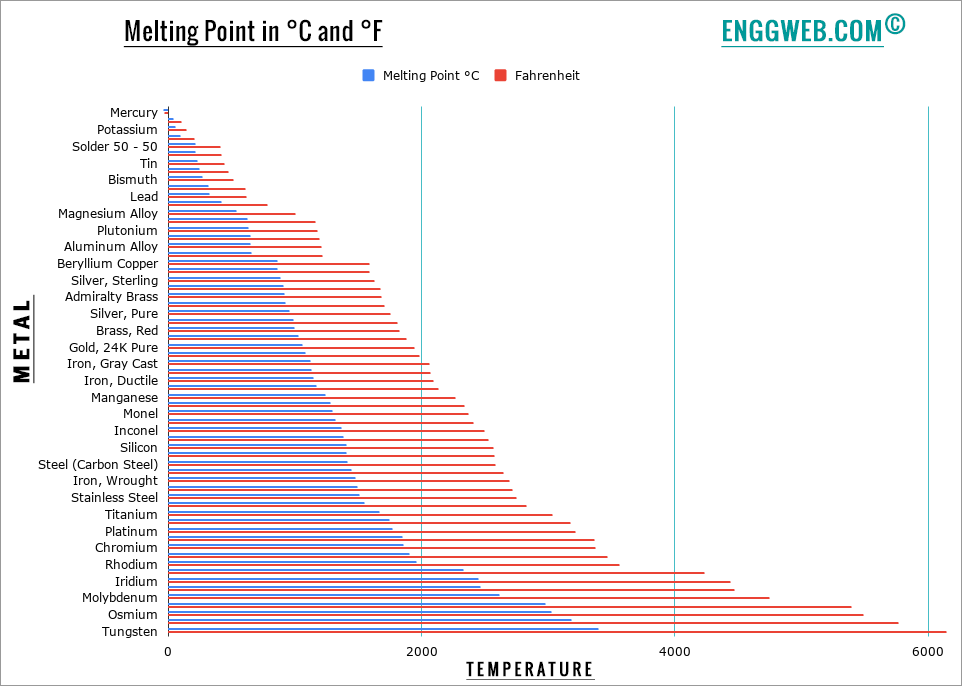
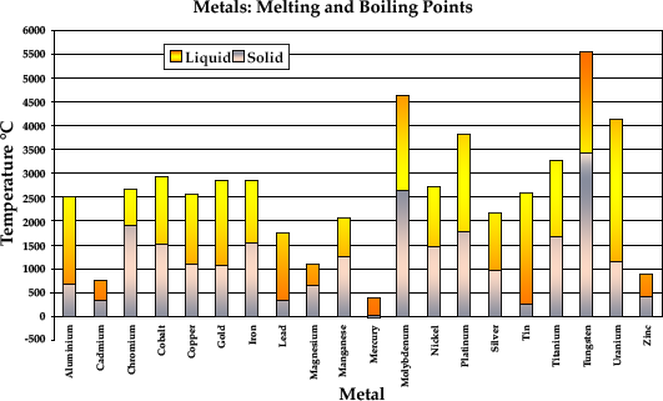
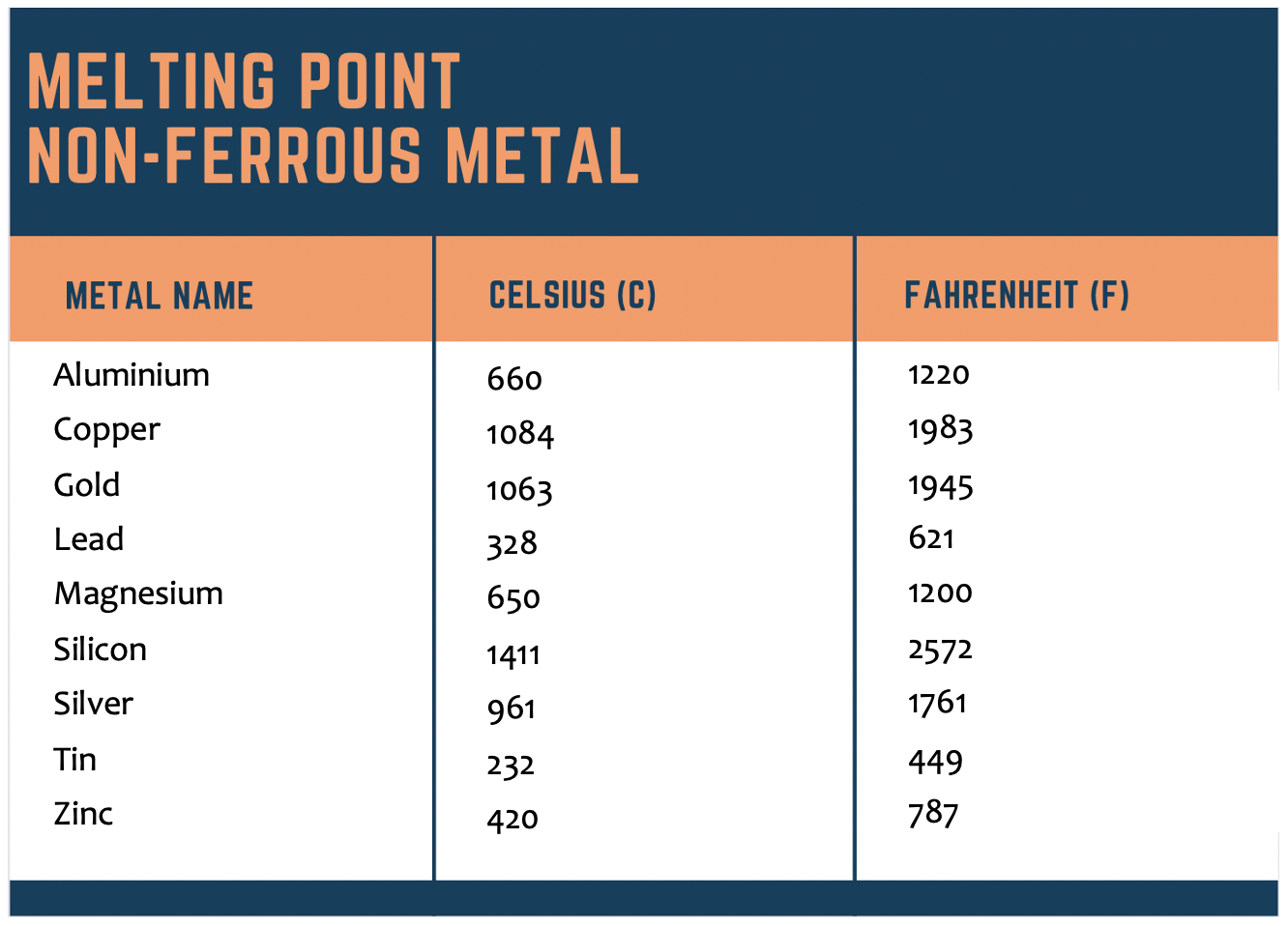
Let’s start with the celebrity of the melting point world: Gold. Ooh, shiny! Gold has a melting point of about 1,064 degrees Celsius (or 1,947 Fahrenheit). That’s hot, folks. Imagine your oven cranked up to its absolute highest, then multiply that by, well, a lot. This is why when you see those fancy gold jewelry makers, they’re not just chucking their gold into a regular kitchen stove. They’ve got some serious heat-generating equipment, like a blacksmith’s forge that’s had way too much coffee.
Gold’s respectable melting point is why it’s been a go-to for jewelry for, like, ever. It’s precious, sure, but it’s also stable. It won’t just turn into a puddle if you leave your earrings out in the sun. You’d have to go through some serious effort, and probably involve a team of scientists with fireproof suits, to melt down your gold bracelet. It's not something you can do with a magnifying glass and a sunny afternoon, unlike that chocolate bar we talked about.
Now, let’s talk about a metal that’s practically the opposite in terms of melting point: Aluminum. This stuff is everywhere. Your soda cans, your car parts, your airplane wings (well, some of them). Aluminum melts at a much lower temperature, around 660 degrees Celsius (1,220 Fahrenheit). Still hot, don’t get me wrong. You wouldn’t want to stick your hand in it. But compared to gold, it’s practically chillin’.
Think about recycling those aluminum cans. The process involves melting them down. It takes a good bit of energy, but it’s a lot less energy than melting down, say, steel. This is why aluminum is such a star in the recycling world. It’s like the metal that’s always up for a transformation, a bit of a shapeshifter when the heat is on, but not too much heat.
Here’s a fun little anecdote: My uncle once tried to "fix" a bent aluminum picture frame by holding it over a gas stove. He thought, "Hey, it's just aluminum, it'll soften up!" Well, it did soften up. A little too much. Let’s just say the picture frame ended up looking less like a frame and more like a Dali painting that had a really bad day. It draped and sagged in ways nature never intended. His wife was not amused. Lesson learned: even metals that melt "easier" need respect.
The Heavy Hitters: Iron and Steel
When you think of strength and building things that last, you often think of iron and steel. These guys are the workhorses of the metal world. But they’re also a bit more… stubborn when it comes to melting.
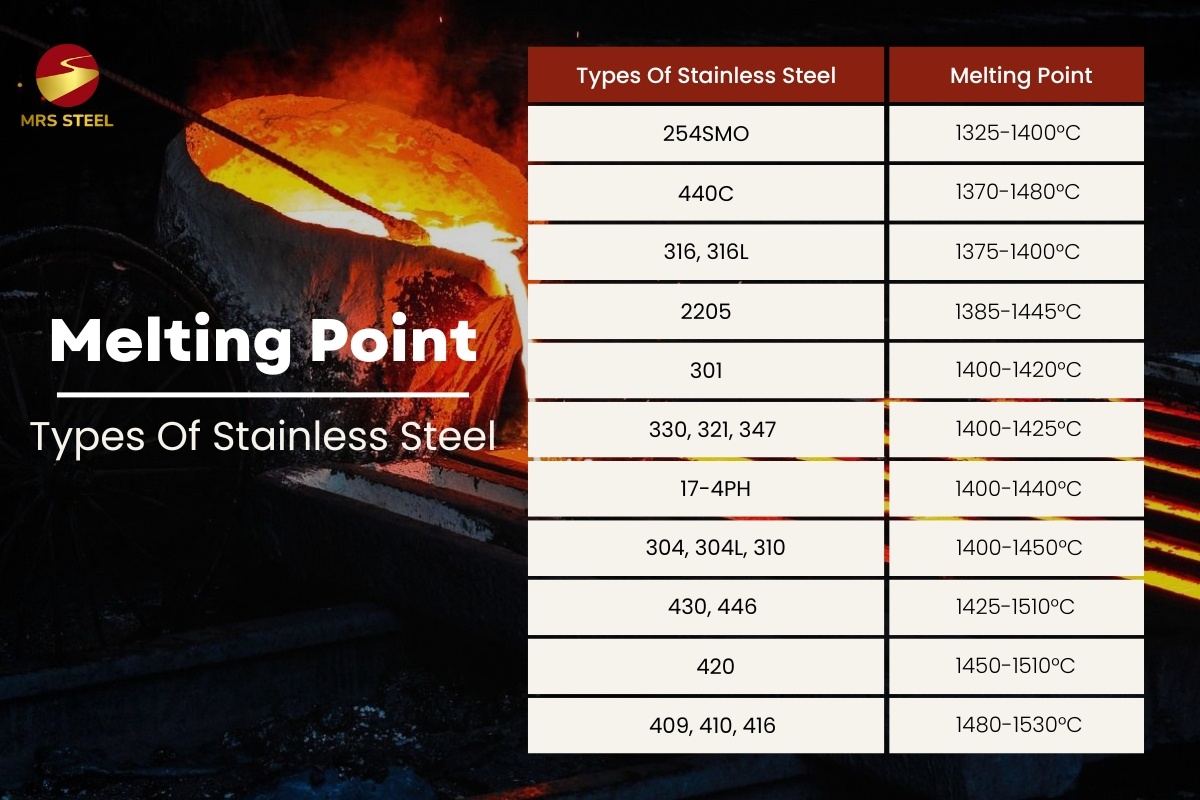
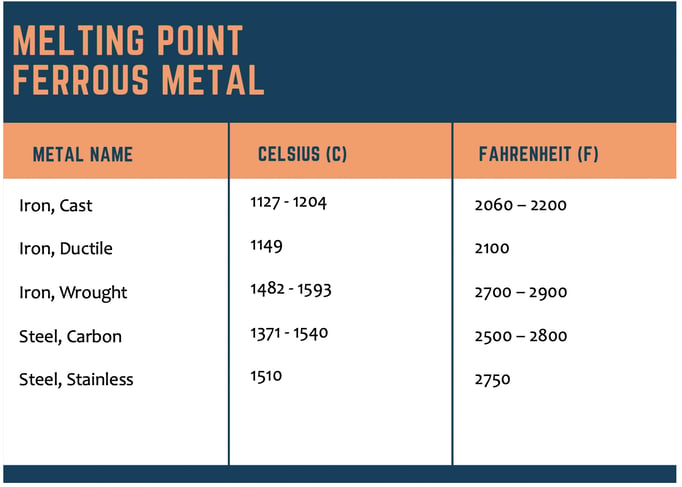
Pure iron melts at around 1,538 degrees Celsius (2,800 Fahrenheit). Steel, which is mostly iron with a bit of carbon and other stuff mixed in, has a slightly lower melting point, but it’s still way up there, usually in the range of 1,370 to 1,540 degrees Celsius (2,500 to 2,800 Fahrenheit). These are temperatures that make you sweat just thinking about them. We’re talking about temperatures hotter than lava, hotter than the surface of the sun (okay, maybe not that hot, but pretty darn close for practical purposes).
This is why building bridges and skyscrapers with steel is such a big deal. It can withstand insane amounts of pressure and heat before it even thinks about giving up and melting. It’s like the ultimate unmovable object. You can build a whole city on it, and it’ll just shrug and say, "Is that all you’ve got?"
Imagine a construction worker on a really hot summer day, sweating buckets. Now imagine a piece of steel at its melting point. That steel is probably feeling way hotter and still refusing to budge. It’s got a serious case of the "I'm not going anywhere" attitude.
The process of making steel involves furnaces that are basically infernos. They’re designed to reach these incredibly high temperatures to purify the iron and add the necessary elements. It’s a whole production, and it’s all about controlling that heat to get the perfect, strong metal we rely on.
There’s a reason why those medieval knights wore suits of armor made of steel. It wasn’t just for show; it was for survival. A sword might be able to cut through weaker materials, but a steel sword hitting a steel breastplate? That’s a clash of titans, and the steel armor is going to stand its ground, not turn into a molten puddle. It’s tough stuff.
The Surprisingly Low Melters: Tin and Lead
Okay, now for the metal that makes you do a double-take: Tin. Tin has a melting point of around 232 degrees Celsius (449 Fahrenheit). That’s significantly lower than gold or steel. It’s hot, sure, but it’s within the realm of what some industrial processes can achieve without going completely bonkers with the heat.
Think about soldering. You know, when you fix electronics with a little bit of melted metal? That’s often done with a solder that’s a mix, but tin is a common ingredient because it melts so easily. You can get a soldering iron to a temperature that’s just hot enough to melt the solder, allowing it to flow and create a strong connection. It’s like the metal that’s happy to help out with a little bit of warmth, rather than demanding a full-blown inferno.
And then there’s Lead. Lead has an even lower melting point, around 327 degrees Celsius (621 Fahrenheit). Historically, lead was used in all sorts of things, from pipes to paint, partly because it was easy to work with, and melting it wasn't an astronomical feat. Now, we know lead is toxic, so its use is heavily restricted, but its low melting point was a big factor in its past popularity.
Imagine trying to melt lead in your backyard campfire. While I strongly advise against this (toxics and all!), theoretically, you could get it to melt. You couldn't do that with a chunk of iron. It’s like the difference between melting butter on the stove versus trying to melt a bowling ball. One’s doable with a bit of heat; the other requires something akin to a volcanic eruption.
This difference in melting points is why certain metals are chosen for specific jobs. You wouldn’t make a frying pan out of tin (it’d melt into your eggs!) and you wouldn’t make delicate jewelry out of pure tungsten (unless you’re aiming for something that could double as a hammer for a small planet).
The Superstars of Heat Resistance: Tungsten and Others
Now, if you want to talk about metals that really laugh in the face of heat, you’ve got to meet Tungsten. Tungsten has the highest melting point of any pure metal: a whopping 3,422 degrees Celsius (6,192 Fahrenheit). That’s hotter than the surface of many stars! Seriously. It’s practically a metal that refuses to melt, period. It’s more of a "vaporize if you push it really hard" kind of material.
This is why tungsten is used in things like light bulb filaments. Remember those old incandescent bulbs? The little glowing wire inside? That’s tungsten. It gets incredibly hot to produce light, but it doesn’t melt. It just glows and glows, like a tiny, tireless sun. It’s the ultimate heat-resistant champion, the undefeated, heavyweight, melt-proof king of the metals.
Other metals, like molybdenum (melts around 2,623°C / 4,753°F) and tantalum (melts around 3,017°C / 5,463°F), are also incredibly resistant to heat. These are the kinds of metals you find in specialized industrial applications, like rocket engine parts or high-temperature furnaces. They're the silent heroes of extreme engineering, working their magic in places where most other materials would simply disintegrate.
Think of them as the "don't even bother trying" metals. You could probably melt a good portion of your kitchen in the time it would take to even think about melting tungsten. It’s like the metal equivalent of someone who never gets tired, never gets flustered, and just keeps going, no matter how much heat you throw at them.
Why Does This Even Matter?
So, why all this talk about melting points? It’s not just for trivia nights (though it’s a pretty good trivia fact). Understanding how much heat a metal can take before it gives up is fundamental to pretty much everything we build and create.
When engineers design an airplane, they need to know that the aluminum in the wings won't soften and warp at cruising altitude, even though the friction of the air can generate some heat. When they build a car engine, they need to select metals that can withstand the intense temperatures of combustion without melting into a sludge.
The casting of statues, the forging of tools, the creation of intricate electronic components – all of it relies on knowing the melting points of the materials being used. It’s the invisible science that allows us to have everything from our smartphones to our bridges.
It’s like knowing your friend can handle three shots of tequila before they start singing karaoke, or that your grandma can bake cookies for three hours straight without her oven exploding. It’s about understanding the limits and capabilities of the materials around us.
So, the next time you’re holding a metal object, take a moment to appreciate its unique melting point. It’s a silent testament to the incredible diversity of the metallic world and the ingenious ways humans have learned to harness their properties. From the humble aluminum can to the mighty steel beam, each metal has its own thermal personality, making our world a sturdier, shinier, and more functional place. Pretty cool, right?