
Different Ways To Say Merry Christmas In Different Languages
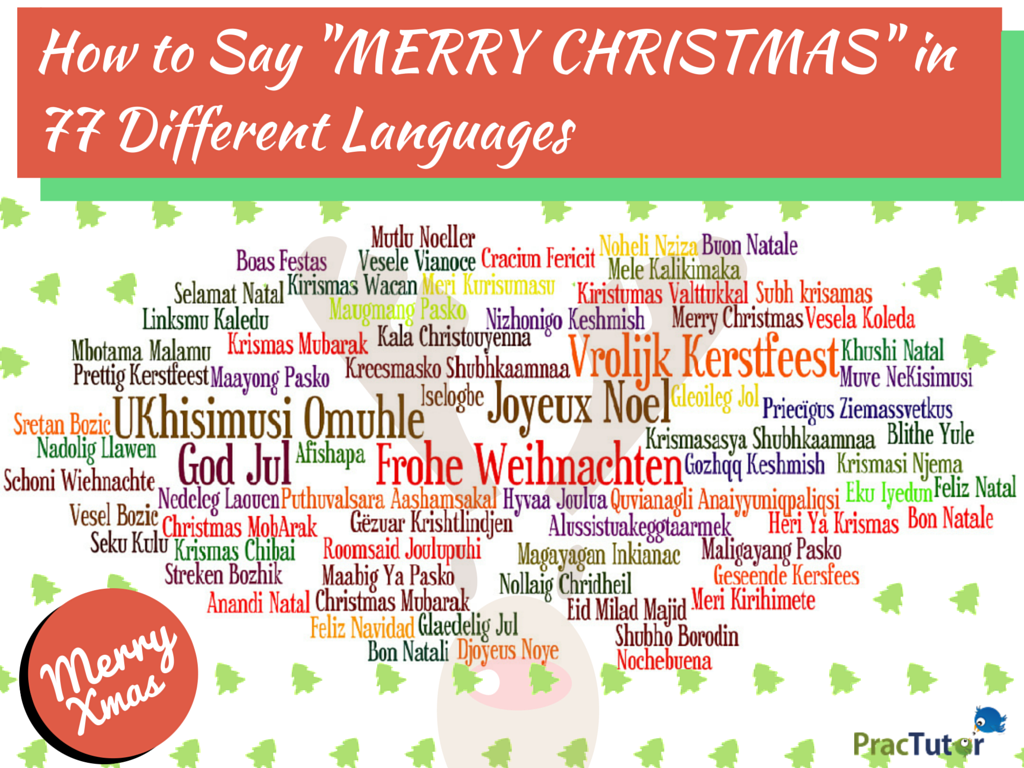
Alright, settle in, grab your imaginary peppermint mocha (mine’s got extra whipped cream, obviously), and let’s talk about a subject near and dear to every caffeine-fueled, slightly-stressed-out holiday enthusiast’s heart: saying "Merry Christmas" when you’re feeling particularly international.
You know that feeling. You’ve mastered the art of the perfect present-wrap, you’ve strategically avoided eye contact with that one relative who always asks about your love life, and now you’re ready to spread some global cheer. But just saying "Merry Christmas" feels… well, a bit like wearing socks with sandals. It’s functional, but it lacks a certain je ne sais quoi.
So, let’s dive into the wonderfully wacky world of Christmas greetings from around the globe. Think of me as your linguistic Santa, ho-ho-ho-ing my way through different dictionaries. And yes, I might have a few candy canes stashed in my pockets for you.
The Classics, With a Twist
Let’s start with the heavy hitters, the ones you’ve probably heard whispered at a festive market or shouted by a particularly enthusiastic carol singer. First up, we have the Spanish greeting: ¡Feliz Navidad!
Now, this one’s a bit of a cheeky imposter. While it literally translates to "Happy Christmas," it's often used more like "Merry Christmas." The funny thing is, "Navidad" itself comes from the Latin word for "birth," which makes perfect sense, right? Except, sometimes I imagine someone in ancient Rome trying to wrap presents and going, "Oh, the birth-day is here! Merry Birth!" It’s just a thought. Anyway, ¡Feliz Navidad! is a solid go-to, guaranteed to get you a nod of recognition and maybe even a little salsa dance from someone nearby.
Next, the French. We’ve got Joyeux Noël. Sounds fancy, right? It absolutely is. “Joyeux” means “joyful” or “happy,” and “Noël” is their word for Christmas. So, you’re essentially wishing someone a joyful Christmas. It’s like saying, “May your tinsel be extra sparkly and your fruitcake surprisingly edible!” It’s polite, it’s charming, and it’s perfect for when you want to sound like you’ve just stepped out of a romantic comedy set in Paris.

Now, let’s hop over to Germany, where things get a little… robust. We have Frohe Weihnachten. “Frohe” means “happy” or “merry,” and “Weihnachten” is their word for Christmas. This one feels like a hearty handshake. It’s direct, it’s sincere, and it probably comes with a side of mulled wine. Imagine saying it while wearing a lederhosen and holding a giant pretzel. It just fits, doesn’t it? Frohe Weihnachten is the Christmas equivalent of a bear hug – warm, comforting, and slightly overwhelming in the best possible way.
Venturing Further Afield (and Getting a Little Quirky)
Okay, now for the fun stuff. The greetings that might make you scratch your head, chuckle, or immediately want to learn a new language. Let’s start with Italy. You’ll hear Buon Natale. “Buon” means “good,” and “Natale” is, you guessed it, Christmas. So, a good Christmas. Simple, effective, and probably delivered with a generous hand gesture. Italians are all about passion, so even a simple greeting can feel like a mini-performance. Buon Natale! chef’s kiss
Moving on to Portugal, we have Feliz Natal. See a pattern here? Much like the Spanish, it’s pretty straightforward. “Feliz” is “happy,” and “Natal” is Christmas. Easy peasy. This one’s great if you’re aiming for a warm, sunny vibe. Imagine saying it on a beach, with a little Portuguese tart in your hand. Feliz Natal! It’s like sunshine in a greeting.

Now, let’s get a bit more adventurous. How about the Netherlands? They say Vrolijk Kerstfeest. “Vrolijk” means “cheerful” or “merry,” and “Kerstfeest” means “Christmas feast.” So, you’re literally wishing them a cheerful Christmas feast. This is perfect for anyone who believes that Christmas is primarily about the consumption of epic amounts of food and drink. It’s a greeting that acknowledges the sheer gluttony of the season. Vrolijk Kerstfeest! May your gravy boat runneth over!
The Unexpected Charms
We’re not done yet! There are so many ways to spread that yuletide joy. Let’s try Sweden, with God Jul. “God” means “good,” and “Jul” is their word for Christmas. So, a “good Christmas.” But “Jul” itself is fascinating. It’s believed to come from an ancient pagan festival. So, when you say God Jul, you’re tapping into centuries of winter solstice celebrations. You’re basically a historical festive ninja! How cool is that?
In Norway, it’s also God Jul. See, we’re building bridges here! But if you want to be extra festive, you can say God Jul og Godt Nytt År, which means "Merry Christmas and Happy New Year." Now we’re talking! It’s efficient and covers all your bases. You’re like a Christmas diplomat, securing peace and goodwill for two holidays at once. Very impressive.

Let’s jet over to Greece. They say Kala Christougenna. “Kala” means “good,” and “Christougenna” means “Christmas.” So, another “good Christmas.” But imagine saying it with a dramatic flourish, perhaps while eating a plate of baklava. It just sounds inherently more celebratory, doesn’t it? Kala Christougenna! May your holidays be as sweet and flaky as a perfect pastry!
And for a real curveball, how about Poland? They say Wesołych Świąt. This is a bit of a cheat, because it actually means "Happy Holidays," and can be used for Christmas or Easter. But in December, everyone knows what you mean! It’s like having a universal holiday remote control. It’s versatile, it’s adaptable, and it’s perfect for when you’re not entirely sure if your Aunt Carol is celebrating the birth of Christ or just really, really likes bunnies. Wesołych Świąt! The ultimate in festive flexibility.
The Surprise Factor
Here’s a fun fact for you: In Russia, they traditionally celebrate Christmas on January 7th due to the Julian calendar. So, while many people might say "Merry Christmas" in December, the official Orthodox Christmas greeting is S Rozhdestvom Khristovym (С Рождеством Христовым).
Now, that’s a mouthful, isn’t it? It literally means "With the Nativity of Christ." It's a bit like saying, "Wishing you a December filled with the momentous event of Christ's birth!" It’s formal, it’s reverent, and it’s definitely a way to impress your Russian friends with your linguistic prowess. Imagine trying to yell that over a noisy office party. You’d probably get a lot of confused but appreciative stares. S Rozhdestvom Khristovym! A greeting that demands a bit of effort, and thus, a lot of respect.
And in case you were wondering, no, I haven’t memorized all these. My browser history looks like a festive, multilingual disaster zone. But that’s the beauty of it, isn’t it? It’s a little adventure, a small way to connect with the world and show that you’re thinking of others, no matter what language they speak.
So, next time you’re out and about, or even just sending a quick text, why not throw in a Joyeux Noël or a Frohe Weihnachten? You might just brighten someone's day, and who knows, you might even learn a new favorite phrase. After all, the best part of Christmas is the joy, and that’s a universal language. Now, if you’ll excuse me, I have some more peppermint mocha to attend to.