
Dishwasher White Residue On Stainless Steel

Hey, so you know how sometimes you pull out your fancy stainless steel dishwasher rack, all ready to load it up, and BAM! It's got this weird, chalky white stuff all over it? Yeah, I've been there. It's like, "Seriously, dishwasher? I just cleaned you!" It totally messes with the whole gleaming appliance vibe, doesn't it?
It's that stubborn residue, the one that seems to mock your efforts. You stare at it, and you're just like, "What are you?" It’s enough to make you question your entire dishwashing strategy, right? Like, maybe you're using the wrong detergent? Or maybe your dishwasher has a secret vendetta against your sparkly pans?
And the worst part? It sticks. Oh, it sticks. You try to wipe it off, and it’s like it’s glued on there with, I don't know, ancient dishwasher secrets. So, what's the deal with this ghostly coating? Let's spill the beans, or should I say, spill the detergent?
So, What Is This Gunk, Anyway?
Alright, so that white residue isn't some mysterious apparition from the land of dirty dishes. It's actually usually one of two things, or sometimes a sneaky combo of both. Think of it as your dishwasher's little, unwanted souvenirs.
First up, we've got hard water. Yep, those minerals lurking in your tap water, like calcium and magnesium, they're the usual suspects. When the water evaporates during the drying cycle, guess what's left behind? Bingo. Those minerals decide to set up shop on your stainless steel. It's like they're saying, "We liked it here, so we're staying!"
And then there’s the other big player: detergent buildup. Sometimes, if you're using too much detergent, or if your rinse aid dispenser isn't working its magic, that soap can leave a film. It’s not exactly bubbly bliss, is it? It’s more like a cloudy, uninvited guest that just won’t leave.
So, it’s not always about dirty dishes. Sometimes, it's about the stuff that cleans them, or the water that helps them get clean, doing a little too much of their job. Funny how that works, right?
The Hard Water Hustle
Let's dive a little deeper into the hard water scenario. If you live in an area known for its… let's say, robust water supply, you're probably more familiar with this phenomenon. It's like the water is trying to give your dishwasher a mineral hug. A little too tight, perhaps.
Think of it like leaving a glass of water out overnight. What do you see on the inside the next morning? That faint, chalky ring? It’s basically the same thing happening on a grander scale inside your dishwasher. Except, instead of a single glass, it's your entire rack system getting coated.
And the stainless steel? It's got this smooth, non-porous surface, which sounds great for cleaning, but it also means those minerals have nothing to cling to except the surface itself. So they just… sit there. And then they bake on. Lovely.
It's especially noticeable on the racks, where the water flows over and then dries. Those little nooks and crannies? Prime real estate for mineral deposits. It's like they're having a tiny mineral convention up there.
Detergent Drama
Now, about the detergent. We all want our dishes to sparkle, right? So sometimes, we might be tempted to just… add a little extra. "Just to be sure," we tell ourselves. But, my friend, this can backfire spectacularly.

Too much detergent can lead to what's called "over-sudsing." And while a few suds are good, a suds explosion? Not so much. These excess suds can actually trap water and minerals against the stainless steel, making the problem even worse. It's like the soap is creating a little mineral prison.
Then there's the rinse aid. This stuff is like the superhero of dishwashing, helping water sheet off your dishes and prevent those pesky water spots. If your rinse aid dispenser is empty, or if it's not dispensing properly, you're essentially leaving your dishes and dishwasher to fend for themselves against the water.
And don't even get me started on using the wrong kind of detergent. Those "all-in-one" pods are convenient, I get it. But sometimes, they can be a bit much for certain water types or certain dishwashers. It's a delicate balance, really.
Why Is It Always On the Stainless Steel?
You might be wondering, why is it always on the stainless steel parts, and not, say, the plastic bins? That's a fair question! It's all about the surface properties, my friend.
Stainless steel, as we mentioned, is pretty smooth. Minerals and soap residue have an easier time adhering to it compared to some other materials. Think of it like a freshly polished car – it looks amazing, but it also shows every single speck of dust!
Plastic, on the other hand, can be a little more… forgiving. It might have microscopic pores or textures that don't grab onto residue as readily. Or, the residue might just be less visible on the plastic. It's like the plastic is wearing a camouflage outfit for dirt.
So, while you might see a faint film on other parts, the stainless steel is often the star of the show when it comes to this white gunk. It’s the prima donna of the dishwasher interior, demanding all the attention for its sparkly, yet sometimes residue-covered, surface.
The Rack is a Hotspot
And the racks themselves? Oh boy, are they a hotspot for this residue! They're constantly in the direct path of the water jets. Think about it: that's where the water is hitting with full force, then pooling, and then evaporating.
Those little wire grids? They provide tons of surface area for minerals to latch onto. It’s like they're designed to be a welcome mat for hard water deposits. And when you load them up with dishes, you're creating even more little hiding spots for the residue to form.

It’s a relentless cycle, isn't it? You put dishes in, water sprays, dishes get clean (hopefully!), water dries, minerals stay. Repeat. It’s enough to make you want to go back to the good old days of scrubbing dishes by hand. (Just kidding… mostly.)
How to Banish the White Ghost!
Okay, so enough with the woes. Let's talk solutions! Because nobody wants a dishwasher that looks like it’s been living in a chalk factory. We need to fight back!
The first line of defense? It’s all about prevention, really. Think of it as giving your dishwasher a spa day, regularly. A good, deep clean can work wonders.
So, what can you do? We're talking about a few simple steps that can make a world of difference. No need to call in the Ghostbusters just yet.
Step 1: The Vinegar Vanish
Vinegar. Yes, that pantry staple. It's a superhero in disguise, especially when it comes to tackling mineral deposits. It's acidic, you see, and that acidity is like a dissolver for all that calcium and magnesium build-up.
Here’s the trick: Take a bowl, fill it with white vinegar (distilled is best, no fancy stuff needed). Place it on the top rack of your empty dishwasher. Run a hot water cycle. Just like that! The vinegar will get all steamy and work its magic. You might want to run a second rinse cycle afterwards, just to make sure that vinegar smell is gone. Nobody wants their clean dishes smelling like a salad bar.
This is a game-changer, seriously. It breaks down those mineral deposits, making them much easier to wipe away. Think of it as softening them up for their eviction.
Step 2: The Baking Soda Buff
After the vinegar treatment, or even as a standalone clean, baking soda is another great ally. It's a mild abrasive, which means it can help scrub away residue without scratching your stainless steel. It also helps neutralize odors, which is always a bonus.
Sprinkle about a cup of baking soda on the bottom of your empty dishwasher. Then, run a hot water cycle again. The combination of the hot water and the baking soda will help lift and remove the grime. You can even use a paste of baking soda and water to gently scrub any particularly stubborn spots on the racks. Just be gentle, we don't want to scratch our beautiful stainless steel!
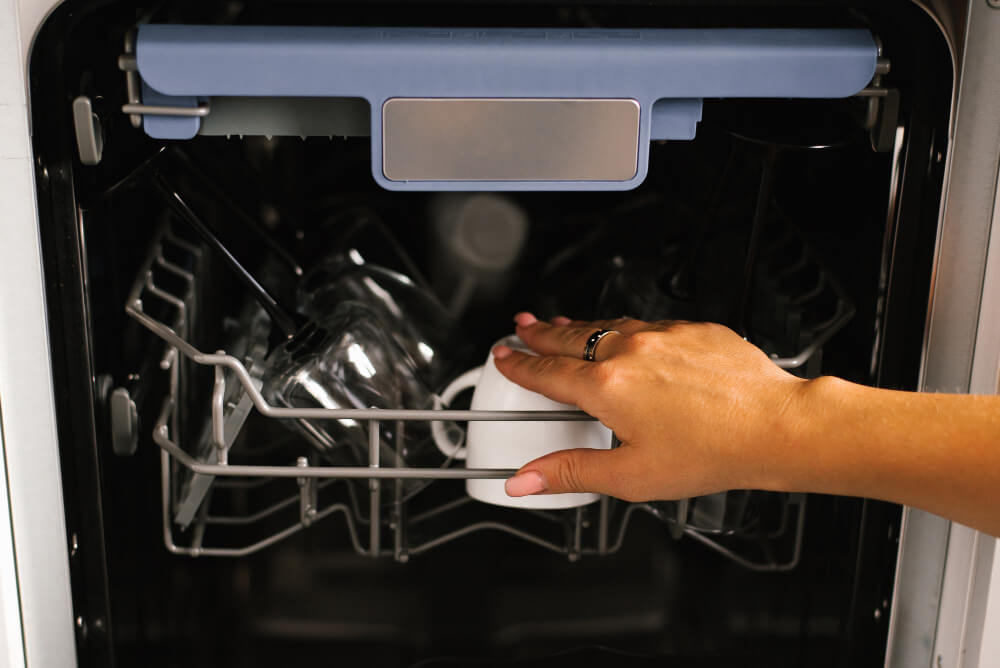
It’s like a natural scrub that won’t do any damage. Who knew our kitchens held such cleaning powerhouses?
Step 3: Dishwasher Cleaner Power-Up
Sometimes, you might need something a little more heavy-duty. There are some fantastic commercial dishwasher cleaners out there designed specifically to tackle limescale and mineral buildup. These are often more potent than vinegar or baking soda, so use them according to the package directions.
You usually just pop a tablet or pour a liquid into the detergent dispenser or the bottom of the machine and run a hot cycle. Easy peasy. It’s like giving your dishwasher a specialized cleaning treatment.
These can be great for a more thorough deep clean every few months, especially if you have really hard water. They’re designed to get into all the nooks and crannies.
Preventing Future Residue: The Long Game
So, we've cleaned it up. Hooray! But how do we stop it from coming back? Because let's be honest, nobody wants to be doing this every other week. We’ve got better things to do, like… well, anything else.
It’s all about making a few small adjustments to your dishwasher habits. Think of it as ongoing maintenance, like oil changes for your car, but for your kitchen appliance.
Rinse Aid is Your Friend
Seriously, don't underestimate the power of rinse aid. If your dishwasher has a rinse aid dispenser, make sure it’s always filled. This stuff is designed to help water sheet off your dishes and the interior of your dishwasher, preventing those water spots and mineral deposits from forming in the first place.
It’s like giving your dishwasher a tiny bodyguard to fight off water. It’s a simple step, but it makes a HUGE difference. Check it regularly, and refill it when it's low. You'll thank yourself later.
The Right Amount of Detergent
We talked about this, but it bears repeating: less is often more when it comes to dishwasher detergent. Read the instructions on your detergent packaging and your dishwasher manual. Most modern dishwashers and detergents are very efficient, and you don't need to overdo it.

If you’re using pods, they’re usually pre-portioned. If you’re using powder or gel, start with the recommended amount and see how your dishes come out. You might be surprised at how little you actually need. Overdosing can actually be counterproductive!
Wipe Down After Every Cycle (Seriously!)
Okay, this might sound like a chore, but hear me out. After your dishwasher finishes its cycle, and the racks are still a little warm, give them a quick wipe down with a microfiber cloth. This will catch any lingering moisture and prevent it from evaporating and leaving behind those minerals.
It takes literally seconds! And it’s so much easier than scrubbing off dried-on residue later. Think of it as a quick polish after the main event. It’s the unsung hero of dishwasher maintenance.
You can keep a designated cloth nearby, so it’s always handy. It's a small habit, but the payoff is huge. Your stainless steel will thank you.
Consider a Water Softener
If you live in an area with extremely hard water, and you're finding that these other methods aren't quite cutting it, you might consider investing in a whole-house water softener. This is a bigger commitment, of course, but it can make a massive difference in not only your dishwasher but also your showerheads, faucets, and even your skin!
It’s a more long-term solution that tackles the root cause of the problem. If you're constantly battling limescale and mineral buildup, this might be the ultimate fix. It's an investment, but sometimes, it's worth it for the peace of mind and the consistently clean results.
Final Thoughts: Keep That Stainless Steel Sparkling!
So there you have it! That mysterious white residue on your stainless steel dishwasher racks doesn't have to be a permanent fixture. With a little bit of know-how and a few simple steps, you can keep your dishwasher looking its best.
It’s all about understanding what’s causing the problem and then implementing a consistent cleaning and prevention routine. Don’t let those minerals and leftover soap residue win! You’ve got this.
Remember, a little regular maintenance goes a long way. And who doesn’t love a shiny, clean dishwasher? It’s like the unsung hero of your kitchen, always working hard. Let’s give it the care it deserves. Happy dishwashing!