
Do Black Cats Turn Grey With Age

My friend Sarah has this incredibly sleek, black cat named Luna. Luna, for most of her life, was the epitome of midnight elegance. Her fur was so dark, it seemed to absorb light, and her emerald eyes would glow like twin jewels against that inky backdrop. She’d saunter around the house like she owned it, which, let's be honest, she probably did. One day, Sarah called me, a little bewildered. "You have to see Luna," she said, her voice laced with a hint of confusion. "She’s… different." I popped over, expecting maybe a new toy or a bizarre new sleeping spot. Instead, I was greeted by Luna, who, upon closer inspection, had a sprinkling of… something… around her muzzle and along her spine. It wasn't a new flea collar, that’s for sure. It looked suspiciously like… grey hairs.
My first thought was, "Wait, do cats even get grey hairs?" I mean, we see it in dogs all the time, those distinguished gentlemen with their grey muzzles. But cats? My own ginger tabby, Marmalade, has been a constant shade of marmalade for his entire tenure with me, barring the occasional dust bunny incident. So, this got me thinking. Do black cats actually turn grey with age? It’s a question that popped into my head and refused to leave, much like that one stubborn cat hair that gets stuck to your favorite black sweater. You know the one.
It turns out, the answer is a resounding, and perhaps slightly surprising, yes. Black cats can indeed develop grey hairs as they get older. It’s not a sudden transformation from midnight to silver, mind you. It’s usually a more subtle process, a gradual fading, a touch of distinguished silver appearing amongst the ebony.
The Science Behind the Silver Streak
So, what’s going on here? Why do perfectly black furballs start to sport a more salt-and-pepper look? It all comes down to melanin, the pigment responsible for color in our hair, skin, and fur. Just like in humans, as cats age, their bodies produce less melanin. This means the pigment that gives their fur its deep, rich color starts to fade.
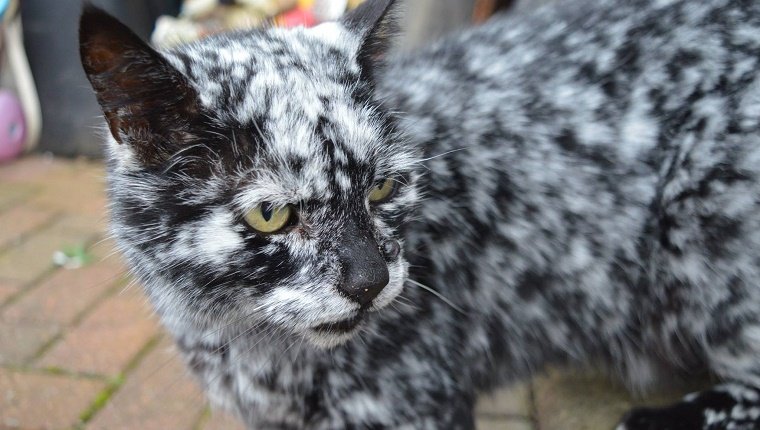
For black cats, this lack of melanin is most noticeable because their fur is supposed to be uniformly dark. When the pigment starts to deplete, the individual hairs may become lighter, sometimes appearing grey or even a rusty brown. It’s like a black crayon that’s been scribbled over a few too many times – the original color is still there, but it's not quite as intense.
Think about it: if you have a jet-black piece of paper and you start to erase parts of it, the underlying color will show through. The same principle applies here. The black fur is due to a high concentration of melanin. As that melanin production slows down, the natural, lighter color of the hair shaft itself starts to peek through, creating that greyish effect.
It’s Not Just Black Cats, Though…
While it’s most obvious in black cats, this greying process happens to cats of all colors. A ginger cat might start to show lighter, almost white hairs, especially around their face. A tabby might have their stripes become less defined as lighter hairs intermingle. A tortie or calico? Their beautiful patchwork might become a little more subdued. It’s just that the contrast is so stark with black fur that the grey becomes a prominent feature.
So, while Luna’s experience might have been a bit of a surprise to Sarah, it’s actually a perfectly natural part of aging for her feline companion. It’s the kitty equivalent of us developing a distinguished grey beard or a few silver strands in our hair. And honestly? I think it’s rather charming.
When Does This Magical Transformation Begin?
There’s no hard and fast rule, of course. Every cat is an individual, just like us. But generally speaking, you might start to notice these subtle changes in a cat’s fur as they enter their senior years. This often means around the age of 7 or 8, but it can vary. Some cats might show signs of greying earlier, while others might keep their dark coats well into their teens. My neighbor’s cat, a magnificent black panther of a creature named Shadow, didn’t start showing any grey until he was well over 12!
It's not like they wake up one morning and BAM! Silver fox. It's a slow, gradual process. You might first notice a few stray grey hairs around their muzzle, on their chin, or along their eyebrows. Then, it might start to spread to other parts of their body, like their chest or their back. Sometimes, the fur might appear a bit lighter overall, a more muted shade of their original color.
It's funny how we associate greying with age in humans, right? We see it as a sign of wisdom, experience, and perhaps a little bit of wear and tear. For cats, it's the same thing. It's a visual cue that they've lived a full life, experienced countless naps in sunbeams, chased an impressive number of laser pointers, and, no doubt, tolerated our goofy affection with remarkable grace.
Factors Influencing the Fade
A cat’s genetics play a huge role in when and how much they grey. If a cat’s parents or grandparents showed signs of greying early on, it’s more likely their offspring will too. It’s just in their DNA, you see.
Diet and overall health can also be contributing factors. A cat with a well-balanced diet and good health might maintain their coat color for longer. Conversely, certain nutritional deficiencies or underlying health issues could potentially affect coat color, though this is less common as a direct cause of greying and more likely to manifest as dullness or patchy fur.
Stress is another interesting, albeit less direct, factor. While not the primary cause of greying, chronic stress can impact a cat's overall health, and this could indirectly influence their coat. But let's be honest, most cats are masters of zen, so this is probably not the main culprit for most silver-streaked felines.

Is it Just Greying, or Something Else?
Now, I’m not a veterinarian (obviously!), and it’s always important to consult with one if you have any concerns about your cat’s health. But generally, the gradual appearance of grey hairs in an older cat is just that – greying. It’s a normal part of life.
However, there are other conditions that can affect a cat’s coat color or appearance. For example, a sudden loss of pigment, patchy hair loss, or drastic changes in coat texture could be signs of something else. This is where a vet check-up is crucial. They can rule out things like:
- Fungal infections: Some fungal infections can cause changes in fur color or texture.
- Skin conditions: Various skin issues can impact the hair follicles and pigment production.
- Nutritional deficiencies: As mentioned before, a lack of certain nutrients can affect coat health.
- Hormonal imbalances: In rare cases, hormonal issues can play a role.
So, if your cat is suddenly looking like they’ve been dusted with a fine layer of talcum powder overnight, and it’s accompanied by other symptoms, it’s definitely time to call the vet. But if it's a slow, natural progression of lighter hairs appearing on your beloved black cat, especially in their golden years, it’s likely just the fur of distinction showing up.
The Charm of the Silver Fox Feline
When I look at Luna now, with her subtle silver muzzle, I don't see a cat who's "going old." I see a cat who has lived a life full of love, warmth, and probably a good few hairballs. That touch of grey adds a certain… gravitas. It makes her look even more regal, if that's even possible. It’s like she’s earned her stripes, or rather, her silver highlights.

There's a certain wisdom in those older cat eyes, and I think the grey fur just complements that. It’s a badge of honor, a testament to all the sunbeams they’ve basked in, all the laps they’ve warmed, and all the purrs they've generously bestowed upon us. It’s a sign of a life well-lived.
And if you have a black cat who’s starting to develop these distinguished touches, I’d encourage you to embrace it! It’s a beautiful part of their aging process. Think of it as a natural enhancement, a subtle upgrade to their already magnificent appearance. It’s a reminder to cherish every moment with them, because their time with us, while often long and fulfilling, is precious.
So, the next time you see a black cat sporting a few grey hairs, don't fret. They're not fading away; they're simply maturing, like a fine wine or a classic piece of furniture. They're becoming distinguished, sophisticated, and arguably, even more adorable. It’s a sign of their journey, a visual narrative of their happy, healthy life with you. And isn’t that just the sweetest thought?
Luna, by the way, seems entirely unfazed by her new look. She still demands her breakfast with the same imperious meow, still claims the best spot on the sofa, and still glares at the vacuum cleaner with the same intensity. Her grey hairs are just… there. A quiet testament to her growing seniority, a subtle reminder that time marches on, even for the most elegant of felines. And honestly, it just makes her even more lovable. It’s like she’s saying, "I’ve seen things, man. And I’ve napped through most of them. Now, where's my treat?"