
Does Baking Soda Have Aluminum

Hey there, kitchen adventurers and curious minds! Today, we're diving into a question that might have popped into your head while you were whipping up some cookies or perhaps just rummaging through your pantry. It's a simple query, but it holds a little bit of kitchen magic and science. We're talking about baking soda!
You know, that little white powder that makes your cakes rise and your cookies spread just right? It's a pantry staple, a superhero of the baking world. But have you ever stopped to wonder about its secret ingredients, or what it's truly made of? It’s more fascinating than you might think!
The big question on everyone's lips, or at least in the back of some people's minds, is this: does baking soda have aluminum? It sounds like a detective story, doesn't it? We're going to unravel this mystery together, one bite-sized piece of information at a time.
Let's get straight to the point, because who likes waiting? The answer, my friends, is a resounding NO! Baking soda, in its pure, pantry-ready form, does not contain aluminum. It's a common misconception, a bit of a kitchen tall tale that has been whispered from one baker to another. But we’re here to clear the air, like opening a window on a spring morning.
So, if it's not aluminum, what is baking soda? It’s a chemical compound called sodium bicarbonate. Say that five times fast! It's a simple salt, made up of sodium, hydrogen, carbon, and oxygen atoms. Think of it as a tiny team of elements working together harmoniously to bring about deliciousness.
This sodium bicarbonate is what gives baking soda its power. When it interacts with an acid (like buttermilk or lemon juice in your recipes) and heat, it creates carbon dioxide gas. And that, my friends, is the bubbling, rising force behind your fluffy muffins and light, airy cakes. It’s pure kitchen alchemy!
Now, you might be wondering, "Where did this aluminum idea even come from?" That's where things get a little more interesting. It's easy to get confused in the world of baking ingredients. There are so many powders and leavening agents out there, all with their own unique personalities and purposes.

One of the main sources of confusion is baking powder. Ah, baking powder! It's baking soda's slightly more complex cousin. Baking powder does contain a leavening agent that can be made with aluminum compounds. This is where the mix-up often happens.
Think of it like this: baking soda is like a single-player game, pure and straightforward. Baking powder is more like a team sport, with a few different players (ingredients) working together to achieve the same goal: rising. And one of those players, in some types of baking powder, can be a bit of an aluminum friend.
Most commercially available baking powders are what we call "double-acting." This means they have two different leavening reactions, one when they get wet and another when they get hot. Some of these formulations use an acidic ingredient that contains aluminum, like sodium aluminum sulfate or sodium acid pyrophosphate.
These aluminum-containing ingredients in baking powder are perfectly safe for consumption. They've been used for decades and are thoroughly tested. The amounts are very small, and they play a crucial role in how baking powder works its magic.
So, to be super clear: pure baking soda = no aluminum. Some baking powders = can contain aluminum-based ingredients. It’s all about which white powder you’re reaching for in your pantry!

It’s kind of like superheroes. Baking soda is Superman – strong, iconic, and gets the job done with its core power. Baking powder is more like the Justice League – a team effort, with different abilities, and sometimes, a specialized gadget that happens to have a metallic component (in this case, the aluminum ingredient).
The beauty of baking soda is its simplicity. Its single purpose is to react with acids and create bubbles. It’s a fundamental building block. It doesn’t need any fancy additives to do its job.
Why is this distinction so entertaining? Because it highlights the wonderful nuances of the kitchen! It’s a world where a tiny change in a name or an ingredient can make a big difference. It makes us appreciate the science that goes into our favorite treats.
It’s also a testament to how many of us are curious about what we’re putting into our bodies. We want to know the truth behind the labels, the stories behind the staples. And the story of baking soda and aluminum is a fun one to uncover.
Think about it: you grab a box of baking soda. You trust it to make your cookies perfectly crisp on the edges and chewy in the middle. You don't need to worry about it having any hidden aluminum surprises. It’s just sodium bicarbonate, ready to perform its leavening duties.
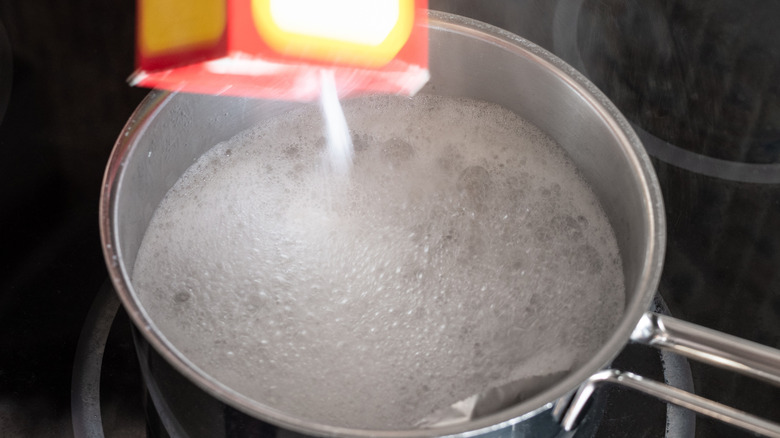
On the other hand, if you’re using a baking powder that does contain aluminum-based ingredients, it’s working in a slightly different way. It’s designed to provide that lift in stages, giving you more control and a consistent result. It's a different kind of kitchen magic, but magic nonetheless.
What makes it special? The fact that a common household item has such a clear-cut, factual answer to a potentially complex-sounding question. It’s empowering! You can confidently reach for that box of baking soda, knowing exactly what you’re getting.
It’s also special because it encourages us to be more mindful in the kitchen. When you’re baking, take a peek at your ingredients. Read the labels. Understand the role each component plays. It’s like getting a backstage pass to the culinary show!
So, next time you’re in the kitchen, perhaps while a cake is rising in the oven, you can have a little mental high-five to yourself. You’ve cracked the code! You know that your trusty baking soda is pure, simple, and aluminum-free. It's just sodium bicarbonate, doing its fantastic, fizzy thing.
And if you're curious about the baking powder situation, don't be afraid to check those labels. You might be surprised at what you learn about the different types and their ingredients. It's a rabbit hole of delicious discovery!

The world of baking ingredients is full of little wonders. From the simplest salt to the most complex leavening agent, each has a story. And the story of baking soda and aluminum is a great starting point for any curious baker.
So, go forth and bake with confidence! Know your ingredients. Enjoy the process. And remember, that humble box of baking soda is your aluminum-free friend in all your culinary adventures. It's a simple truth that makes baking even more fun.
Isn’t it neat how something so common can have such a clear and reassuring answer? It’s a little victory for kitchen science and a big win for bakers everywhere. Now, if you’ll excuse me, I think I hear a batch of cookies calling my name!
The next time you see that little box of baking soda, give it a little nod. You know its secret, and it’s a good one: it’s pure, potent, and proudly aluminum-free. Happy baking!