
Drill Bit For Heavy Metal
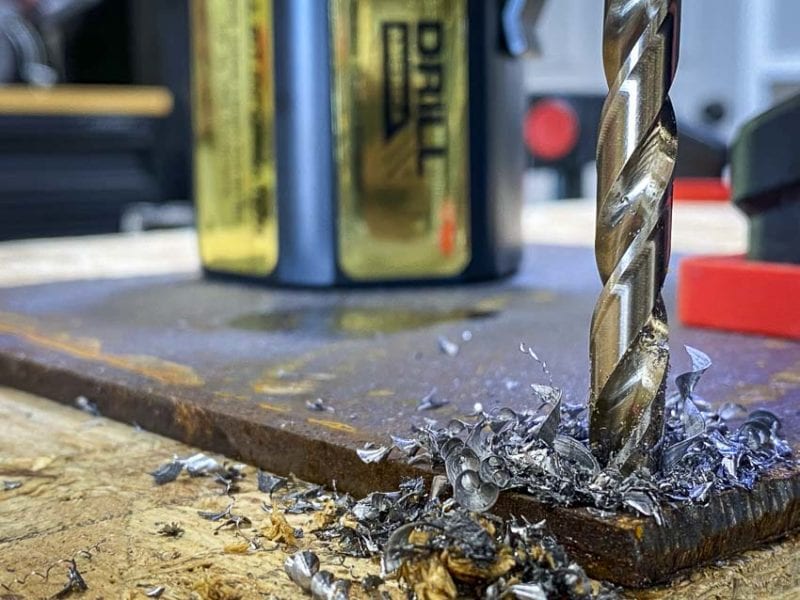
Alright, pull up a chair and grab a cuppa. We’re gonna talk about something that sounds like it belongs in a black metal mosh pit, but is actually way cooler and, dare I say, essential if you’ve ever found yourself staring down a piece of metal and thinking, "You know, this would look so much better with a hole in it." Yep, we’re diving deep into the fantastical, the legendary, the utterly unbreakable… the heavy metal drill bit.
Now, when I say "heavy metal," I don't mean the kind with more eyeliner than a raccoon convention. Although, honestly, some of these bits look like they could cut through that much angst. We're talking about the actual, literal, dense, unforgiving, can-dent-your-skull-if-you’re-not-careful kind of metal. We're talking about steel, stainless steel, titanium – the stuff that makes engineers weep with joy and DIYers develop an unhealthy relationship with their safety glasses.
So, what’s the deal? Why do we need a special drill bit for this metallic beast? Well, imagine trying to poke a hole in a superhero’s cape with a toothpick. Yeah, that’s pretty much what a regular drill bit would do to a solid chunk of steel. It’d get hot, it’d get frustrated, and it would probably just… give up. You’d end up with a sad little scratch and a drill bit that looks like it’s been through a particularly unpleasant divorce.
Enter the heavy metal drill bit. These aren’t your dad's flimsy little HSS (High-Speed Steel) bits that get shy around anything harder than aluminum foil. Oh no. These are the gladiators of the drill world. They’re built for war. They’re built to conquer. They’re probably forged in the heart of a dying star by tiny, burly blacksmiths who listen exclusively to Wagner.
So, what makes them so special? It’s all about the material, my friends. Forget your basic steel. We’re talking about stuff that sounds like it should be in a sci-fi movie. The most common superhero in this arena is Cobalt. You might have heard of it in relation to batteries, but in drill bits, it's like giving your drill a shot of pure, unadulterated grit.
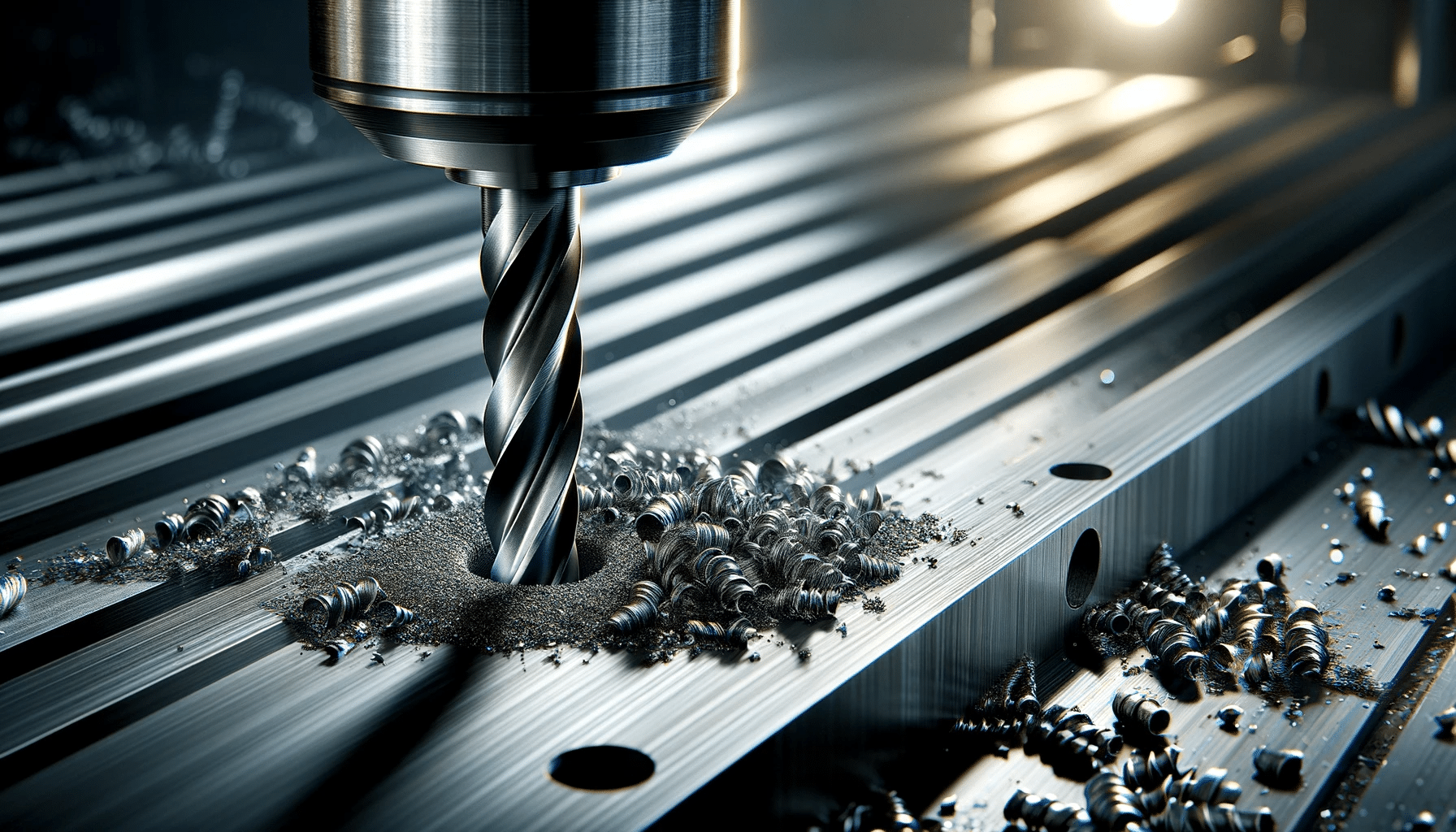
Cobalt drill bits are essentially steel that’s been infused with a healthy dose of… well, cobalt. Typically, you'll see them labeled as HSS-Co, meaning High-Speed Steel with Cobalt. The percentage usually hovers around 5% or 8% (HSS-Co5 and HSS-Co8). Think of it like adding super-strength serum to an already tough guy. This cobalt stuff makes the bit incredibly hard and gives it a much higher heat resistance. And let me tell you, when you’re drilling into metal, heat is your nemesis. It’s like trying to shave with a dull butter knife – messy, painful, and ultimately ineffective.
Why is heat so bad? Well, when a drill bit gets too hot, it starts to lose its temper. No, really. It actually softens up. It becomes less able to cut and more prone to… well, melting. And nobody wants a melted drill bit. It's the ultimate defeat. It’s like your drill bit saying, "You know what? This is just too much effort. I'm going to go lie down and contemplate the futility of existence."

Cobalt bits, on the other hand, can handle the heat. They can keep spinning and cutting even when things get toasty. This means you can drill deeper, faster, and more efficiently without worrying about turning your expensive metal into a molten puddle. It’s like giving your drill a tiny, personal air conditioner and a suit of armor.
Beyond Cobalt: The Real Heavyweights
But wait, there’s more! For those of you who like to push the boundaries, who laugh in the face of mere steel and say, "Is that all you've got?", there are even more hardcore options. We’re talking about Carbide bits.
Carbide… sounds tough, right? It is. Tungsten carbide, to be precise, is often mixed with other metals to create drill bits that are ridiculously hard and wear-resistant. These are the folks you bring out when even the cobalt bits are starting to sweat. Think of them as the drill bit equivalent of a titanium exoskeleton. They’re not as common for everyday DIYers because they can be a bit more brittle. They're like a super-strong, but slightly clumsy, bodybuilder. You don't want to drop them.

Then you’ve got bits with special coatings. You might see bits with a black oxide coating, which offers some rust resistance and improved lubricity. That’s like giving your drill bit a nice, sleek, aerodynamic paint job. But for the really tough stuff, you’ll find bits with TiN (Titanium Nitride), TiAlN (Titanium Aluminum Nitride), or even ZrN (Zirconium Nitride) coatings. These coatings are incredibly hard and can withstand even higher temperatures. It’s like giving your drill bit a suit of diamond-encrusted armor that also magically repels heat. These are the drill bits that could probably take on a dragon and win. (Disclaimer: I have not tested this. Please do not attempt to drill a dragon.)
So, When Do You Actually Need One?
Now, before you rush out and buy a whole set of drill bits that could probably survive a nuclear apocalypse, let's be realistic. You don't need a cobalt bit to drill through a thin piece of sheet metal for a birdhouse. Your regular HSS bits will be perfectly happy. But if you're:
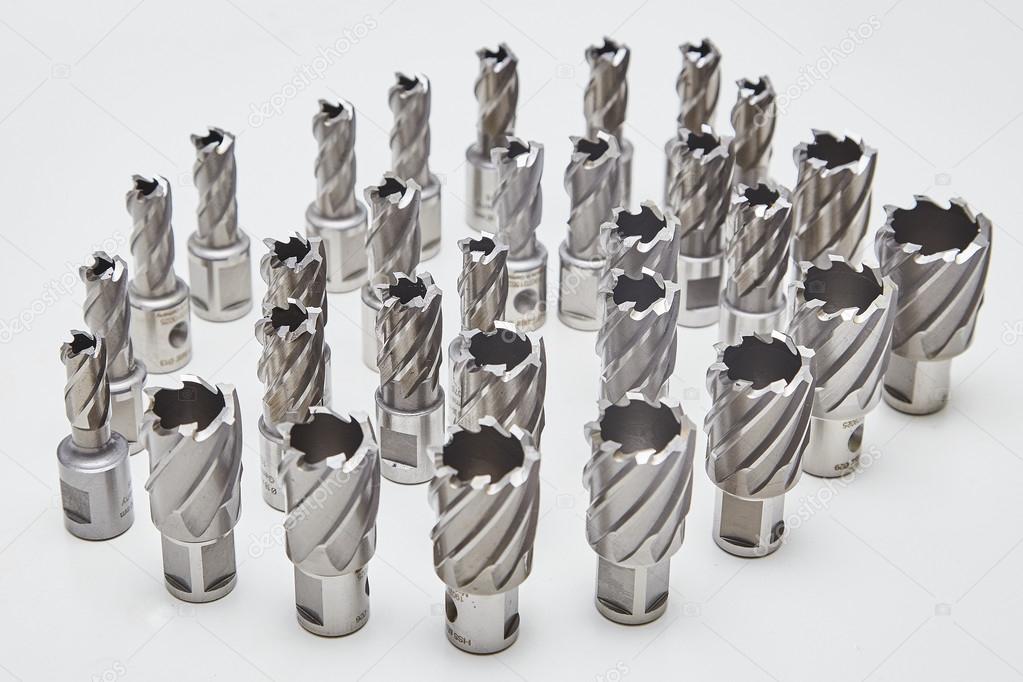
- Working with thick steel plates.
- Drilling into stainless steel (that stuff is notoriously tough!).
- Tackling hardened steel (think tool steel, things that are meant to be incredibly durable).
- Dealing with cast iron.
- Just plain tired of your drill bits giving up the ghost after a few holes.
… then it's time to level up. It's time to embrace the heavy metal drill bit.
A Word to the (Future) Wise
Using these bad boys isn't just about having a tougher tool; it's about using it correctly. You still need to use cutting fluid or oil. It's like giving your drill bit a drink of water on a hot day – it cools things down and helps it cut more smoothly. And for the love of all that is hole-y, go slow! Don't try to force it. Let the bit do the work. Respect the metal, respect the bit, and you'll end up with a clean, precise hole. You'll be the hero of your own DIY saga, armed with nothing but a drill and a bit that laughs in the face of density.
So, the next time you’re faced with a piece of metal that looks like it’s been sculpted by Thor himself, don't despair. Just reach for the heavy metal drill bit. It’s the unsung hero of every serious metalworking project, the quiet conqueror of all things hard and unyielding. Now, if you'll excuse me, I have some very stubborn bolts to drill out. Wish me luck… and maybe send some of those tiny blacksmiths my way.