
Explain The Difference Between Kinetic Energy And Potential Energy
Ever wondered why a roller coaster can zoom up and then plunge down with such thrill? Or why a ball tossed into the air eventually comes back to earth? It all comes down to two fundamental types of energy: kinetic energy and potential energy. Understanding the difference between these two isn't just for scientists in lab coats; it’s a fascinating peek into how the world around us moves and stores energy, and it can make everyday observations a lot more interesting!
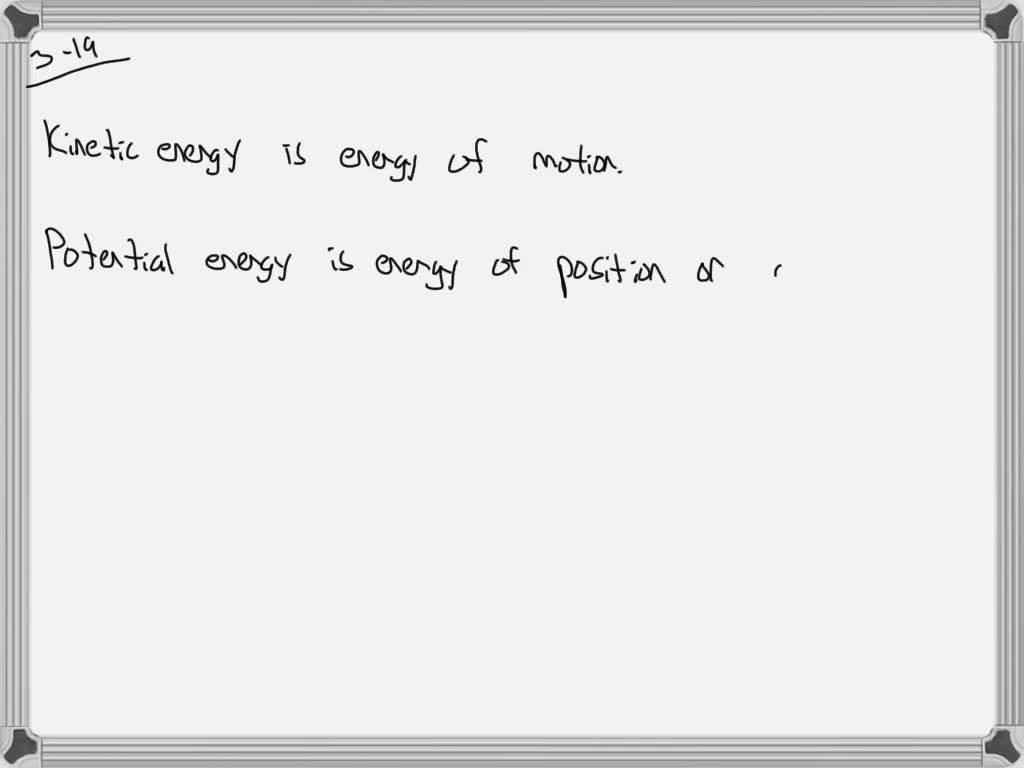
Think of it this way: potential energy is like stored-up possibility. It's the energy an object possesses due to its position or state. The higher an object is, the more potential energy it has because gravity could pull it down further. Similarly, a compressed spring has potential energy because it has the potential to expand. It’s the energy that could be released. On the flip side, kinetic energy is the energy of motion. If an object is moving, it has kinetic energy. The faster it moves and the more mass it has, the more kinetic energy it possesses. It’s the energy that is being used.
The beauty of these two is that they are constantly transforming into one another. This interplay is what makes so many things happen. In our roller coaster example, as the coaster climbs the first big hill, it’s gaining potential energy. Once it reaches the top and starts to descend, that stored potential energy is converted into kinetic energy, making it speed up. As it goes back up smaller hills, some kinetic energy is converted back into potential energy, and so on. This transformation explains the dynamic nature of many systems and is a core concept in physics, helping us predict and understand everything from the swing of a pendulum to the orbits of planets.
Where do we see this in action? Everywhere! In education, it’s a cornerstone of physics lessons, helping students grasp concepts of motion, gravity, and forces. In our daily lives, think about a dam holding back water. That water has immense potential energy. When released, it flows through turbines, converting that potential energy into kinetic energy to generate electricity. Even something as simple as walking involves this dance: when you lift your foot, you're storing potential energy, and as you step forward, it transforms into kinetic energy. A parked car on a hill has potential energy; a car in motion has kinetic energy.
Exploring these concepts can be surprisingly easy and fun! Try this: take a ball and hold it up high. That's potential energy. Now, drop it. As it falls, that potential energy turns into kinetic energy. Notice how it speeds up as it gets closer to the ground. Or, grab a slinky. Stretch it out and hold it – that's potential energy in its compressed state. Let it go, and watch it spring back, demonstrating the release of that stored energy. Even observing a child on a swing illustrates the principle perfectly: at the highest point, they have maximum potential energy, and at the lowest, maximum kinetic energy. It’s a constant, mesmerizing transformation of energy all around us!