
Finding Tube Length Of A Telescope
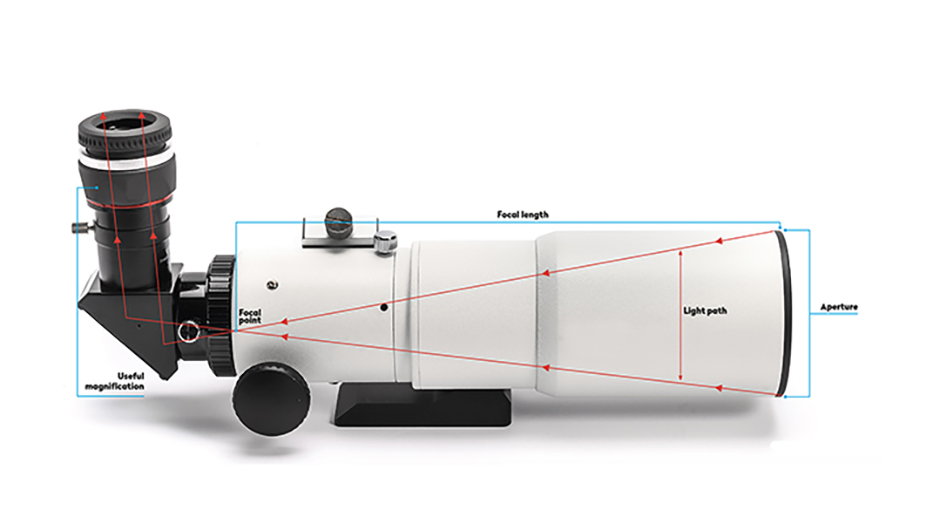
Ever looked up at the night sky, felt that spark of wonder, and thought, "I wish I could get a closer look at that nebula?" Telescopes are our magical portals to the cosmos, but sometimes, getting them to perform their best involves a little bit of hands-on magic of our own. Today, we're diving into a surprisingly fun and incredibly useful aspect of telescope ownership: finding the tube length. It might sound a bit technical, but trust us, understanding this simple measurement unlocks a world of better views and smoother celestial adventures.
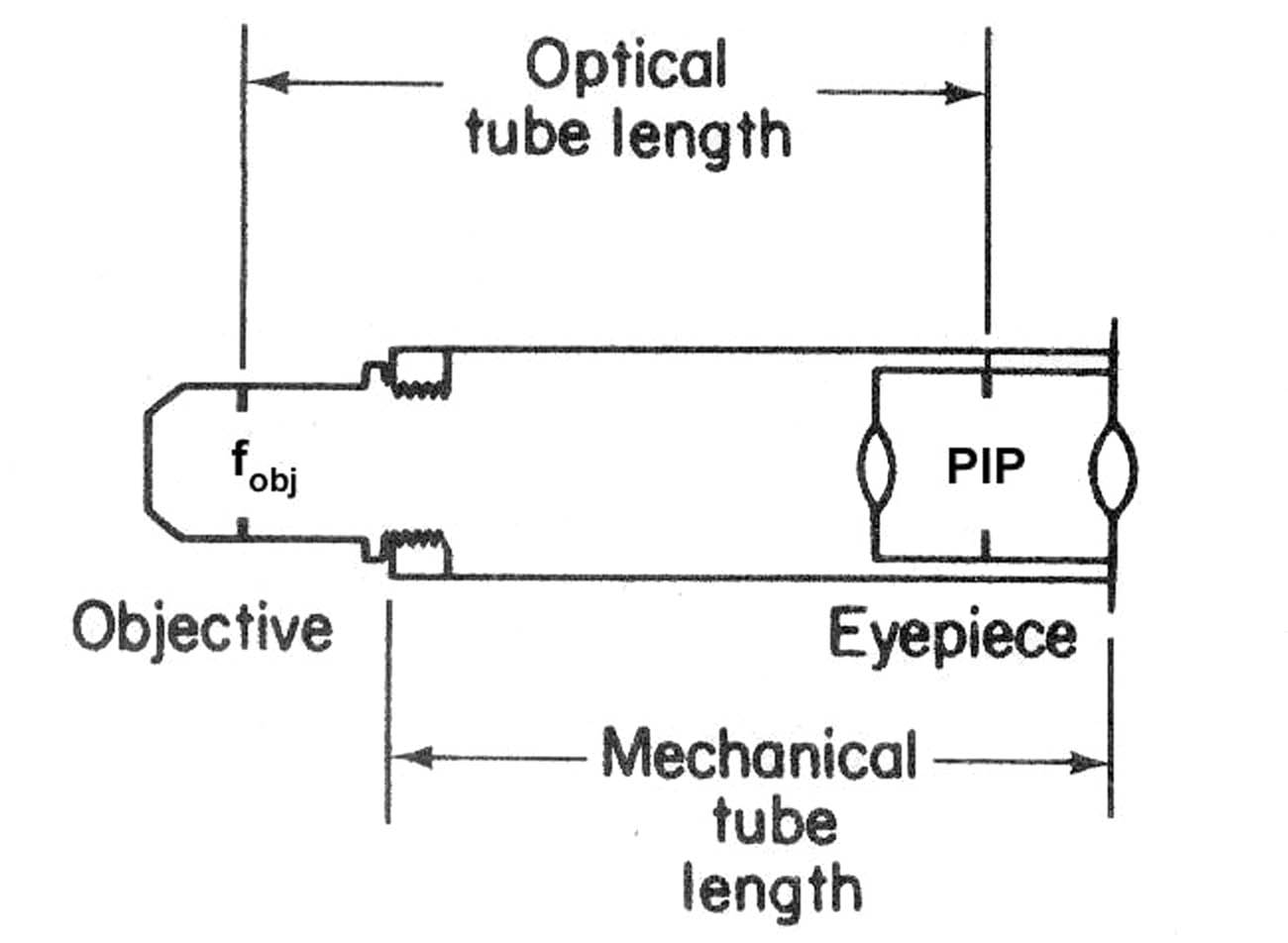
Why is tube length so important? Think of it as the heart of your telescope's optical system. It's the physical distance between where the light enters (the objective lens or primary mirror) and where it's focused to meet your eyepiece. This distance directly influences how your telescope magnifies images and how well it performs. Getting this measurement right can be the difference between a blurry, disappointing view and a crystal-clear, awe-inspiring encounter with distant galaxies and planets.
The Purpose and Benefits of Knowing Your Tube Length
So, what exactly are we gaining by understanding the tube length? For starters, it’s crucial for eyepiece compatibility. Different eyepieces have varying focal lengths, and the relationship between your telescope's focal length (which is directly related to its tube length) and your eyepiece's focal length determines your magnification. If you're looking to buy new eyepieces or accessories, knowing your telescope's focal length, derived from its tube length, is non-negotiable. Without this information, you might end up with an expensive accessory that simply doesn't work well with your scope, leading to frustration instead of stargazing bliss.
Beyond eyepiece selection, understanding tube length is essential for focusing. Most telescopes have a focuser that allows you to move the eyepiece in and out to achieve a sharp image. The range of this focuser is designed with your telescope's specific tube length and focal length in mind. If you're ever troubleshooting focusing issues, or if you're considering modifications like adding a secondary mirror or a different kind of focuser, knowing the fundamental tube length is your starting point.
Furthermore, for those who enjoy astrophotography, tube length is a fundamental parameter. The focal length of your telescope dictates the field of view and the scale of the image projected onto your camera sensor. Understanding this relationship allows you to choose the right equipment and settings to capture stunning images of celestial objects. Want to photograph the Moon in detail? Or maybe capture the vastness of a star cluster? Your telescope's tube length plays a significant role in achieving these photographic goals.
It also helps with transportation and storage. While not directly about the optics, knowing the precise tube length can be helpful for planning how your telescope will fit in its case, in your car, or on your shelf. Some telescopes, especially larger ones, can be disassembled, and knowing the lengths of the components can make packing and unpacking much more efficient.
Finally, there’s a certain satisfaction that comes from truly understanding your equipment. When you know the tube length of your telescope, you’re not just an observer; you’re a more informed and empowered user. This deeper knowledge can lead to more enjoyable observing sessions and a greater appreciation for the engineering that brings the universe within our reach. It’s like learning a few basic chords on a guitar; suddenly, you can play more songs and explore the instrument with more confidence.
Finding Your Telescope's Tube Length: Simple Methods for Everyone
Now, how do you actually find this magical measurement? Don't worry; it's not as complicated as rocket science. There are a few straightforward methods you can use, depending on your telescope's type.

For Refractor Telescopes (the long, tube-like ones):
Refractors are generally the easiest. These are the telescopes that look like long tubes with a lens at the front and an eyepiece at the back. For these, the tube length is essentially the physical length of the main optical tube, from the front of the objective lens (or where it's housed) to the back where the focuser is attached.
Simple Measurement: The most direct way is to grab a trusty tape measure. Measure from the very front of the objective lens housing to the point where the focuser starts to accept the eyepiece. Be as precise as you can. If there's a dew shield that extends, you can measure with and without it extended, depending on your needs, but generally, the main optical tube is what we're after.
Pro Tip: Sometimes, the objective lens itself is recessed slightly. Measure to the front edge of the lens housing or the end of the main tube, whichever is the outermost point of the optical path.
For Newtonian Reflector Telescopes (the ones with a mirror at the back):
Newtonians are a bit different. They have a primary mirror at the bottom of the tube and a smaller secondary mirror that directs light out the side to the focuser. Here, the tube length is still important, but it’s more about the distance from the primary mirror to the focal plane. However, for practical purposes of identifying your scope or purchasing accessories, the physical length of the optical tube is usually what people refer to when talking about "tube length" in a general sense.
Physical Tube Measurement: Similar to refractors, measure the outer length of the main optical tube. This is usually from the back end where the primary mirror is housed to the front end where the spider vanes (which hold the secondary mirror) are located.
Important Note: For Newtonians, the effective focal length is a more critical optical specification. This is determined by the primary mirror's focal length. While the physical tube length is a good indicator, it’s the primary mirror’s properties that truly define its optical reach. However, knowing the physical tube length is still useful for handling and fitting.
For Catadioptric Telescopes (like Schmidt-Cassegrains or Maksutov-Cassegrains):
These are the more compact, often tube-within-a-tube designs. They use a combination of mirrors and lenses. For these telescopes, the tube length is usually quite short relative to their focal length due to their folded optical path.
Compact Design Measurement: Measure the physical length of the telescope tube. These are often circular and have a distinctive corrector plate at the front and a mirror system at the back.
Key Insight: Catadioptric telescopes are prized for their portability. Their ingenious optical design packs a long focal length into a short tube. When you look up specs, you'll often see the focal length (e.g., 2000mm) and the actual tube length (e.g., 400mm). This difference highlights the power of their folded optics.
When in Doubt: Consult Your Manual or Online Resources!
If you’re still unsure, the easiest path is often to consult the original manual that came with your telescope. It will almost certainly list the specifications, including focal length and often approximate tube dimensions. If you’ve lost the manual, don’t fret! A quick search online using your telescope’s make and model will usually bring up detailed specifications from the manufacturer or reviews that list these important measurements.
Knowing your telescope's tube length isn't just about dusty numbers; it's about unlocking the full potential of your stargazing equipment. It empowers you to make informed decisions, troubleshoot effectively, and ultimately, enjoy more breathtaking views of the universe. So, grab that tape measure, explore your telescope, and get ready for some clearer, brighter adventures under the stars!