
Fixing Dents In Stainless Steel Appliances

Ah, the stainless steel appliance. It’s the workhorse of our kitchens, the gleaming centerpiece that whispers promises of culinary adventures and family feasts. We love it for its sleek look, its modern vibe, and the fact that it probably cost more than our first car. But then… it happens. A rogue pot lid, a playful toddler’s toy, or maybe even a moment of pure, unadulterated clumsiness sends a tiny little thwack reverberating through your kitchen. And there it is. A dent. A blemish. A tiny, metallic frown on your otherwise smiling appliance.
It’s like finding a gray hair when you were sure you were still in your prime. A little chip in your favorite mug. A minuscule scratch on your brand-new phone screen. It’s that moment when you sigh and think, "Well, there goes perfection." Don't you just hate that? That little sinking feeling in your gut when you spot a new imperfection on something you’ve painstakingly tried to keep looking showroom-ready?
We've all been there, right? You’re whipping up a masterpiece, feeling like a five-star chef, and BAM! The heavy cast iron pan, which you were sure was securely on the counter, decides to take a swan dive onto your beloved refrigerator door. Or perhaps you’re juggling groceries, keys, and a toddler, and in the chaos, your grocery bag strap grazes the side of the dishwasher with a sound that makes your heart skip a beat. It’s that universal kitchen dread. That, "Oh no, what have I done?" moment that can send shivers down your spine.
But here’s the thing: those dents, while annoying, aren't usually the end of the world. They’re like tiny battle scars, telling the story of a well-lived, well-used kitchen. And the good news? For many of these minor mishaps, there are surprisingly simple and ridiculously low-tech ways to fix them. No need to call in the cavalry, or your highly paid appliance repair person. We're talking about DIY fixes that are so easy, you might even be able to do them while simultaneously keeping an eye on the kids and humming your favorite tune.
Think of it like this: your stainless steel appliance is a bit like your favorite pair of jeans. They’re awesome, they’re durable, but over time, they’re going to pick up a few scuffs and maybe even a tiny tear. Does that mean you throw them out? Of course not! You patch them up, embrace the character, and keep on rocking them. Your appliances deserve the same love.
The "Is This Even Real?" Dent
Sometimes, the dent is so small, so insignificant, you’re not even sure if you imagined it. You squint, you tilt your head, you get down on your hands and knees like a detective searching for a microscopic clue. You poke it. You prod it. "Did that scratch just appear out of thin air?" you mutter to yourself, convinced the appliance fairy has paid you a visit. These are the easiest ones to tackle, because they often haven't deeply offended the metal yet.
For these little blips, sometimes all you need is a good ol' fashioned heat and cool trick. Now, I know what you're thinking: "Heat? On my shiny appliance? Are you trying to turn it into a pretzel?" Nope! We're talking about localized, controlled heat. Think of it like gently coaxing the metal back into place.
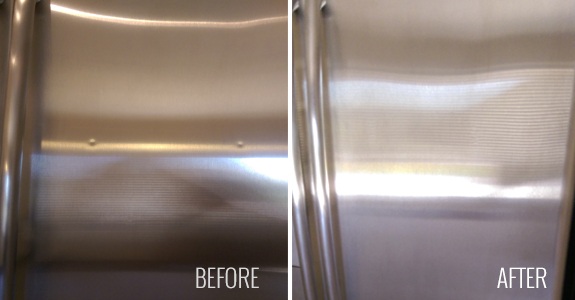
The most common method involves a hair dryer. Yes, that magical device that usually tames your wild hair. You're going to blast the area around the dent with warm air for a minute or two. The idea is to make the metal expand just a tiny bit. Then, immediately after, you’ll grab something cold. An ice pack is perfect, but even a can of compressed air held upside down (for that blast of super cold stuff) can work. The rapid cooling causes the metal to contract. Sometimes, this dramatic temperature shift is enough to pop the dent right out, or at least significantly reduce its appearance. It’s like giving the metal a gentle, surprised jolt.
Imagine you're trying to unwrinkle a crinkled piece of paper. You might use a little bit of steam or warmth to loosen it up, and then maybe press it flat. This is kind of the same principle, just with metal. It’s not rocket science, folks. It’s just a bit of physics playing nice with your kitchenware.
You might need to repeat this a few times. Don’t get discouraged if it doesn’t pop out on the first try. Be patient. Think of yourself as a kitchen surgeon, performing a delicate operation with a hairdryer and an ice pack. It’s got a certain flair, doesn't it?
The "Uh Oh, That's Not Good" Dent
Okay, so maybe the dent is a little more… pronounced. Not a gaping chasm, but definitely more than just a whisper. You can see it from across the room. It’s like that slightly crooked picture frame you’ve been meaning to straighten for weeks. It just stares at you, a constant reminder of that one unfortunate incident.

For these slightly more stubborn dents, we’re going to bring in the big guns. Well, not actual big guns. We're talking about a plunger. Yes, your bathroom plunger. I know, it sounds utterly ridiculous. But hear me out. Those plungers are designed to create suction, and that suction can be your best friend when it comes to pulling out dents.
First, you’ll want to clean both the plunger and the dented area thoroughly. Nobody wants to be pulling bathroom funk onto their refrigerator. Make sure the rubber rim of the plunger is nice and wet – this helps create a better seal. Then, firmly press the plunger onto the dent. You want a good, tight seal. Now, the fun part: yank! Pull the plunger away with a firm, steady motion. If you’re lucky, the suction will be enough to pull the dent out. You might need to try this a few times, adjusting the position of the plunger to get the best grip.
This method works best on dents that are relatively smooth and don’t have sharp creases. If the dent is more like a crumpled piece of paper, a plunger might not be your hero. But for those rounded, more gradual dents? It’s a surprisingly effective, and dare I say, satisfying, technique. It's like giving your appliance a little vacuum massage to help it feel better.
Some folks even recommend using a suction cup, like the kind you use to hang things. The principle is the same: create suction and pull. Whatever you use, the key is a good seal and a firm, but not overly aggressive, pull. You don’t want to pull so hard that you warp the surrounding metal.

The "Is This Even Repairable?" Dent (Spoiler: Probably Yes!)
Now, let’s talk about those dents that look like someone took a mischievous toddler and let them have a field day with a toy hammer. Sharp creases, maybe even a slight ripple effect. These are the ones that make you want to just cover them up with a strategically placed magnet and pretend they don’t exist.
For these more serious dents, you might need to get a bit more creative. This is where things can get a little more involved, but still totally doable without calling in a professional. The idea here is to work the metal from the back, if possible, or to gently manipulate it from the front.
If you can access the back of the panel where the dent is located (this might be tricky depending on your appliance and the location of the dent – think inside the dishwasher door, or behind a removable panel on the fridge), you can try using a rubber mallet or even a block of wood and a hammer. Gently tap from the back, working your way around the edges of the dent, trying to push the metal back into its original shape. The key here is gentle. You are coaxing, not demolishing.
If you can’t access the back, you might need to try some more delicate manipulation from the front. This is where things like a dent puller kit, often used for car dents, can come in handy. These kits usually involve an adhesive you apply to the dent, a pulling tab, and a tool to pull the tab. It’s like a mini, DIY version of professional car dent repair. You'll need to be careful with the adhesive, and always test it in an inconspicuous area first if you're worried about scratching the finish.

Another popular, albeit slightly more advanced, method involves using a heat gun and dry ice. You heat the dented area with the heat gun (again, moderately, don’t go crazy), and then immediately apply dry ice. The extreme cold can cause the metal to contract rapidly, potentially popping the dent out. This method requires caution, as dry ice can cause frostbite, so wear gloves and eye protection. It’s a bit more dramatic, and probably not your first go-to for a tiny ding, but it can be effective for more stubborn dents.
The "It's Still Not Perfect, But It's Better!" Mentality
Let’s be honest. Sometimes, even with the best efforts, a dent might not disappear entirely. You might be left with a faint outline, a slight shimmer where the metal was once smooth. And that’s okay! The goal isn’t always to achieve factory-new perfection. It’s about improving the situation, reducing the visual annoyance, and saving yourself a potentially expensive repair. Think of it as embracing the character of your appliance. It’s been through a lot with you, after all.
It's about that feeling of accomplishment. That little smirk you get when you look at the appliance and think, "Yep, I fixed that myself." It’s the same feeling you get when you successfully assemble IKEA furniture without crying, or when you manage to get that stubborn jar of pickles open on the first try. It’s a small victory, but a victory nonetheless.
And sometimes, the best fix is simply to strategically place a magnet. We’ve all got those cute souvenir magnets, right? A silly quote, a picture of your pet, a reminder of a great vacation. Why not use them to cover up those little metallic boo-boos? It’s a practical and charming way to disguise imperfections.
Ultimately, fixing dents in stainless steel appliances is about being resourceful and embracing a little bit of DIY spirit. It’s about knowing that you don’t always need the most expensive tools or the most complicated techniques to make things look better. Sometimes, all it takes is a hairdryer, a plunger, and a little bit of patience. So the next time you spot a dent, don’t despair. Grab your tools, channel your inner MacGyver, and get to work. Your stainless steel workhorse will thank you for it, and you’ll probably have a funny story to tell at your next dinner party.