
Food Keeps Sticking To Stainless Steel Pan
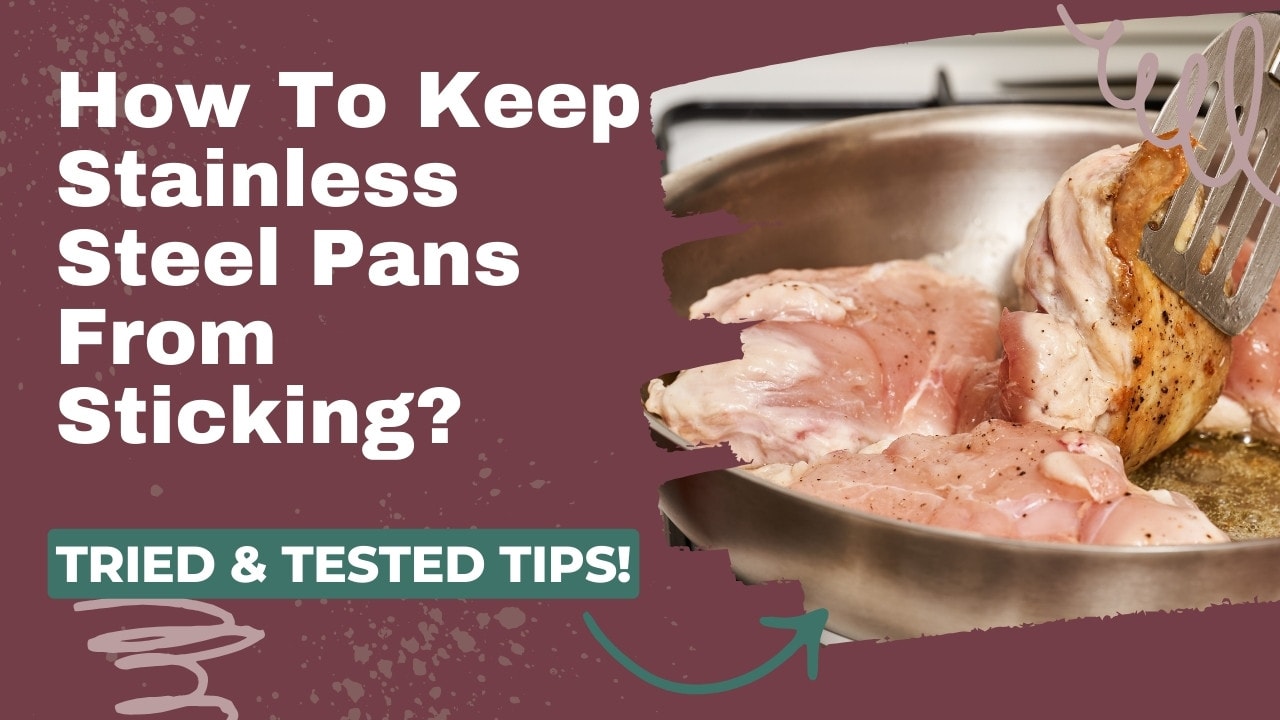
Hey there, fellow kitchen adventurers! Ever find yourself staring into your trusty stainless steel pan, only to discover that your perfectly seared scallops or your delicate fried egg have decided to stage a rebellion, sticking firmly to the bottom like they’ve taken root?
Yeah, it’s a tale as old as time, or at least as old as stainless steel cookware. It’s one of those kitchen mysteries that can leave you scratching your head, wondering if your pan has a secret grudge against your culinary creations. But fear not! This isn't some cosmic conspiracy; it's just a little bit of science and a sprinkle of know-how. And honestly, understanding why this happens is kind of neat, don't you think?
The Sticky Situation: Why Does Food Love My Stainless Steel So Much?
So, what’s the deal? Why does that smooth, shiny surface seem to have a magnetic attraction for bits of food? It all boils down to a few key players: heat, oil, and the surface itself.
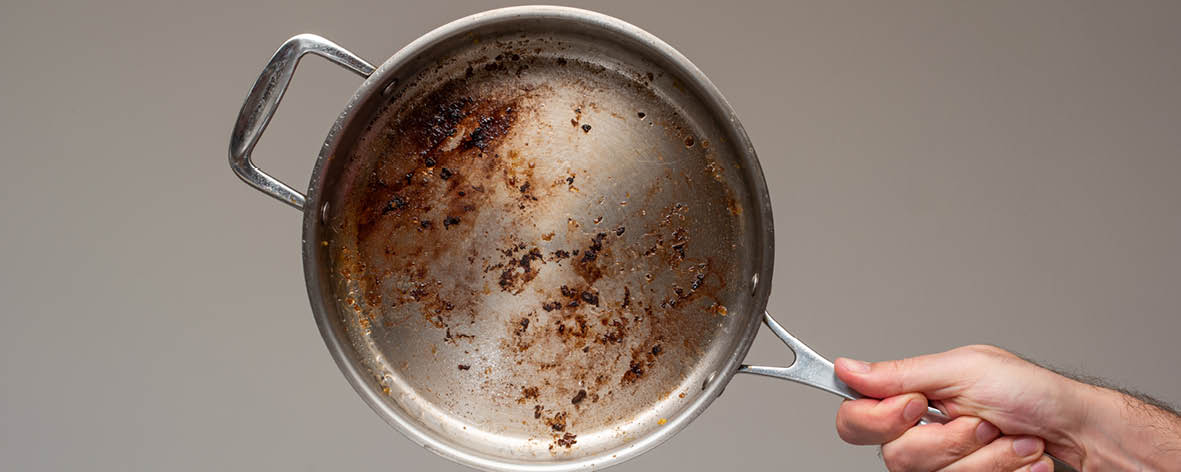
Think about stainless steel. It looks super smooth, right? But on a microscopic level, it's actually quite rough. It’s like a tiny mountain range, full of little valleys and peaks. When you introduce food and heat, those food particles can easily find their way into those little nooks and crannies. Once they’re in there, especially with the help of heat, they can essentially bake themselves into those tiny indentations. It's like they're trying to become one with the pan!
This is especially true for proteins. Eggs, fish, and meats have complex structures that can break down and bond with the metal. It’s a bit like a handshake that gets a little too firm.
The "Leidenfrost Effect" – Not So Scary After All!
You might have heard whispers of the "Leidenfrost Effect" when talking about non-stick cooking. It’s a real thing, and it’s pretty cool. This effect happens when a liquid, like water or oil, comes into contact with a surface that is significantly hotter than its boiling point.
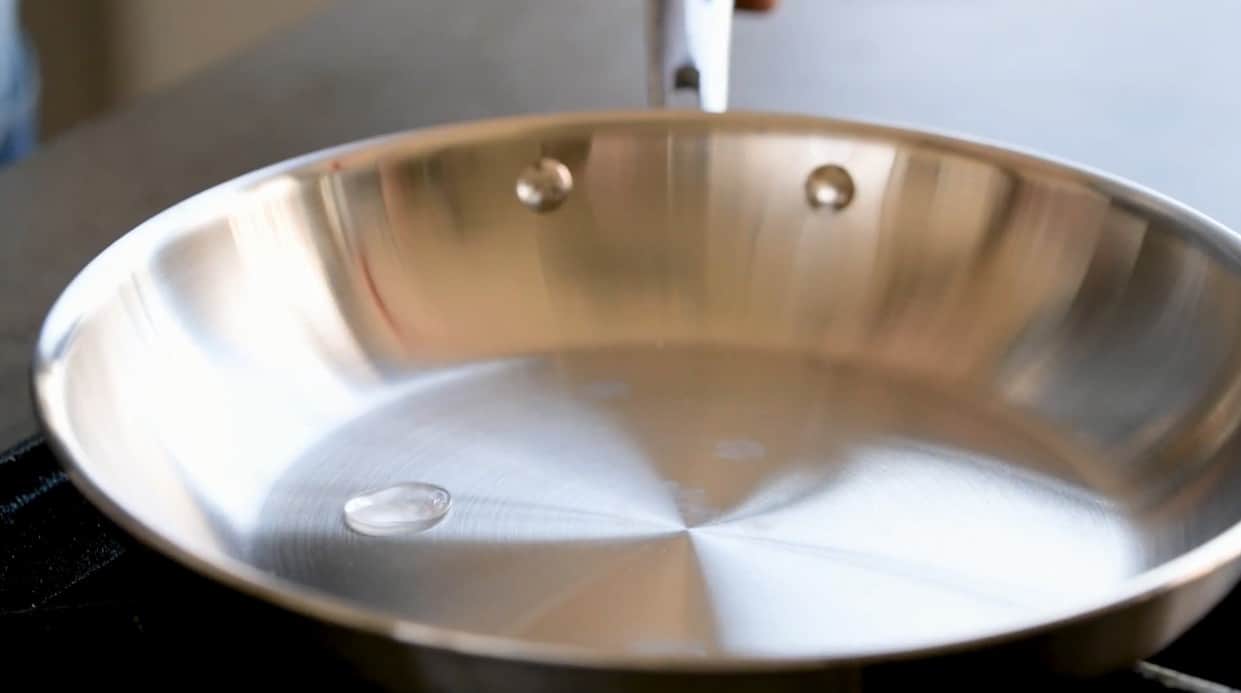
When your pan is just right, and you drop a tiny bit of water in, what happens? It doesn't just sizzle and disappear. It dances! It skitters around the pan like a tiny hovercraft on a cushion of steam. That little steam cushion is the key. It’s lifting the water droplet (or your food!) ever so slightly off the pan's surface.

If your pan isn't hot enough, that steam cushion doesn't form properly. The liquid (or the oils from your food) just sinks into those microscopic valleys and makes contact. No cushion, no dance, just sticking. So, getting the pan to the right temperature is crucial. It’s like setting the stage for a graceful ballet, not a clumsy wrestling match.
The Role of Oil: More Than Just Lubrication
We all know oil is important for cooking. But in a stainless steel pan, it plays a starring role in preventing sticking. Think of oil as the smooth operator. It’s supposed to fill in those microscopic valleys and create a more even, less grippy surface for your food.
But here’s the catch: too little oil, and those valleys are still exposed. Too much oil, and it can get too hot and smoke, which isn't ideal for flavor and can sometimes contribute to sticking too. It's a delicate balance, like trying to walk a tightrope while juggling.
The type of oil matters too! Oils with higher smoke points, like avocado oil or grapeseed oil, are generally better for getting those pans nice and hot without burning. If your oil starts smoking aggressively, it’s a sign that it’s broken down and won’t do its job of creating that protective layer as well.
Preheating: The Unsung Hero
This is where many of us might stumble. We’re in a hurry, we toss the food in, and BAM! Sticking. But proper preheating of your stainless steel pan is arguably the most important step to prevent sticking.
You want to heat the pan gradually. This allows the metal to expand evenly, and more importantly, it helps to create that super-heated surface where the Leidenfrost Effect can work its magic when you add your oil. Imagine you’re slowly warming up a sleepy giant; you don’t want to startle it.
How do you know when it's ready? A good trick is the water test. Drop a few drops of water into the heated pan. If they sizzle and disappear immediately, it’s not hot enough. If they form a solid ball and skitter around, you’re golden! If they just sit there and evaporate slowly, it's too cool. You're aiming for that dancing water droplet performance.
The "Seasoning" Myth and Reality
Now, some folks might think, “But my cast iron gets seasoned, so why can’t my stainless steel?” Well, that’s where things get interesting. Stainless steel is different. It doesn’t really develop a "seasoning" in the same way that cast iron does.
Cast iron is porous, and its seasoning is essentially layers of polymerized oil baked onto the surface, creating a naturally non-stick finish. Stainless steel, on the other hand, is non-porous. You can’t build up that same kind of protective layer.
So, when you hear about “seasoning” a stainless steel pan, it’s often a misnomer. What people are usually doing is creating a temporary barrier, often by heating oil and then wiping it out. It can help a little, but it’s not a permanent solution like it is for cast iron. The key to stainless steel is technique, not a permanent built-in non-stick coating.
Troubleshooting Your Sticky Pan Blues
So, if your pan is still being a bit of a diva, what can you do? Let’s break down some common culprits and solutions.
1. The Pan Isn't Hot Enough
Solution: Be patient! Let that pan heat up gradually over medium heat for a few minutes before adding your oil. Do the water test. It’s worth the wait, trust me.
2. Not Enough Oil
Solution: Don’t be shy, but don’t drown it either. Add enough oil to coat the bottom of the pan. Let the oil heat up until it shimmers – that's a good indicator it's ready for your food.
3. Adding Food to a Cold Pan (with Cold Food!)
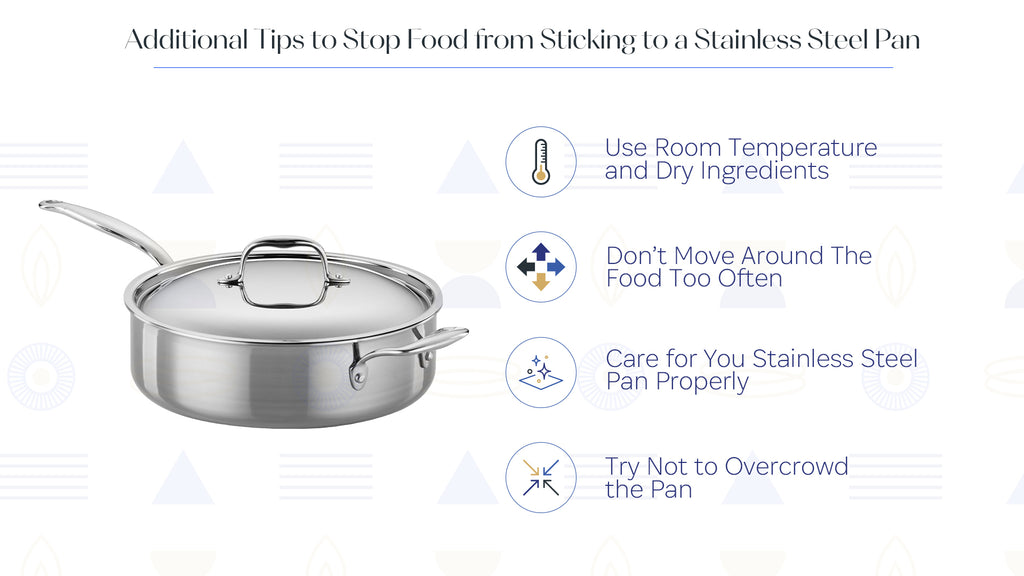
Solution: This is a recipe for disaster. Always add your food to a hot pan with hot oil. If you’re cooking something cold, like fish straight from the fridge, let it sit out for a few minutes to come closer to room temperature. This helps it cook more evenly and prevents temperature shock, which can cause sticking.
4. Too Much Heat, Too Fast
Solution: While you need heat, blasting your pan on high can burn the oil and the food before it has a chance to cook properly. Start with medium heat and adjust as needed. Stainless steel conducts heat incredibly well, so you often don’t need super high temperatures.
5. Overcrowding the Pan
Solution: When you cram too much food into the pan, you lower the pan’s temperature significantly. This means less effective searing and a higher chance of sticking. Cook in batches if necessary. Give your food some breathing room!
The Joy of the "Fond" – A Silver Lining!
Now, here's a bit of good news. Sometimes, the bits that stick to your stainless steel pan aren't entirely a bad thing. That browned, caramelized residue left behind? That’s called fond, and it's pure gold for flavor!
It’s the base for incredible pan sauces, gravies, and deglazed dishes. So, while we’re trying to avoid having our entire meal welded to the pan, a little bit of fond is a sign of successful searing. It’s like the pan is saying, “I worked hard, and I want to leave my mark!”
Learning to properly release food from stainless steel is a skill, but it’s one that unlocks a whole new level of cooking. It’s about understanding your tools and working with them, not against them. So, next time your stainless steel pan is being a bit stubborn, remember these little tricks. It’s not about fighting the pan, it’s about having a chat with it, and learning its language. Happy cooking!