
For Gamma Radiation What Stops Its Penetrating Abilities

Hey there, science nerds and curious cats! Let's dive into something super cool. We're talking about gamma radiation. Sounds a bit sci-fi, right? Like something out of a superhero movie. Well, it kind of is! But instead of giving people superpowers, it's just… well, radiation. And it's pretty darn powerful.
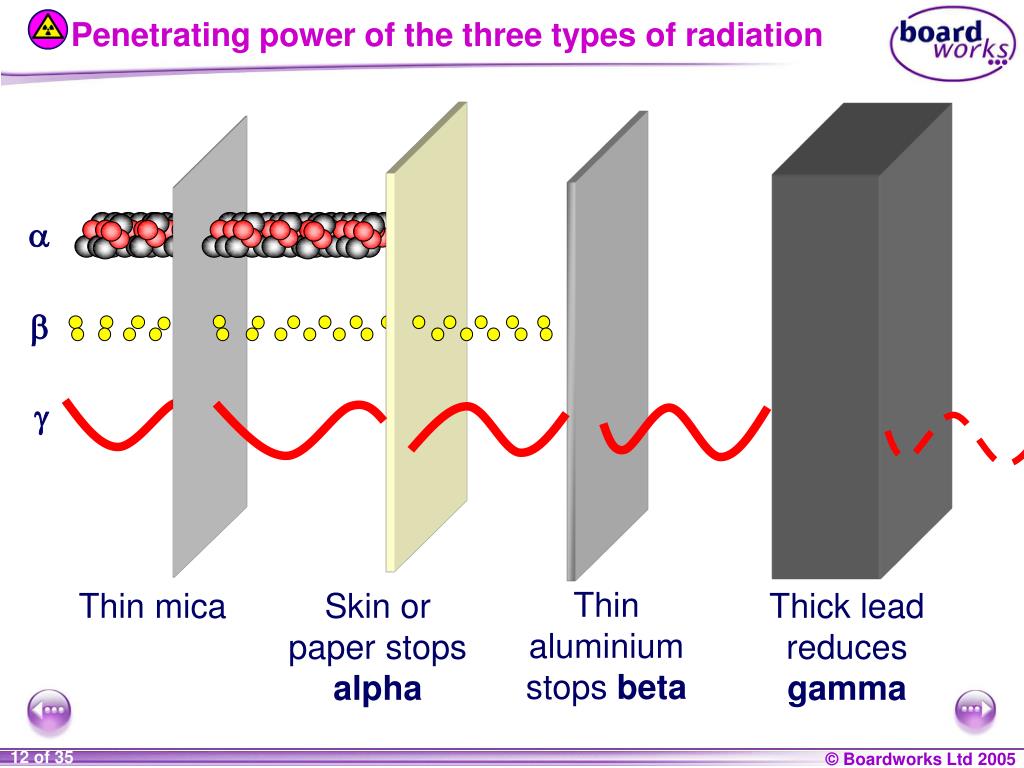
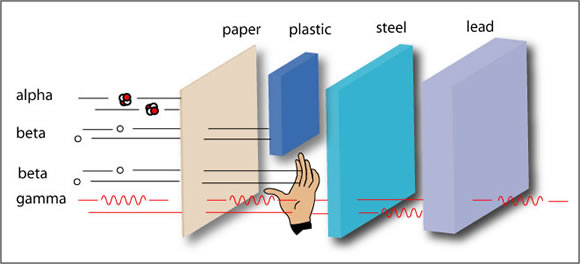
Think of gamma rays as tiny, super-fast energy bullets. They zip around at the speed of light. And when we say they're penetrating, we mean it. These little guys can blast through tons of stuff. Like, a lot of stuff. It's one of their most impressive (and sometimes terrifying) traits. They can go right through your flesh, your bones, even the walls of your house! Yikes.
So, the big question is: what on earth can stop these energetic ninjas? It's not like you can just put up a "No Gamma Rays Allowed" sign. Nope, it takes something a bit more… substantial.
The Mighty Materials That Say "Nope!"
When it comes to blocking gamma radiation, we're talking about playing defense. And our defenders need to be dense. Like, really, really dense. Think of it like trying to stop a super-fast paintball. A piece of paper won't do much. A brick? Better. But we need something even tougher.
The key ingredient is mass. The more stuff packed into a material, the harder it is for those gamma ray bullets to get through. It’s like a giant, immovable wall versus a flimsy curtain. The gamma rays hit the dense material and BAM! They interact with the atoms in that material. They lose energy. They get scattered. They basically get… tired.
Meet the Heavy Hitters
So, what are these heavy-hitting materials? Let's talk about the champions:
Lead. Ah, good old lead. It's the classic movie star of radiation shielding. You see it in X-ray rooms, in nuclear power plants. Why lead? Because it's incredibly dense. Its atoms are big and have lots of electrons. When a gamma ray zips past a lead atom, it's like hitting a speed bump. Or, more accurately, a whole bunch of speed bumps.

The gamma ray might hit an electron and bounce off. Or it might knock an electron right out of its orbit. Or, if it's really unlucky (for the gamma ray, that is), it might even interact with the nucleus of the lead atom itself. Each of these interactions saps the gamma ray's energy. The more lead you have, the more chances for these energy-draining encounters.
Think of it like this: imagine you're trying to throw a tennis ball through a crowd of people. If the crowd is thin, the ball might make it through. But if the crowd is packed shoulder-to-shoulder, the ball is going to hit someone pretty quickly and stop dead. Lead is like that super-packed crowd.
More Than Just Lead
While lead is the poster child, it's not the only game in town. Other dense materials work too.
Concrete. Yep, good old concrete! The stuff we build bridges and buildings with. It's dense and readily available. It’s not quite as effective as lead, pound for pound, but you can use a lot more of it. So, a thick concrete wall can be a pretty good shield. It's especially common in nuclear facilities because, let's face it, you can build a whole lot of concrete.
The trick with concrete is its composition. It's got all sorts of elements in it – calcium, silicon, oxygen, aluminum. These different atoms all help to absorb and scatter the gamma rays. It's like having a mixed martial arts fight instead of just a boxing match. More ways to take down the opponent!
Water. Now this might surprise you! Water? Seriously? Yes, seriously! While not as dense as lead or concrete, water is surprisingly good at shielding gamma rays. Why? Because it's made of hydrogen and oxygen. These lighter atoms can still interact with gamma rays, and when you have enough of them, it adds up.
You often see water used in nuclear reactors. Spent nuclear fuel rods, which are still incredibly radioactive, are stored underwater. The water acts as both a coolant and a shield. It's a pretty clever, and wet, solution!
Steel. Another common material in our world, steel also has good shielding properties. It’s an alloy of iron and carbon, and the iron atoms are pretty good at stopping those energetic gamma rays. It’s often used in combination with other materials for robust shielding.
It's All About Thickness!
But here's the really fun part: it's not just about what you use, but how much you use. You can make almost anything a decent shield if you pile it up high enough.

Imagine trying to stop a cannonball. A thin metal plate won't do much. But a thick steel wall? That's a different story. It's the same principle with gamma rays, just on a much, much smaller scale.
Scientists talk about something called the "half-value layer" (HVL). This is the thickness of a material needed to reduce the intensity of the gamma radiation by half. Different materials have different HVLs. For lead, it's quite small. For something like water, it's larger.
So, to completely block gamma rays, you'd theoretically need an infinite amount of shielding. But in reality, we're just trying to reduce the radiation to safe levels. And that’s where our dense materials come in. A few inches of lead, a few feet of concrete, or a much thicker layer of water can do the trick.
Why Is This So Cool?
Okay, so why is this actually fun to talk about?
First, it's like a giant game of cosmic dodgeball. You've got these incredibly powerful energy bullets whizzing around, and we've figured out how to build little safe havens. It's a testament to human ingenuity!
Second, it highlights the amazing properties of everyday materials. Who knew that a humble block of concrete or a swimming pool full of water could be such a formidable defense against something as potent as gamma radiation? It’s like finding out your grandma’s knitting skills can literally save the world.
Third, it touches on some really important applications. Radiation is used in medicine (think X-rays and radiation therapy), and in industry. But it also comes from natural sources and can be dangerous if we’re exposed to too much. Understanding how to block it is crucial for keeping us safe.
And finally, it’s just a little bit mysterious and powerful. Gamma radiation itself is pretty mind-boggling. The fact that we can understand its behavior and build defenses against it is, in its own way, pretty awesome. It’s a little peek into the invisible forces that shape our universe.
So next time you see a lead apron at the dentist's office, or walk past a concrete wall, give a little nod. They’re working hard, stopping those energetic gamma ray bullets in their tracks. Pretty cool, right?