
Future Of The Solar System In Planetballs

You know, I was staring out the window the other day, watching a particularly fluffy cloud drift by, and I started thinking. About clouds, of course, and how they’re just these big, ethereal water balloons. And then, because my brain apparently has a direct line to the cosmic absurdity, I thought about our own solar system. Specifically, what happens when all our planets decide to have a massive, celestial game of Planetball?
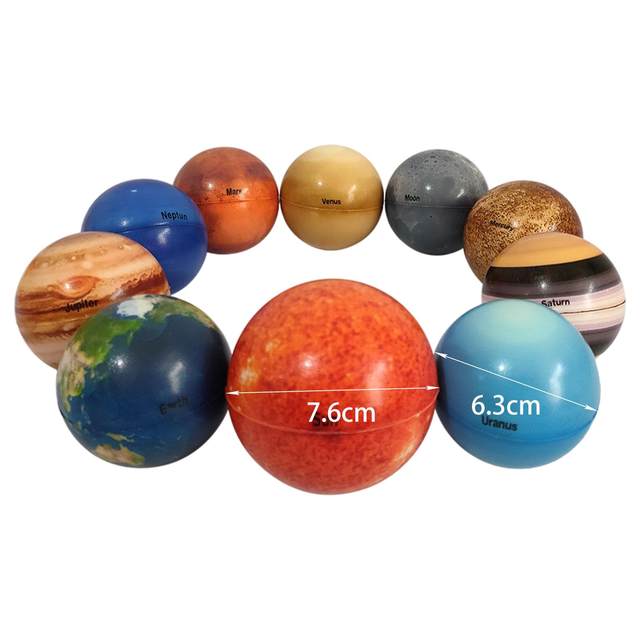
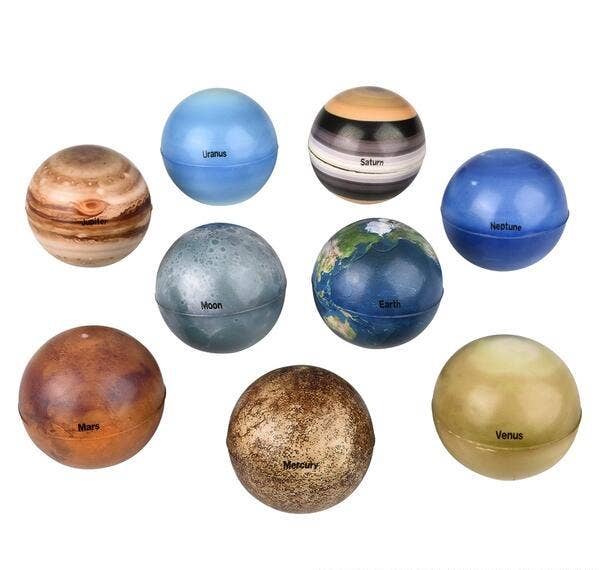
Yeah, Planetball. Imagine it: Jupiter, the ultimate heavyweight, chucking Saturn’s rings like a giant, sparkly discus. Mercury, all zippy and eager, trying to score a goal by whizzing through Venus’s atmosphere. And poor Pluto, bless its little heart, still trying to get invited to the main tournament, even though everyone knows it’s been relegated to the minor leagues. (No offense, Pluto. We still love you.)
This whimsical little thought experiment, as silly as it sounds, actually got me pondering the real future of our solar system. Not in a "will aliens play sports with us?" kind of way, but in a more scientific, albeit still pretty mind-blowing, sense. What’s the long-term game plan for our stellar neighborhood? Are we all just going to hang out in a stable orbit forever, or is something more dramatic on the cards?
Spoiler alert: things are definitely on the cards. And it’s a lot more interesting, and maybe a little terrifying, than a cosmic game of catch. So, grab your metaphorical popcorn (or maybe some space ice cream, if that’s a thing), and let's dive into the truly wild future of our solar system.
The Slow Burn: Gradual Changes
First off, let's not expect Jupiter to suddenly launch a rogue asteroid at Mars anytime soon. The solar system, while seemingly chaotic from afar, is actually governed by some incredibly consistent laws. Gravity, my friends, is the ultimate referee, and it plays a very, very long game. So, the immediate future, in terms of billions of years, is more about a slow, steady evolution.
Think about the Sun. Our magnificent, life-giving Sun. It’s not going to stay a cheerful, yellow dwarf forever. Nope. It’s on a predictable path, just like everything else. Right now, it’s happily fusing hydrogen into helium, providing us with warmth and light. This is its “main sequence” phase, and it’s been doing this for about 4.6 billion years. Pretty good run, right?
But eventually, all good things must come to an end, or at least, change dramatically. The Sun will start to run out of hydrogen fuel in its core. This is where things get a bit… spicy. As the hydrogen depletes, the Sun will begin to contract and heat up. This internal heating will ignite the hydrogen in a shell around the core, causing the outer layers of the Sun to expand.
And when I say expand, I mean ENORMOUSLY. We’re talking about the Sun swelling up to become a red giant. Imagine it: our familiar Sun, now a bloated, fiery behemoth, stretching outwards. It’s a bit like your favorite sweater after a particularly large Thanksgiving dinner. It just… gets bigger. And bigger.
This is where our Planetball game gets seriously disrupted. Mercury? Forget about it. It’ll be gobbled up by the Sun’s expanded atmosphere. Venus? It’s going to get a serious tan, probably a very, very uncomfortable one. And Earth? Well, let’s just say we’ll be living on the Sun’s doorstep. The oceans will boil, the atmosphere will be stripped away, and our beautiful blue marble will become a scorched, uninhabitable husk.
It’s a bit of a sobering thought, isn't it? Makes you appreciate that lukewarm cup of coffee you're probably nursing right now.

But wait, there’s more! The red giant phase isn’t the end of the story for our Sun. After it expands and then sheds its outer layers (which will form a beautiful, but ultimately ephemeral, planetary nebula – think of it as a cosmic light show before the final curtain call), the Sun will shrink down to become a white dwarf. This is a super dense, incredibly hot remnant, about the size of Earth, that will slowly, gradually cool down over trillions of years, eventually becoming a cold, dark black dwarf. Pretty anticlimactic, right? From fiery giant to tiny ember.
The Rocky Road: Planetary Chaos (Eventually)
So, the Sun’s life cycle is a pretty big deal for the inner planets. But what about the outer giants? Jupiter, Saturn, Uranus, and Neptune. They’re a bit further out, so they get a little more breathing room. They won’t be consumed by the red giant Sun, thankfully. But that doesn’t mean they’re safe from the solar system’s long-term shenanigans.
You see, the solar system isn't perfectly stable. It's more like a giant, intricate clockwork, but the gears are constantly nudging each other. Even the tiniest gravitational interactions between the planets over billions of years can accumulate and have significant effects.
One of the biggest concerns is orbital resonance. This is when the orbits of two or more celestial bodies become related by a ratio of small integers. Think of it like two pendulums swinging at slightly different speeds, but then, over time, they start to synchronize in a specific pattern. In the solar system, these resonances can amplify gravitational forces, leading to subtle but persistent changes in the planets' orbits.
Over vast stretches of time, these nudges can cause orbits to become more eccentric (less circular) or even inclined (tilted). Imagine Jupiter and Saturn, the two biggest players, having a bit of a gravitational wrestling match. While they’re unlikely to collide (phew!), their constant tug-of-war can influence the orbits of the other planets.
For instance, there are theories suggesting that certain resonances could eventually perturb Uranus or Neptune into a more eccentric orbit. This could lead to some rather dramatic consequences. One scenario involves one of the ice giants being flung out of the solar system entirely. Talk about a home opener gone wrong!
Another possibility, and this is where it gets really spicy, is that an ejected ice giant could send other planets flying. Imagine a cosmic billiard shot. The ejected planet could collide with another planet, or its gravitational influence could be so strong that it sends another planet careening off into the void, or even towards the Sun.
This is the kind of stuff that makes you want to check your escape pod’s fuel levels. Just in case.
Then there’s the idea of the solar system becoming unstable in a more general sense. While our current models suggest a certain degree of stability for billions of years, there are subtle chaotic effects that could, over eons, lead to a more unpredictable future. It’s like trying to predict the exact path of a single raindrop in a hurricane. We can see the general direction, but the tiny deviations can add up.
The Grand Finale: Cosmic Spectacles
Beyond the internal dynamics of the solar system, there are external forces at play. The galaxy isn't a static place. We’re all moving, and sometimes, our neighborhood can get a little crowded.
The most significant external threat comes from passing stars. Our Sun isn't a solitary wanderer; it's part of the Milky Way galaxy, orbiting the galactic center. As it orbits, it occasionally passes relatively close to other stars. If a star comes too close, its gravity can wreak havoc on our solar system.
Imagine a large, invisible hand reaching into our solar system and giving it a good shake. This gravitational disturbance could easily alter the orbits of planets, comets, and asteroids. It could send the Oort Cloud, a vast reservoir of icy bodies way out beyond Pluto, into turmoil, showering the inner solar system with a barrage of comets.
And let’s not forget about collisions. While direct planet-on-planet collisions are exceedingly rare due to the vast distances involved, a close pass from another star could nudge a rogue planet into a collision course with one of our own. Or, as mentioned before, it could fling comets and asteroids our way, leading to catastrophic impact events.
The good news? These close stellar encounters are also very rare. We’re talking about probabilities that are incredibly low over human timescales. But over billions of years? It becomes a statistical certainty that something will happen.
Another fascinating, albeit even more distant, possibility is the eventual collision of our Milky Way galaxy with the Andromeda galaxy. This is predicted to happen in about 4.5 billion years. While the galaxies themselves are mostly empty space, the gravitational interactions between their stars and planets will be immense.
It’s highly unlikely that our Sun will collide directly with another star. However, the gravitational dance between the two galaxies could significantly rearrange the solar system. Planets could be flung into new orbits, or even ejected from the galaxy entirely. Imagine the cosmic ballet that will unfold! A magnificent, albeit potentially destructive, merger.
So, while you’re enjoying your current view, remember that in the far, far future, the very fabric of our galactic neighborhood will be rewoven. Mind-blowing, right?
So, What’s the Takeaway?
The future of our solar system, as described by science, is not a static picture. It’s a dynamic, evolving story, filled with dramatic transformations, potential chaos, and ultimately, a grand cosmic ballet. From our Sun’s fiery demise to the potential ejection of planets, the universe has a lot of surprises in store for our little corner of space.
It’s easy to get caught up in the day-to-day grind, the traffic jams, and the endless to-do lists. But sometimes, it’s good to step back and consider the truly monumental timescales involved in cosmic evolution. It puts things in perspective, doesn’t it? Your car breaking down suddenly seems a lot less catastrophic when you consider the possibility of your entire planet being consumed by a red giant.
While the specific details of the far future remain subjects of ongoing scientific research and modeling, the general trends are clear. Our solar system, like everything else in the universe, is in constant flux. It's a testament to the incredible power and relentless march of time and gravity.
So, the next time you look up at the night sky, remember that you’re not just looking at pretty lights. You’re looking at a system in motion, a story unfolding across billions of years. And while the Planetball analogy might be a bit silly, it’s a fun way to imagine the immense forces at play. Just try not to imagine Jupiter actually scoring a goal by hitting the Earth with a moon. That’s a game I’d rather not be a part of.
Until then, enjoy the relative calm. And maybe, just maybe, keep an eye on that particularly fluffy cloud. You never know what cosmic games it might be dreaming up.