
Heat Treatment Process For Steel

I remember this one time, back when I was still figuring out what a properly tempered chisel felt like. My dad, bless his patient soul, was trying to teach me how to forge a simple hook. We heated up this chunky piece of mild steel in the forge, glowing a cheerful orange-red, and I was all ready to whack it into shape. But then he stopped me. “Wait a minute,” he said, “we haven’t treated this steel yet.” I remember looking at him, utterly bewildered. Treated? It’s just a lump of metal, right? I thought we were going to shape it. Turns out, there’s a whole world of what happens before and after you start banging away with a hammer. And that, my friends, is where the magic of heat treatment for steel comes in.
So, what exactly is this mysterious "heat treatment"? Think of it as giving your steel a spa day. A very, very hot spa day, followed by some rather aggressive cooling and maybe even another gentle warm-up. It’s not just about making it stronger, though that’s often the big prize. It’s about fine-tuning its personality, making it behave in specific ways for specific jobs. Because honestly, a piece of steel fresh from the mill is a bit like a teenager – full of potential, but a little unpredictable and maybe a tad too soft for serious work.
You see, steel isn't just iron. It's iron with a little bit of carbon thrown in. And that carbon is the key. The way those carbon atoms arrange themselves within the iron's crystal structure is what gives steel its properties. And guess what? Heat is incredibly good at messing with that arrangement, in a good way, of course. It’s like giving those carbon atoms a little nudge, a gentle shake, to get them to sit in a new, more desirable configuration. Pretty neat, huh?
The Big Players: Annealing, Hardening, and Tempering
When we talk about heat treatment, there are a few main characters that always show up to the party. These are the foundational processes that most other treatments build upon, or are variations of. Let’s get acquainted with them.
Annealing: The "Chill Out" Session
Imagine you’ve got a piece of steel that’s been worked really hard. Maybe it’s been bent and twisted a lot, or it’s come out of a rough forging process. It’s probably feeling a bit stressed, stiff, and not very happy. Annealing is like a long, luxurious soak in a warm bath for that steel.
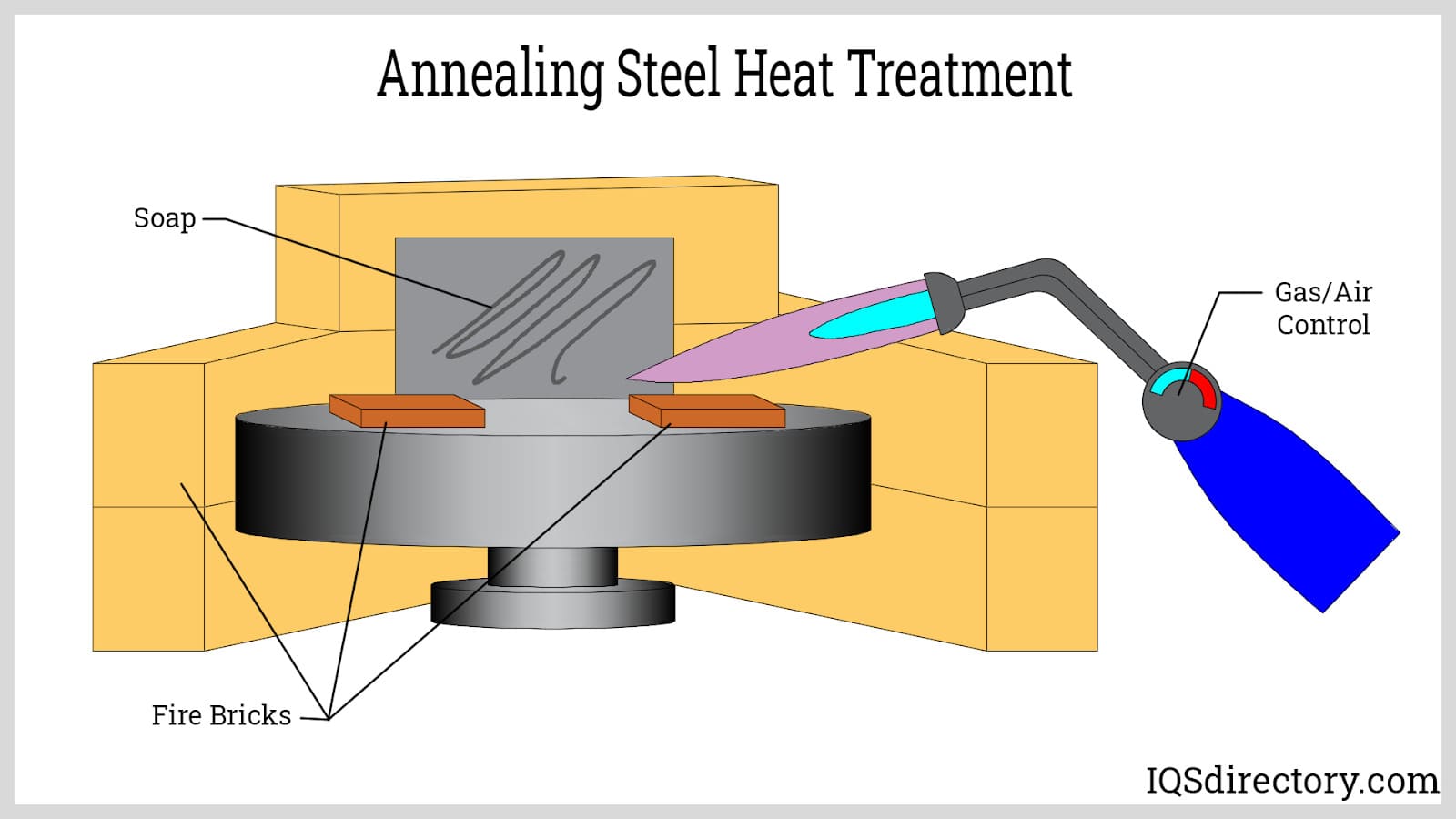
What actually happens? Well, we heat the steel up to a specific temperature, hold it there for a while, and then let it cool down really, really slowly. Like, sometimes burying it in insulating material so it cools down over hours, or even days. This slow cooling allows the steel’s internal structure to relax and reorganize itself into a softer, more ductile state. Think of it as undoing all the "damage" from previous work. It makes the steel easier to machine, easier to shape, and reduces internal stresses that could otherwise cause it to crack later on. So, if you’re looking to bend that metal into a really complex shape without it snapping, annealing is your friend.
This is the process that makes metal malleable. If you’ve ever tried to bend a paperclip and found it gets harder and harder to bend the more you work it, that’s the opposite of annealing. That’s work hardening, and annealing is how you “fix” that. It’s crucial for things like making wires or intricate metal components.
Hardening: The "Get Tough" Phase
Now, for the opposite end of the spectrum: hardening. This is the process that gives steel its bite. Think of knives, gears, cutting tools – they all need to be hard to do their jobs.
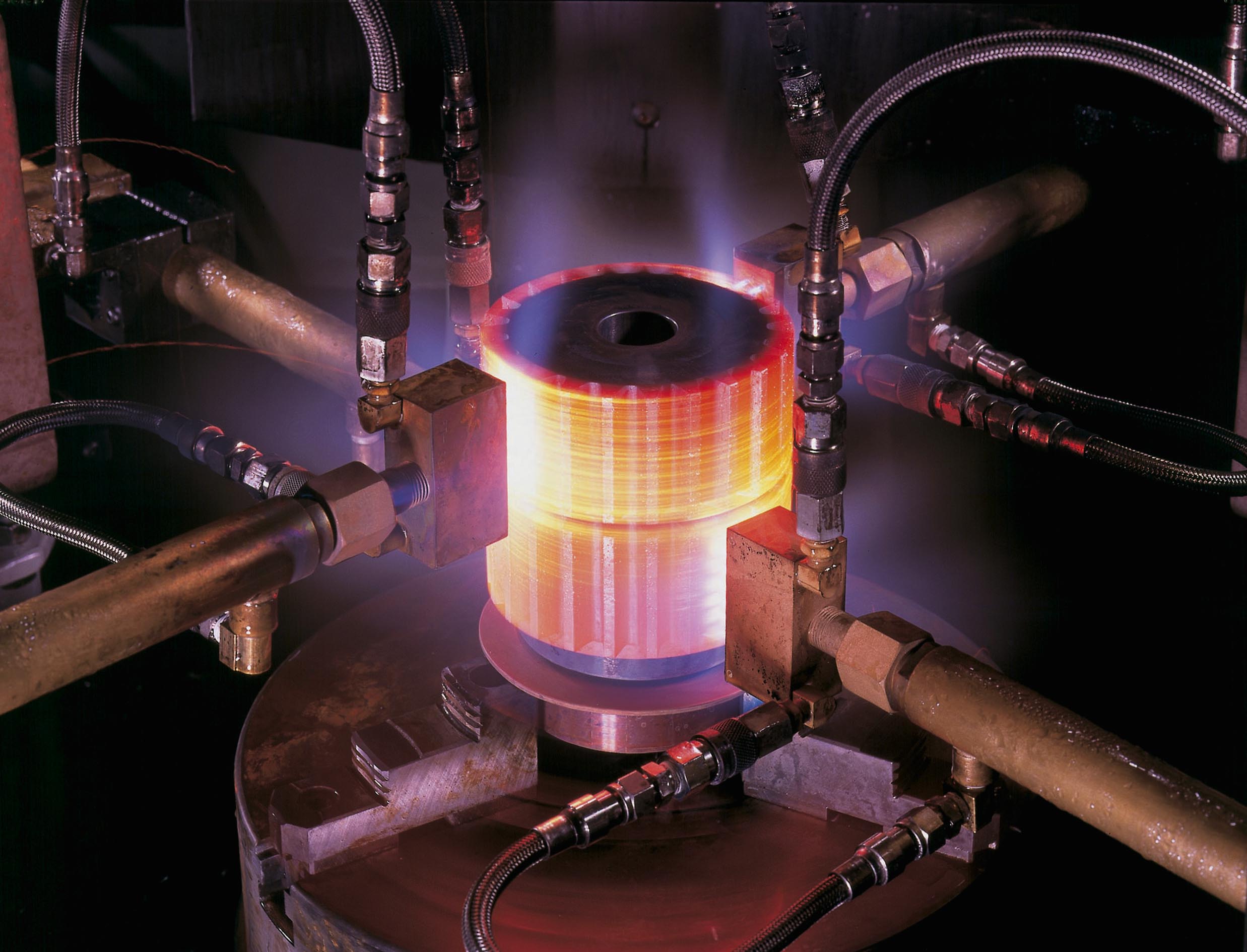
Here’s where things get a bit more dramatic. We heat the steel up to a specific temperature, often to a bright cherry red or even hotter, and then we shock it. This shock comes in the form of rapid cooling, usually by plunging it into a quenching medium like water, oil, or even a special salt bath. This fast cooling traps the carbon atoms in a very hard, brittle structure called martensite. It’s like catching them in a really awkward pose they can’t escape from.
This martensitic structure is super hard, but also incredibly brittle. If you were to take a hardened piece of steel and drop it, it would likely shatter. Not exactly ideal for most applications, right? It’s like giving your steel a super-powered punch that makes it incredibly strong but also prone to breaking. So, while hardening gives you the hardness you crave, it comes at a cost – brittleness.
This is also where the "spark test" for blacksmiths comes into play, although it's more of an art than a science. Different types of steel will spark in different ways when ground against a stone, and the color and pattern of those sparks can give experienced smiths a clue about the carbon content and heat treatment possibilities. Pretty cool, huh?
Tempering: The "Gentle Reminder"
Okay, so we’ve got our super-hard but brittle steel from the hardening process. What do we do with it? We can’t really use it as is, can we? This is where tempering comes in, and it’s arguably the most important step for many applications.
Tempering is essentially a controlled re-heating of the hardened steel to a lower temperature than the hardening temperature, followed by cooling. This isn’t a slow, relaxing cool like annealing. It’s usually a much quicker cooling. The purpose here isn’t to make it soft, but to reduce that brittleness we created during hardening.
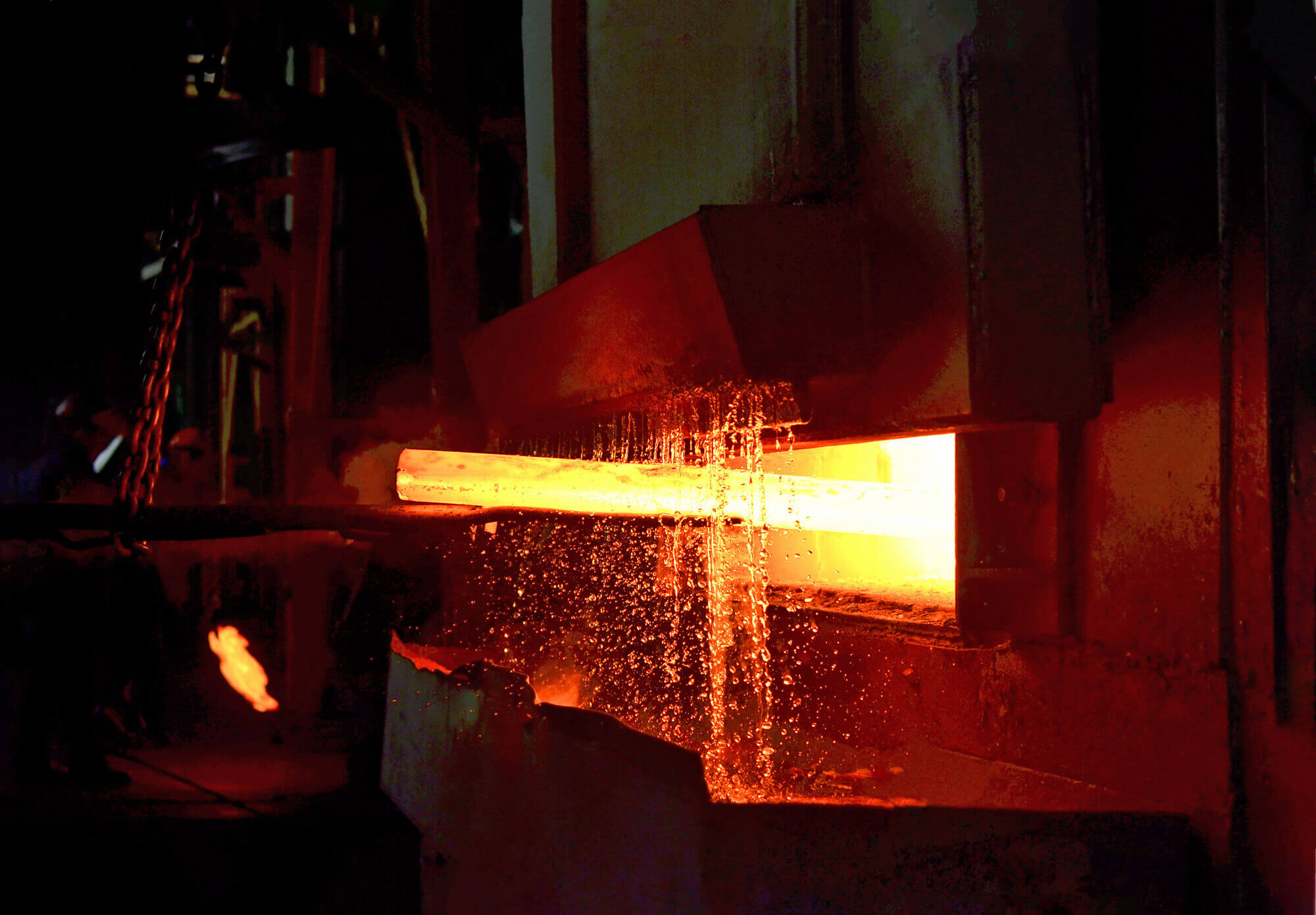
By re-heating to specific temperatures, we allow some of the trapped carbon atoms to escape their martensitic prison and form different, less brittle structures. The higher the tempering temperature, the softer and tougher the steel becomes. It’s a balancing act: we want to retain a good amount of hardness while gaining the ductility and toughness needed to withstand impacts and stresses without fracturing.
Think of it like this: hardening makes your steel incredibly stiff, like a rigid ruler. Tempering makes it more like a flexible ruler – it can still be hard and hold its shape, but it can also bend a little without breaking. The specific temperature you temper at is crucial and depends entirely on the desired properties for the final product. A knife blade might be tempered to a straw-yellow color, while a spring might be tempered to a bluish hue. Each color corresponds to a different temperature and thus, a different balance of hardness and toughness. It’s a subtle art!
More Than Just the Big Three: Other Heat Treatments
While annealing, hardening, and tempering are the bread and butter, there are other processes that get used, often in combination or as refinements. It’s like having a whole toolbox of techniques to get the job done exactly right.
Normalizing: A "Refresh" for the Structure
Normalizing is similar to annealing in that it involves heating and cooling, but the cooling rate is generally faster than in annealing, usually in still air. It's not as drastic as quenching, but it's faster than annealing.
The goal of normalizing is to refine the grain structure of the steel and remove any internal stresses. It’s often done before hardening to ensure a more uniform and predictable result. Think of it as a good “reset” for the steel’s internal workings, making it more uniform before you start applying the more extreme treatments. It helps ensure you get the same results every time, which is, you know, pretty important in manufacturing.
Case Hardening: The Toughest Skin
Sometimes, you need a component that’s incredibly hard on the surface, like the wear-resistant outer layer of a gear, but you still want a tougher, more ductile core to absorb shock. Enter case hardening.
This is a family of processes that work by altering the chemical composition of the steel's surface layer. Common methods include carburizing (adding carbon to the surface of low-carbon steel by heating it in a carbon-rich environment, then hardening and tempering that surface layer) and nitriding (introducing nitrogen to the surface, which forms very hard nitrides).
It's like giving your steel a really tough, protective shell. The outside is incredibly resistant to wear and abrasion, while the inside remains more flexible and able to handle stress. This is why components like crankshafts and gears can be so robust – they’ve got that hardened case!
Quenching and Partitioning (Q&P): The Modern Marvel
This is a more advanced technique, a bit of a newer kid on the block. Q&P is designed to create steels with an exceptional combination of strength and ductility, often referred to as "advanced high-strength steels" (AHSS).
It involves a carefully controlled sequence of quenching (cooling) and tempering steps, with the aim of creating a microstructure that includes a significant amount of retained austenite. This retained austenite is metastable – it can transform into martensite under stress, which contributes to the steel's toughness and ability to deform before fracturing. It's a complex dance of temperature and time, but the results are steels that are incredibly strong yet surprisingly formable. Think of it as engineering the steel's microstructure at a very fundamental level to achieve seemingly contradictory properties.
Why Bother? The Practical Applications
So, why do we go through all this fuss? What’s the big deal about making steel harder or softer or tougher? Well, it’s all about making that humble piece of metal do its job effectively, safely, and for a long, long time.

Think about your car. Every single component, from the engine block to the tiniest bolt, has undergone specific heat treatments. The crankshaft needs to be hard and wear-resistant. The springs need to be tough and resilient. The chassis needs to be strong but also able to absorb impact. Without precise heat treatment, these components would fail, leading to anything from a minor inconvenience to a catastrophic accident.
And it’s not just cars. Consider the tools you use every day – your kitchen knives, your hammer, your screwdriver. They are all heat-treated to perform their specific functions. A dull, soft knife is frustrating and dangerous. A brittle screwdriver that snaps in half is no good to anyone.
Even in more artistic pursuits, like blacksmithing or jewelry making, understanding heat treatment is crucial. It dictates how easily you can shape the metal, what kind of finish you can achieve, and how durable your final creation will be. Remember my hook story? A simple hook that bends out of shape isn't much of a hook!
Controlling the Magic: Temperature, Time, and Atmosphere
Getting heat treatment right isn't just about throwing steel in a hot box and hoping for the best. It requires a lot of control. The key variables are:
- Temperature: This is probably the most critical factor. Different temperatures induce different microstructural changes. Too high, and you risk melting or grain growth that weakens the steel. Too low, and the desired transformation won't happen.
- Time: How long you hold the steel at a particular temperature matters. For annealing, a long soak is needed for full relaxation. For hardening, the hold time is usually shorter, just enough to get the steel to the right temperature throughout.
- Cooling Rate: As we discussed, this is huge! A slow cool for annealing, a rapid quench for hardening. Even the medium used for quenching (water, oil, air) makes a difference.
- Atmosphere: Sometimes, the environment around the steel during heating is important. Heating in an oxidizing atmosphere can lead to surface scaling, while inert or vacuum furnaces prevent this. For some specialized treatments, a specific gas might be introduced.
It’s a scientific process, but there’s definitely an art to it, especially when working on a smaller scale or with older techniques. Experience and careful observation play a big role.
So, the next time you pick up a well-made tool, admire a sturdy bridge, or even just unsheathe your favorite kitchen knife, take a moment to appreciate the invisible magic that’s happened within that piece of steel. It’s not just metal; it’s metal that’s been carefully guided, coaxed, and transformed through the intricate dance of heat treatment, all to make it perfectly suited for its job. Pretty incredible stuff, right? It makes you wonder what other secrets are hidden within the materials we take for granted every day.