
How Are Metals And Non Metals Different
Hey there, science curious friends! Ever looked around your house, your workshop, or even your jewelry box and wondered, "What's the deal with all this stuff?" You've got shiny bits, dull bits, bits that bend easily, and bits that… well, don't. It turns out, a lot of this everyday magic comes down to the super cool, and surprisingly different, world of metals and nonmetals.
Now, don't let the fancy names scare you. We're not talking about complex chemical formulas here. Think of it more like a friendly neighborhood rivalry, where each group brings its own awesome personality to the table. And understanding this difference? Oh, it can actually make your life way more interesting, I promise!
The Shinies and the Not-So-Shinies: A Visual Clue
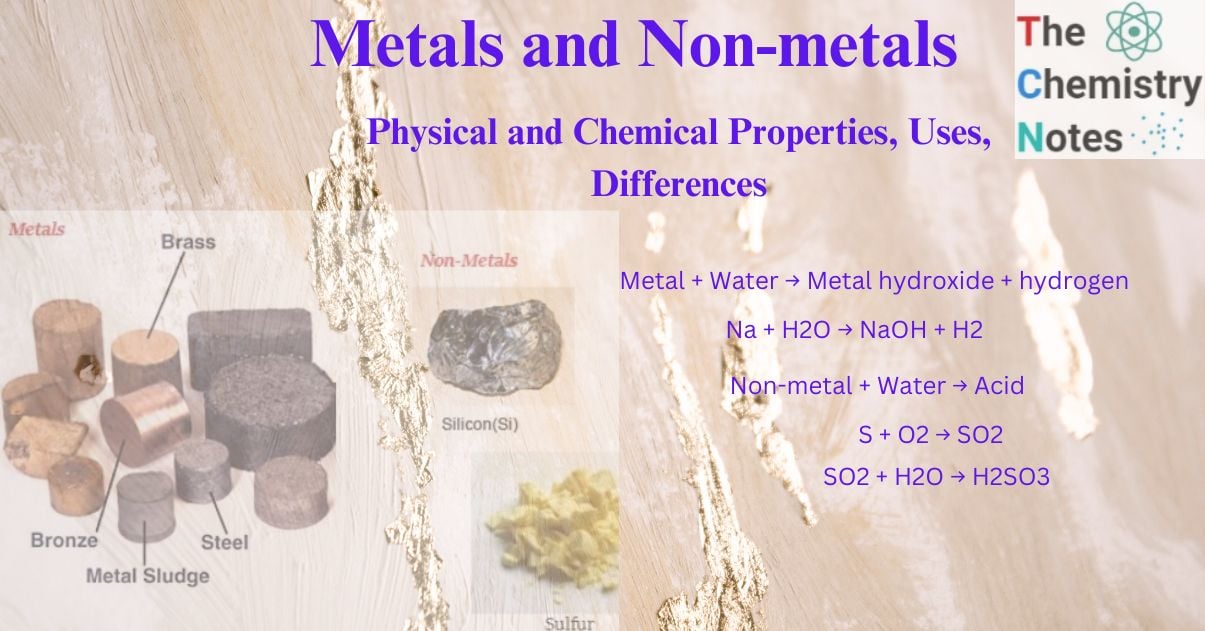
Let's start with the most obvious, shall we? Have you ever noticed how most metals just gleam? Think of a polished silver spoon, a shiny copper pipe, or even your trusty car keys. That distinctive shine, that beautiful lustre, is a dead giveaway for a metal. It's like they're naturally dressed up for a party!
Nonmetals, on the other hand? Not so much. They're often more… matte. Think of the charcoal in your barbecue, the oxygen you're breathing right now (can you see it? Nope!), or the sulphur that gives rotten eggs their… unique aroma. They're more down-to-earth, less about the flashy display, and more about getting the job done.
Conducting Business: Heat and Electricity
Here's where things get really interesting, and where metals truly shine (pun intended!). Metals are like the rockstars of the electrical world. They're fantastic conductors of both electricity and heat. Ever touched a metal pan on the stove? Ouch! That's because heat travels through it like lightning. And your phone charger? It relies on metals to get that electricity to your device.
Nonmetals? They're usually the opposite. They tend to be insulators. They don't let heat or electricity zip through them easily. That rubber coating on your electrical cords? Yep, that's often a nonmetal, keeping you safe from any shocking surprises. It's like they're saying, "Nah, I'm good, I'll just keep things where they are."
Bending and Breaking: The Malleable vs. The Brittle
Imagine trying to shape a piece of aluminum foil versus trying to bend a piece of charcoal. See the difference? Most metals are wonderfully malleable, meaning you can hammer them into thin sheets, and ductile, meaning they can be drawn into wires. This is why we can make intricate jewelry, bendy pipes, and thin electrical wires from metals.
Nonmetals, however, are often quite brittle. If you try to bend them, they're more likely to just… snap. Think of glass (which is a type of nonmetal compound), or chalk. They do their job, but you wouldn't want to be shaping them into anything too fancy without a whole lot of frustration.

State of Affairs: Solid, Liquid, or Gas?
Now, most of the time, when you think of metals, you picture them as solid, right? Gold, iron, silver – all nice and solid at room temperature. And that's generally true! There are a couple of exceptions, like mercury, which is a liquid metal and super cool to look at (but don't touch it!).
Nonmetals, though, are a bit more diverse in their everyday states. You've got your gases like oxygen and nitrogen (essential for life!), your solids like carbon (hello, diamonds and graphite!), and even bromine, which is a liquid nonmetal. It’s like the nonmetal club has a wider variety of fashion choices for their public appearances.
The Electron Dance: The Secret Sauce
So, what's really going on under the hood? It all comes down to how the atoms of metals and nonmetals behave, specifically with their outer electrons. Think of electrons as tiny dancers on the edge of an atom's stage.

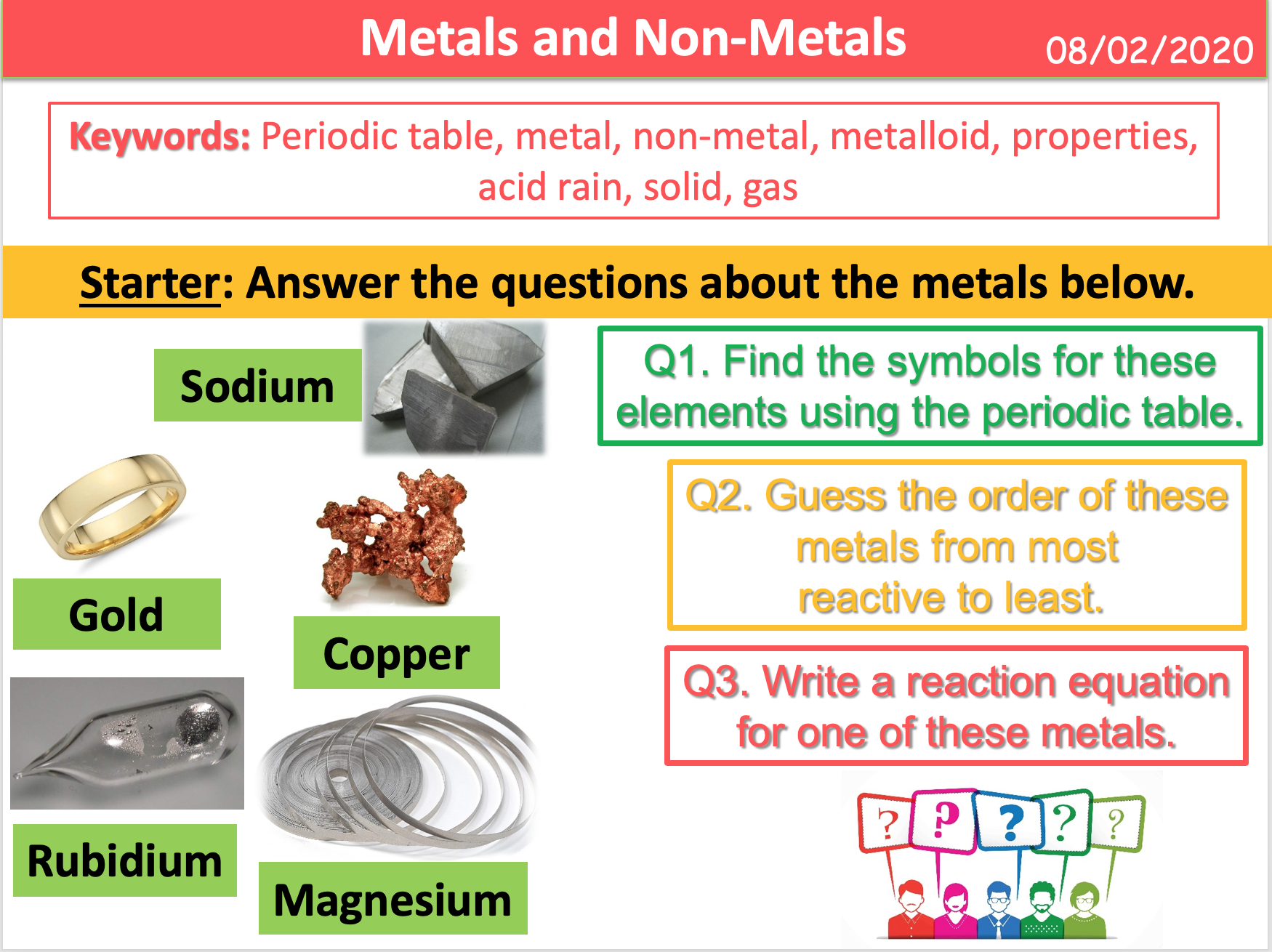
Metal atoms are generous dancers. They tend to easily let go of their outer electrons. This freedom allows those electrons to move around and create that conductive magic we talked about. It's like they're saying, "Here, take an electron, I've got plenty to share!"
Nonmetal atoms, on the other hand, are more like collectors. They tend to hold onto their electrons tightly, and some even like to grab electrons from others. This makes them less likely to be good conductors, as the electrons aren't free to roam. They're more like, "My electrons are mine, thank you very much!"
Why This Matters to YOU!
Okay, so we've got shinies, conductors, benders, and breakers. Why should you care about this seemingly small difference? Because it's everywhere! Understanding this helps you appreciate:

- Your kitchen gadgets: That stainless steel pot? A metal, great for conducting heat evenly. Your plastic spatula? A nonmetal, an insulator, perfect for stirring without melting!
- Your tech life: The copper wires in your computer, the silicon in its chips (a metalloid, a fascinating middle-ground!), the plastic casing – all working together thanks to their differing properties.
- Nature's wonders: The metals in the earth that create beautiful ores, the nonmetals in the air that let us breathe.
It's like having a secret decoder ring for the material world! You start seeing the brilliance of design in everything around you. The way a craftsman chooses iron for a sturdy frame, or glass for a delicate window pane. It’s all based on these fundamental differences.
A World of Wonderful Materials
Honestly, learning about metals and nonmetals isn't just about memorizing facts. It's about unlocking a deeper appreciation for the incredible variety and cleverness of the universe. It’s about understanding the building blocks that make our modern world possible.
So, the next time you're using a metal spoon or breathing in fresh air, take a moment. Marvel at the simple yet profound differences that make these materials so unique. And who knows? Maybe this little peek into the world of elements will inspire you to explore even further. There's a whole universe of amazing science waiting to be discovered, and it all starts with a curious mind!