
How Do Vacuum Tubes Work
Hey there, fellow tech enthusiasts and curious minds! Ever stumbled upon an old piece of audio gear, maybe a vintage amplifier or a retro radio, and noticed these glowing, glass bulbs inside? Those, my friends, are vacuum tubes, and they're the rockstars of early electronics. They might look a bit like fancy light bulbs, but oh boy, do they do a whole lot more!
So, what's the deal with these things? How do they actually work? It’s a question that’s probably popped into your head if you’ve ever been captivated by that warm, rich sound that tubes are famous for. And honestly, it’s way cooler than you might think.
The Magic Inside the Glass
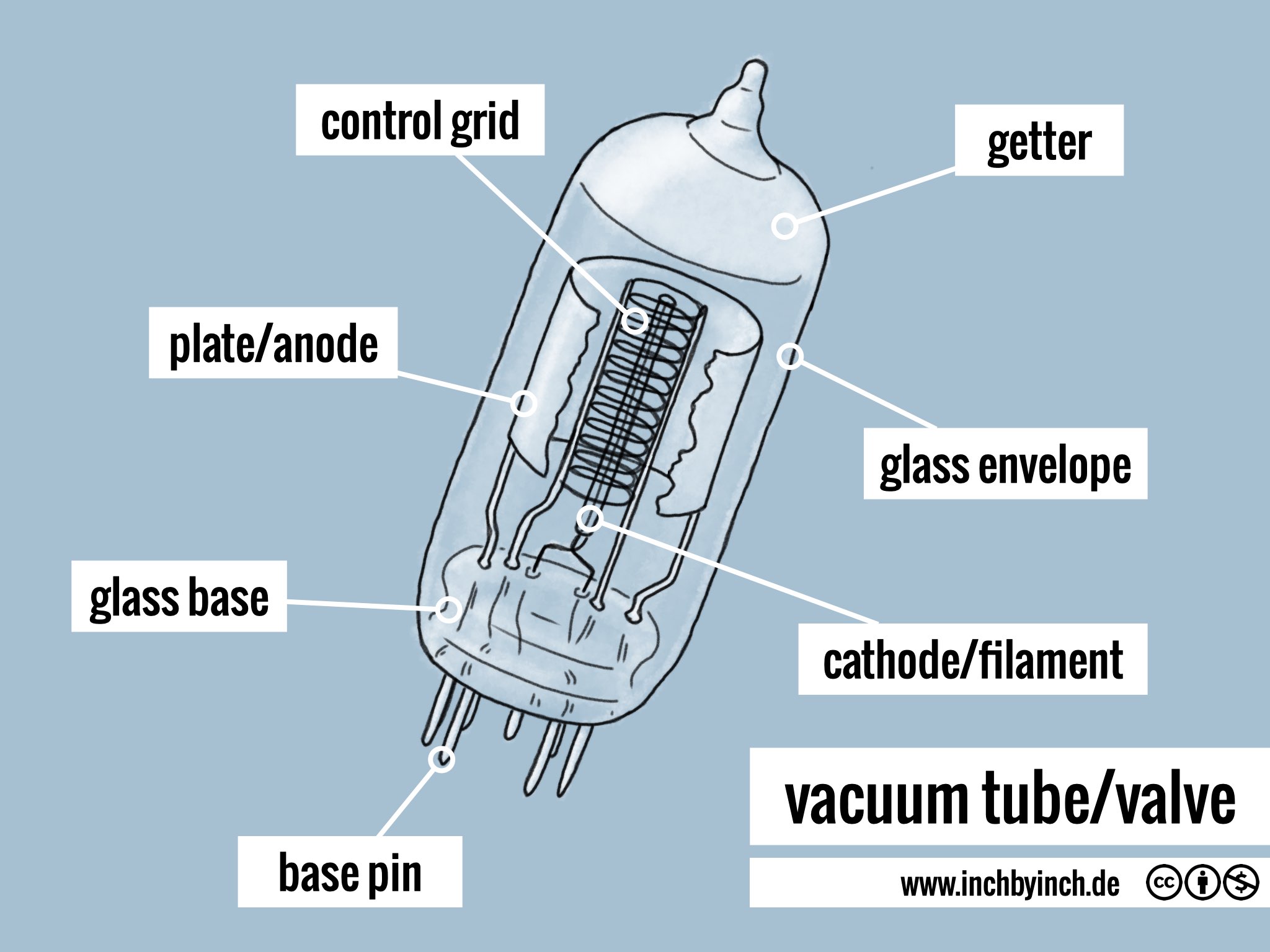
Imagine a tiny, sealed glass house. Inside this house, we've got a few key players. The most important one is called the cathode. Think of the cathode as the source of the party. When you heat it up (and yes, it gets hot!), it starts releasing tiny little particles called electrons. It’s like the cathode is saying, “Alright everyone, time to get moving!”
Now, where do these electrons go? Well, they’re naturally attracted to anything that’s positively charged. So, we introduce another player: the anode, or as it’s often called, the plate. This plate has a positive vibe going on, so it’s basically a magnet for those eager electrons released by the cathode. They zip across the empty space inside the tube, creating a flow of electricity. Pretty neat, right?
But here’s where it gets really interesting. If it were just a cathode and a plate, it would be a pretty simple circuit, like a one-way street for electrons. What makes vacuum tubes so special is the addition of one or more grids. These grids are like the traffic controllers of our electron highway.

The Grid: The Master Conductor
The most common type of grid is called the control grid. It’s usually a wire mesh or a spiral that sits between the cathode and the plate. Now, this control grid is a bit of a tease. If we apply a small, negative voltage to it, it can actually repel the electrons trying to get to the plate. It’s like putting up a temporary fence. The electrons, being negatively charged, don't like being pushed around by that negative grid voltage, so many of them turn back.
But here's the genius part: even a tiny change in the voltage applied to the control grid can have a huge effect on the flow of electrons to the plate. A slightly less negative voltage lets more electrons through, and a slightly more negative voltage blocks more. It’s like turning a tiny knob to control a massive flow of water!
This ability to control a large electrical current with a small input signal is the fundamental secret sauce of vacuum tubes. It’s how they can amplify signals, making a weak audio input from your guitar, for instance, loud enough to drive speakers.

Why Are They So Cool Anyway?
Okay, so they amplify electricity. Big deal, right? Well, yes! Because of how they amplify, vacuum tubes produce a distinct type of sound that many people absolutely adore. It’s often described as warm, rich, and organic. It’s not the perfectly clean, sterile sound you might get from some modern digital gear.
Think of it like this: Imagine a perfectly smooth, straight line drawn with a ruler (that’s your clean digital signal). Now imagine a line drawn with a fine-tipped pen, with all its subtle wobbles and variations (that’s your tube-driven signal). The tube adds its own character, its own little "flavor," to the sound. It's like a baker adding a pinch of a secret spice to a recipe – it makes it special!

This characteristic "warmth" comes from the way tubes handle certain frequencies and the subtle distortions they introduce. These distortions, often called harmonic distortion, aren't usually unpleasant. In fact, they can add a pleasing richness and complexity to music, especially when you push the tubes a bit harder. It's that beautiful, slightly "gritty" or "crunchy" sound you hear in classic rock guitar solos.
From Simple Beginnings to Sonic Legends
The first practical vacuum tube, the diode, was invented by John Ambrose Fleming in 1904. It was essentially a light bulb with an extra plate, and it could rectify AC current (turn it into DC). But it was Lee De Forest’s invention of the triode in 1906, adding that crucial control grid, that truly revolutionized electronics.
Suddenly, you had devices that could not only detect radio waves but also amplify them. This paved the way for everything from radios and televisions to early computers. Before transistors and integrated circuits took over, vacuum tubes were the absolute backbone of the electronic world.

Think about the sheer ingenuity! They figured out how to control the flow of electrons in a vacuum using carefully placed wires and voltages. It’s like conducting an orchestra of invisible particles, all happening within a sealed glass vessel. It’s a testament to human creativity and a deep understanding of physics.
The Tube Renaissance
Even though transistors and modern chips are incredibly efficient and smaller, vacuum tubes have made a huge comeback in certain areas. Why? Because of that sound! Audiophiles, musicians, and radio enthusiasts actively seek out tube gear for its unique sonic qualities. That vintage amplifier in your grandpa’s attic might be worth more than just sentimental value!
So, next time you see those glowing glass bulbs, give them a nod. They’re not just old tech; they’re a piece of history, a marvel of engineering, and the source of some of the most beloved sounds in music. They’re a reminder that sometimes, the older ways of doing things have a magic all their own. Pretty cool, huh?