
How Do You Know When A Propane Tank Is Empty

Alright, let's talk propane. You know, that stuff that fuels your summer BBQs and keeps your patio heater glowing on those crisp evenings. We all use it, but how do you really know when that trusty tank is on its last legs? It’s not exactly like a gas gauge in your car, is it? No fancy little needle pointing to "E." But fear not, my friend! We're about to dive into the wonderfully quirky world of empty propane tanks, and trust me, it's more interesting than it sounds.
Think about it. That big ol' metal cylinder sits there, looking all stoic and full of promise. Then, poof! Suddenly, your burgers aren't sizzling, your dreams of perfectly toasted marshmallows are dashed, and your patio party grinds to a halt. It's a culinary catastrophe! A social standoff! A true test of your preparedness. So, let's get you armed with the knowledge to avoid such propane-related predicaments.
The Usual Suspects: Signs of a Sad, Empty Tank
Okay, so the most obvious sign? It just… stops working. Yep, I know, revolutionary. Your grill goes cold. Your heater emits a pathetic puff of lukewarm air. Your camping stove decides it's on vacation. This is the big kahuna of empty-tank indicators. It's the equivalent of your phone dying right when you need to make an important call. Utterly inconvenient.
But before we get to that dramatic finale, there are often some subtle hints. Think of them as the tank's little whispers before it screams. You might notice the flame on your grill getting smaller, weaker, and a bit… sad. It’s like the flame is saying, “I’m trying my best here, but my energy reserves are dwindling, folks.”
The color of the flame can also be a clue. A healthy propane flame is typically a nice, bright blue with maybe a hint of yellow at the tip. If you start seeing a lot more yellow, orange, or even a sputtering red, it’s a sign that the fuel isn't burning as efficiently. It's the flame's way of throwing a little tantrum before it goes out completely.
The "Water Trick": A Classic for a Reason
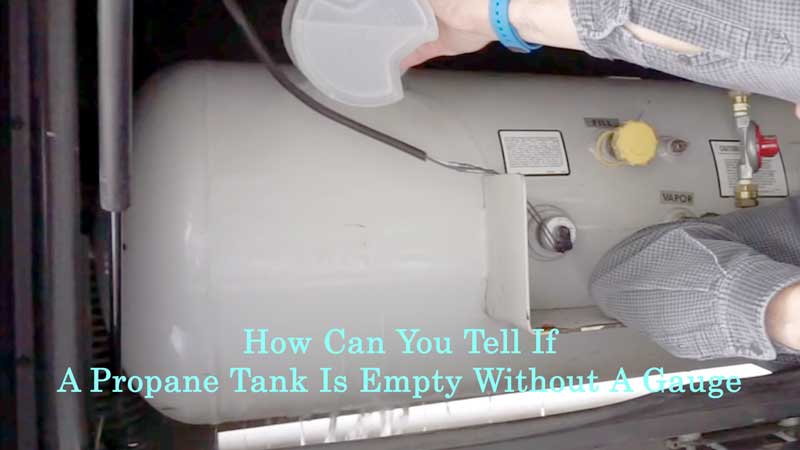
Now, for a bit of a hands-on approach. This is one of the most reliable (and frankly, pretty cool) ways to gauge your propane level. It’s called the warm water trick. Grab a bowl of warm water. Not boiling, just pleasantly warm. Then, pour a thin stream of this water down the side of the tank. Slowly, from top to bottom.

Here’s the science-y part that makes it fun: As the warm water hits the tank, it heats up the metal. But here’s the magic: propane is a liquid inside the tank. When that liquid propane is exposed to the warm water, it absorbs the heat. This causes the liquid to turn into a gas and expand. And when something expands, it gets colder, right? So, as you pour the water down, you'll feel a noticeable temperature difference. Where the propane level is, the tank will feel colder.
Keep pouring! You’ll feel the warm water on the empty part of the tank, and then suddenly, BAM! It’ll feel cold. That cold spot? That’s your propane level. It’s like a secret decoder ring for your tank! It’s a simple, effective, and slightly mesmerizing trick. Plus, who doesn't love playing with warm water?
Gauges: The Techy, But Sometimes Tricky, Friends
You can also get fancy with it. There are propane tank gauges you can buy. Some clip onto the valve, and others are built into newer grills. They work using different technologies, like pressure sensors or magnetic indicators. They’re designed to give you a more precise reading, like a car’s fuel gauge, but for your propane.
However, these aren't always perfectly accurate. Sometimes they can be a bit finicky. They might read "full" when you suspect otherwise, or "empty" when there's still a bit left. Think of them as helpful suggestions rather than gospel truth. They’re great for a general idea, but don’t blindly trust them. The warm water trick is still your trusty backup!

Some people even use little magnets that stick to the tank and change color based on the temperature, which is essentially a more passive version of the warm water trick. It’s a neat gadget if you like that sort of thing. But let’s be honest, the satisfaction of the warm water method is hard to beat.
The Weighty Matter of an Empty Tank
This is another one that’s a bit more… hands-on. Propane tanks have a weight listed on them, usually in pounds. This is the weight of the tank itself, when it’s empty. You can find it stamped on the tank's collar.
So, if you’re feeling ambitious (and have a decent sense of muscle power), you can lift the tank. If it feels surprisingly light, it’s a good indicator that it’s running on fumes. Compare that lightness to when you know it was full. It's a direct comparison. It's a weighty issue, indeed!
This method is best for when you're feeling strong and you have a clear memory of what a full tank feels like. It's also a great excuse to get a little workout in before your BBQ. Win-win!

The "Smell Test": A Cautionary Tale
Now, this one is more about detecting a leak than an empty tank, but it’s often mentioned in the same breath. Propane itself is actually odorless. The smell we associate with it is an additive called mercaptan. It’s deliberately added to make leaks detectable. So, if you smell that distinct "rotten egg" smell around your tank, it's not a sign of emptiness, it's a sign of potential danger.
If you smell it, do not try to light anything! Turn off the gas, move the tank outdoors (if safe to do so), and call a professional. This is where the fun stops and the seriousness kicks in. An empty tank is an inconvenience; a leaking tank is a hazard.
So, while the smell test is crucial for safety, it's not your go-to for knowing when the tank is about to conk out. Think of it as the emergency siren, not the fuel gauge.
When in Doubt, Just Swap It Out!
Honestly, the easiest and most foolproof way to deal with a potentially empty propane tank is to just swap it out. Most hardware stores, gas stations, and even some grocery stores have exchange programs. You bring in your empty tank, and you get a full one for a set price. It’s like trading in an old book for a new one, but way more useful for your dinner plans.
This takes all the guesswork out of it. No more fiddling with warm water, no more straining your back, no more wondering if that flame is just feeling a bit shy. You just hand over the deadweight and get a vibrant, life-giving tank of propane. It’s the ultimate convenience.
Plus, it saves you from that awkward moment of realizing your tank is empty halfway through cooking that perfectly marinated steak. Nobody wants that. It’s the ultimate propane peace of mind.
The Quirky Charm of Propane Knowledge
So, there you have it! A little dive into the surprisingly engaging world of empty propane tanks. It’s a topic that’s both practical and a little bit silly, isn't it? Who knew that a simple metal cylinder could hold so many secrets? From the subtle flame flicker to the satisfying chill of the warm water trick, there's a certain charm to understanding these everyday objects.
It’s these little bits of practical knowledge that make life a little smoother, and sometimes, a lot more fun. So next time you’re firing up the grill, take a moment to appreciate the magic of propane. And if you’re ever unsure, just remember the warm water trick. It’s a conversation starter, a party trick, and your trusty guide to a full tank of fun!