
How Does A Steel Plow Work
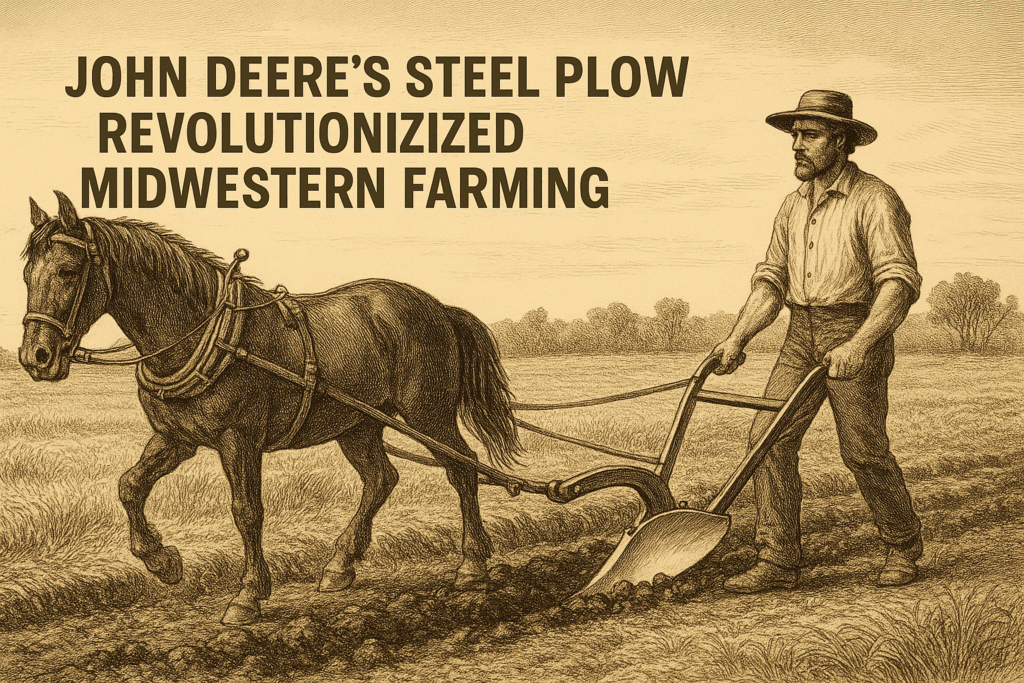
Alright, gather 'round, you folks who think farming is all about cute baby chicks and Instagram-worthy sunsets. Let me tell you about a real unsung hero of the agricultural world. Forget your fancy drones and your GPS-guided tractors (for now, anyway). We're diving deep into the glorious, greasy, and surprisingly philosophical world of the steel plow. Yeah, you heard me. A hunk of metal designed to make dirt do its bidding. It’s less about organic kale and more about brute force with a touch of engineering genius. Think of it as the original earth-mover, the dirt's worst nightmare, and frankly, my hero for anyone who's ever had to break ground.
So, how does this majestic beast actually work? It's not exactly rocket science, but it’s definitely not a self-stirring coffee mug either. The basic idea is simple: you drag this thing through the soil, and it… well, it plows. Fancy name for turning over the dirt, right? But the magic isn't just in the dragging. Oh no, that's where the fun really begins. Imagine you're trying to get your teenager to clean their room. You push, you shove, you complain. The plow does something similar, but with way more oomph and a lot less whining.
At its core, a steel plow is basically a really, really sharp wedge. That’s it! Well, not just a wedge, but that’s the fundamental principle. It has a sharp bit, called the share, that slices into the earth like a hot knife through butter. Or, more accurately, like a super-determined metal badger trying to dig up a particularly stubborn worm. This share is usually made of hardened steel, because let’s be honest, dirt can be a tough customer. It's got rocks, roots, probably some ancient dinosaur bones – you name it. You don't want your plow to go all wimpy and bendy on you when it hits a pebble the size of a hamster.
Once the share has done its slicing duty, the real action starts. Behind that sharp bit is something called a moldboard. Now, this moldboard is the Beyoncé of the plow. It’s curved, it’s shiny (or it should be, unless it’s been used to excavate a lost city), and its job is to lift and turn over the soil. Think of it as a giant, metal spatula for the earth. It takes that slice of dirt the share just cut and flips it, burying the weeds and crop residue from the previous season underneath. This is crucial, folks! It’s like giving your soil a fresh start, a complete makeover. No more last season's questionable fashion choices for your dirt.
Why is turning over the soil so important, you ask? Great question! It's like a soil spa treatment. The buried stuff decomposes and becomes nutrient-rich fertilizer. It's nature's recycling program, and the plow is the industrial-strength composter. Plus, it breaks up compacted soil, which is basically dirt that’s had too much pizza and fallen asleep. Loosening it up allows air and water to penetrate, which is super important for plant roots. Imagine trying to grow a plant in concrete – not ideal, right? The plow prevents that. It makes your soil breathable, drinkable, and generally a lot happier.

Now, the shape of that moldboard is a bit of an art form. Different soils need different shapes. Sandy soil might need a gentler curve, while heavy clay might require something a bit more aggressive. It’s like choosing the right tool for the job. You wouldn’t use a butter knife to chop down a tree, and you wouldn’t use a chainsaw to spread jam. Same principle applies here, just with more dirt and significantly less toast.
And then there’s the landside. This is the part that rides along the unplowed soil, acting as a brace. It keeps the plow from veering off course. Think of it as the pilot’s co-pilot, making sure the whole operation stays on track. Without the landside, your plow would be doing drunken cartwheels across the field. Not good for the soil, and probably quite alarming to watch.

The whole contraption is usually attached to a tractor, or in ye olden days, a team of very strong, and probably very grumpy, oxen. The tractor, or the oxen, provides the draft – the pulling force. It’s the engine that makes the whole operation go. You need enough power to overcome the resistance of the soil. Imagine trying to pull a really heavy couch through thick mud. You need some serious horsepower for that, and a plow is kind of like that couch, but it’s digging into the mud.
The angle at which the plow cuts into the soil is also super important. Too shallow, and it’s just tickling the dirt. Too deep, and you’re basically trying to dig to China. Farmers (or, you know, the folks who invented these things) figured out the sweet spot. It’s a delicate balance, like trying to walk a tightrope while juggling flaming torches. Except, you know, less flammable.

And let’s not forget the sheer force involved. This isn't a gentle caress of the earth. This is a firm, decisive action. The steel slicing, the dirt turning – it’s a symphony of soil manipulation. It’s loud, it’s dusty, and it smells like pure, unadulterated agriculture. It’s the smell of potential, of future harvests, of really good potatoes. Plus, it’s a great way to get out of doing chores, if you’re a tractor. “Sorry, I can’t help with the dishes, I’ve got a very important appointment with the soil.”
So, there you have it. The steel plow. A simple-yet-brilliant piece of engineering that has shaped agriculture (literally!) for centuries. It’s the unsung hero that makes it possible for us to have that breakfast toast, that dinner salad, and all the deliciousness in between. It’s a testament to human ingenuity, a bit of metal that commands respect from the earth itself. Next time you see a freshly plowed field, give a little nod of appreciation. That’s the work of our friend, the steel plow. And maybe, just maybe, offer it a nice, greasy polish. It deserves it.