
How Does The Cathode Ray Tube Work
Hey there, curious cat! Ever wonder what made those old-school TVs and computer monitors glow with all those awesome pictures? You know, the chunky ones that probably weighed more than your cat? Yep, we're talking about the magical box of tricks called the Cathode Ray Tube, or CRT for short. It sounds super fancy, right? Like something out of a mad scientist’s lab. But honestly, it’s a pretty neat piece of engineering that’s surprisingly easy to wrap your head around. Think of it like a super-powered flashlight that paints pictures on a screen. Pretty cool, huh?
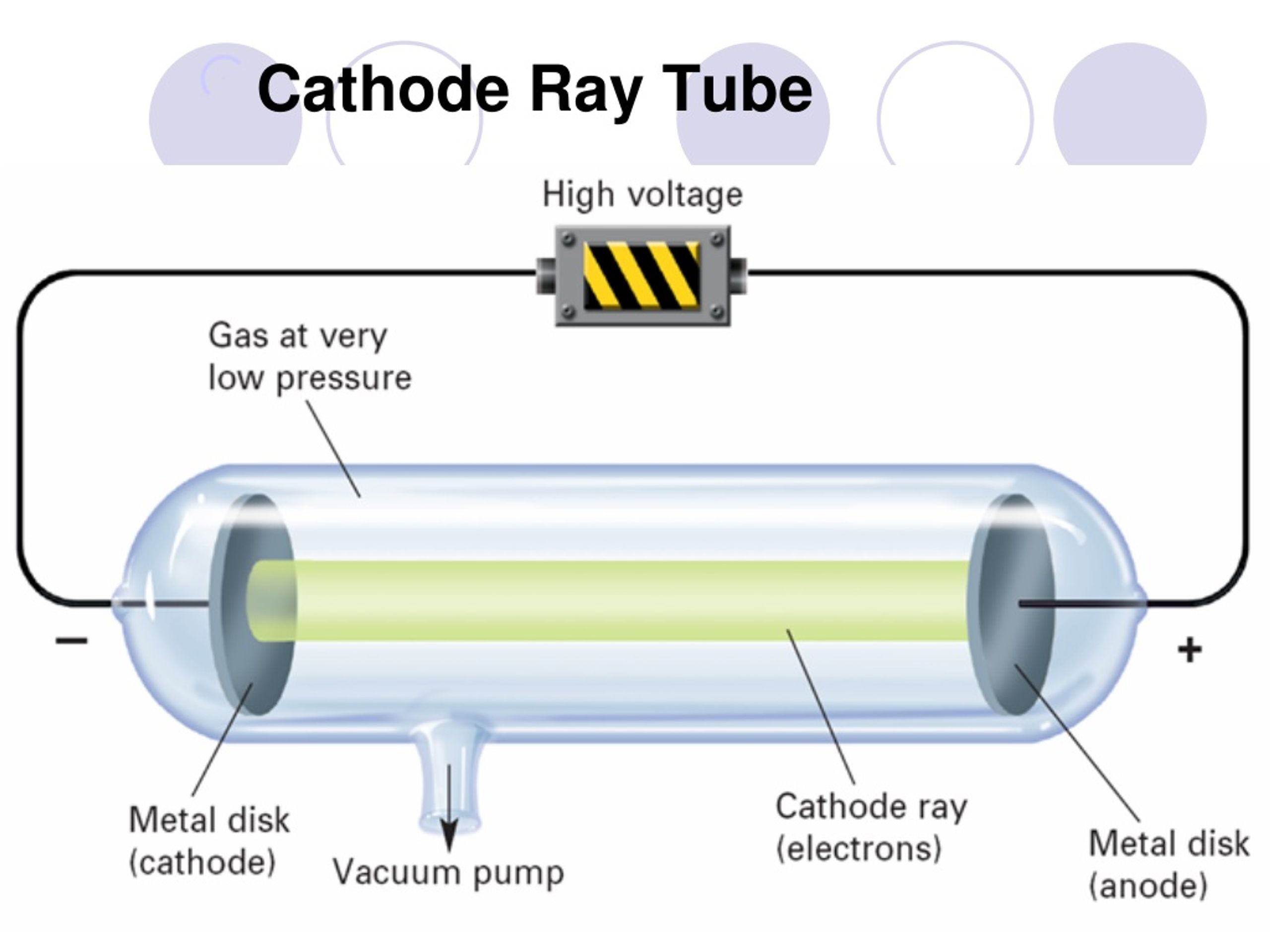
So, let’s break it down, shall we? No need to grab your physics textbook just yet, because we're going to keep it light and breezy. Imagine a big, glass bottle, kind of like those old-fashioned soda bottles, but way, way bigger and completely sealed. Inside this glass bottle, it’s pretty much a vacuum. Yep, they sucked all the air out of it. Why? Because air would get in the way of our little light show. Think of it like trying to have a picnic during a hurricane – not ideal!
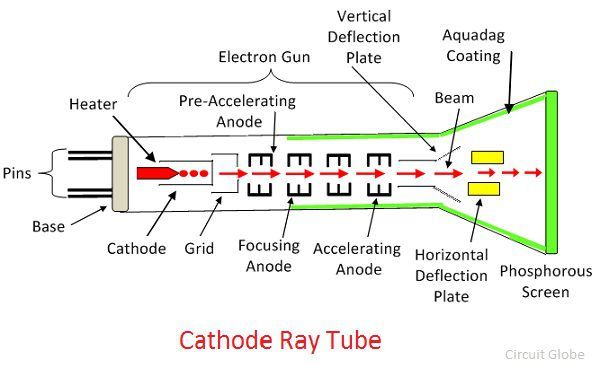
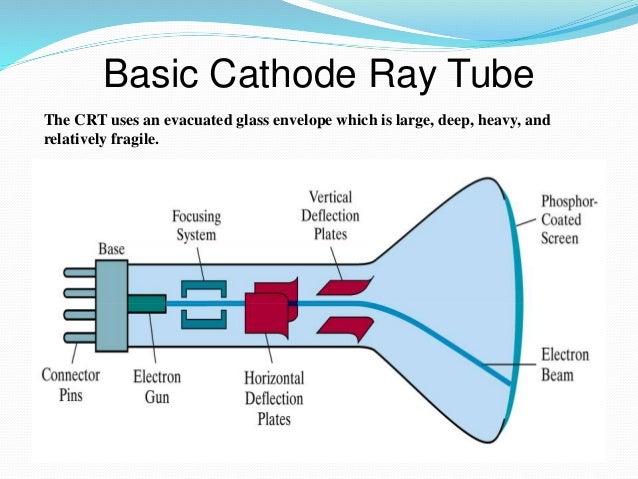
Now, the real star of the show is at one end of this glass bottle: the electron gun. This isn't your dad's Nerf gun, oh no. This is where the magic actually starts. It’s a little contraption that’s designed to do one thing and one thing only: shoot out a stream of tiny, tiny particles called electrons. These electrons are so small, you couldn't see them with a microscope even if you squinted really, really hard. They’re like the invisible paintbrushes of our CRT TV.
How does it shoot them, you ask? Well, it involves a heated filament, kind of like the filament in an old-fashioned light bulb. When this filament gets hot, it starts to release electrons. It's like when you make toast and the bread gets all toasty and warm – same idea, but with electrons! Then, these eager electrons are given a good shove, a strong electrical push, and whoosh! they’re off, zipping through the vacuum towards the screen.
Okay, so we’ve got these tiny electron bullets flying through the tube. But how do they actually draw a picture? This is where things get even more interesting. Right after the electron gun, there are some clever little things called deflection coils. Think of these coils like tiny, invisible magnets. And what do magnets do? They push and pull! These deflection coils create magnetic fields that can steer the beam of electrons this way and that, up and down, left and right. It’s like having a tiny steering wheel for our electron beam.
These coils are super precisely controlled by the TV’s electronics. They’re told exactly where to point the electron beam at any given moment. This is what allows the CRT to draw the picture line by line, across the entire screen. It happens so incredibly fast, it looks like a continuous image to us. It’s like a magician drawing with light, but instead of a wand, it’s a beam of electrons being guided by magnetic forces. Pretty neat, right?
Now, what are these electron bullets hitting when they reach the front of the tube? Ah, the screen! But it's not just plain old glass. The inside surface of the screen is coated with a special material called phosphor. You can think of phosphor as being like glow-in-the-dark stickers, but much more advanced. When those speedy electrons hit the phosphor coating, they make it glow. Ding ding ding! That's how we get light!
The intensity of the glow depends on how many electrons hit that spot. More electrons mean a brighter spot, fewer electrons mean a dimmer spot. This is how we get different shades of gray, or in color TVs, different colors. For color, things get a bit more complicated, but the principle is the same.
Color Me Impressed!
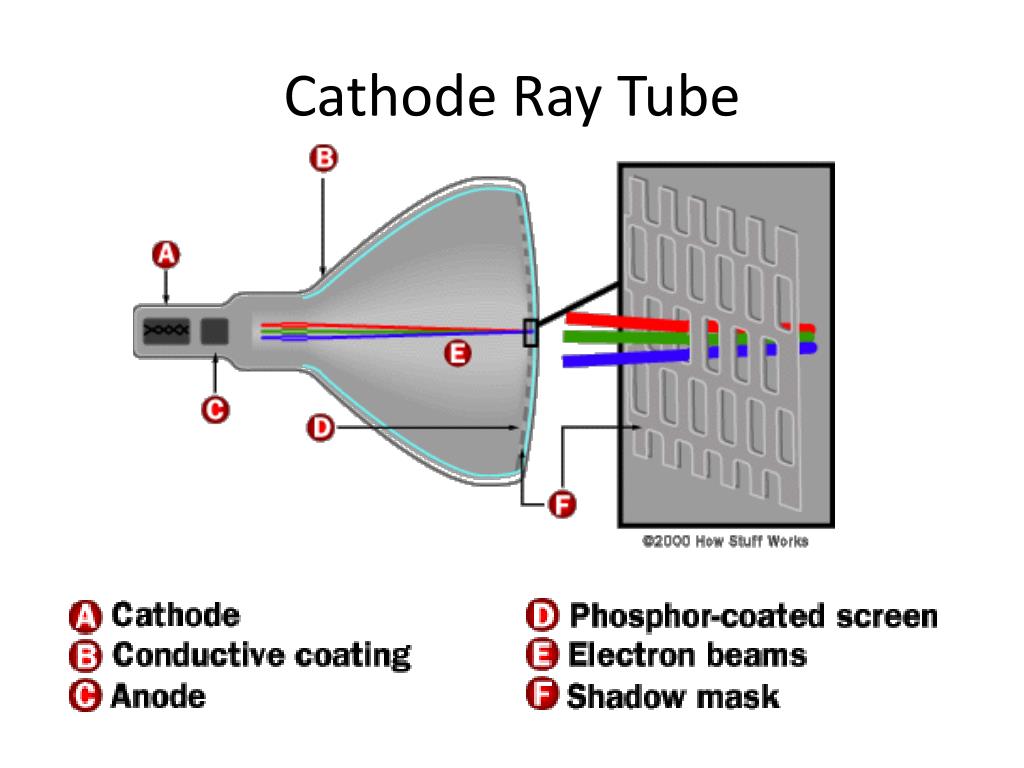
So, how do you get colors? Well, in a color CRT, there aren’t just one, but three electron guns. Each gun is responsible for a different primary color: red, green, and blue. These are the building blocks of all the colors we see. Imagine three tiny spotlights, each ready to paint its own color.
The screen itself is covered in tiny dots or stripes of red, green, and blue phosphor. And here's the really clever part: the electron guns are very precisely aimed so that the electron beam from the red gun only hits the red phosphor dots, the green gun hits the green dots, and the blue gun hits the blue dots. There’s a special metal mask, often called a shadow mask or aperture grille, with tiny holes in it, placed just behind the phosphor screen. This mask acts like a stencil, ensuring each electron beam hits only its designated color. It’s like having incredibly skilled archers hitting specific targets from a distance!

By varying the intensity of the electron beams from each of the three guns, the CRT can create millions of different colors. For example, if the red and green beams are fired at the same spot with equal intensity, you get yellow. If all three are fired with equal intensity, you get white. If none are fired, you get black. It’s like a cosmic paint palette controlled by electricity!
The whole process of scanning the screen with the electron beam is called raster scanning. The beam starts at the top-left corner of the screen, sweeps across to the right, drawing one line of the image. Then it quickly jumps back to the left, slightly lower down, and draws the next line. This happens for every single line on the screen, and it does this about 60 times a second (that’s 60 frames per second, or Hz). That’s why the picture looks like it’s moving, not like a bunch of static dots. It's a constant, rapid refresh of the image. It’s so fast that our eyes perceive it as a smooth, continuous picture. Imagine drawing with a pen really, really fast, and someone watching you would see a complete drawing appearing before their eyes. That's kind of what’s happening, but with electrons and phosphor!
So, to recap, we have:
- An electron gun firing a beam of electrons.
- Deflection coils steering that beam with magnetic fields.
- A phosphor-coated screen that glows when hit by electrons.
- For color, three electron guns (red, green, blue) and a screen with corresponding phosphor dots.
- Raster scanning to draw the image line by line, very quickly.
Think about it: all those hours you spent glued to the TV, watching cartoons or playing video games, were made possible by this incredible device. It was the heart and soul of entertainment for decades. While we've moved on to sleeker, flatter screens these days, there's a certain charm and nostalgic appeal to the CRT. It’s like remembering your first bike – a bit clunky, maybe, but it got you where you needed to go and created some unforgettable memories.
So next time you see an old CRT TV or monitor, give it a little nod of appreciation. It’s a testament to human ingenuity, a window into a world of glowing images, and a reminder that sometimes, the most complex magic starts with something as simple as a beam of electrons. Keep that curiosity alive, and keep exploring the wonderful world around you. There’s always something fascinating to discover, even in the things we’ve left behind!