
How Does Vacuum Tubes Work
Remember those old radios that looked like furniture and crackled with life? Or maybe the vintage amplifiers that give guitars that oh-so-warm, fuzzy sound? Those magnificent beasts owe their magic to something called vacuum tubes! They’re like the rockstars of early electronics, tiny glass packages that did some truly amazing things.
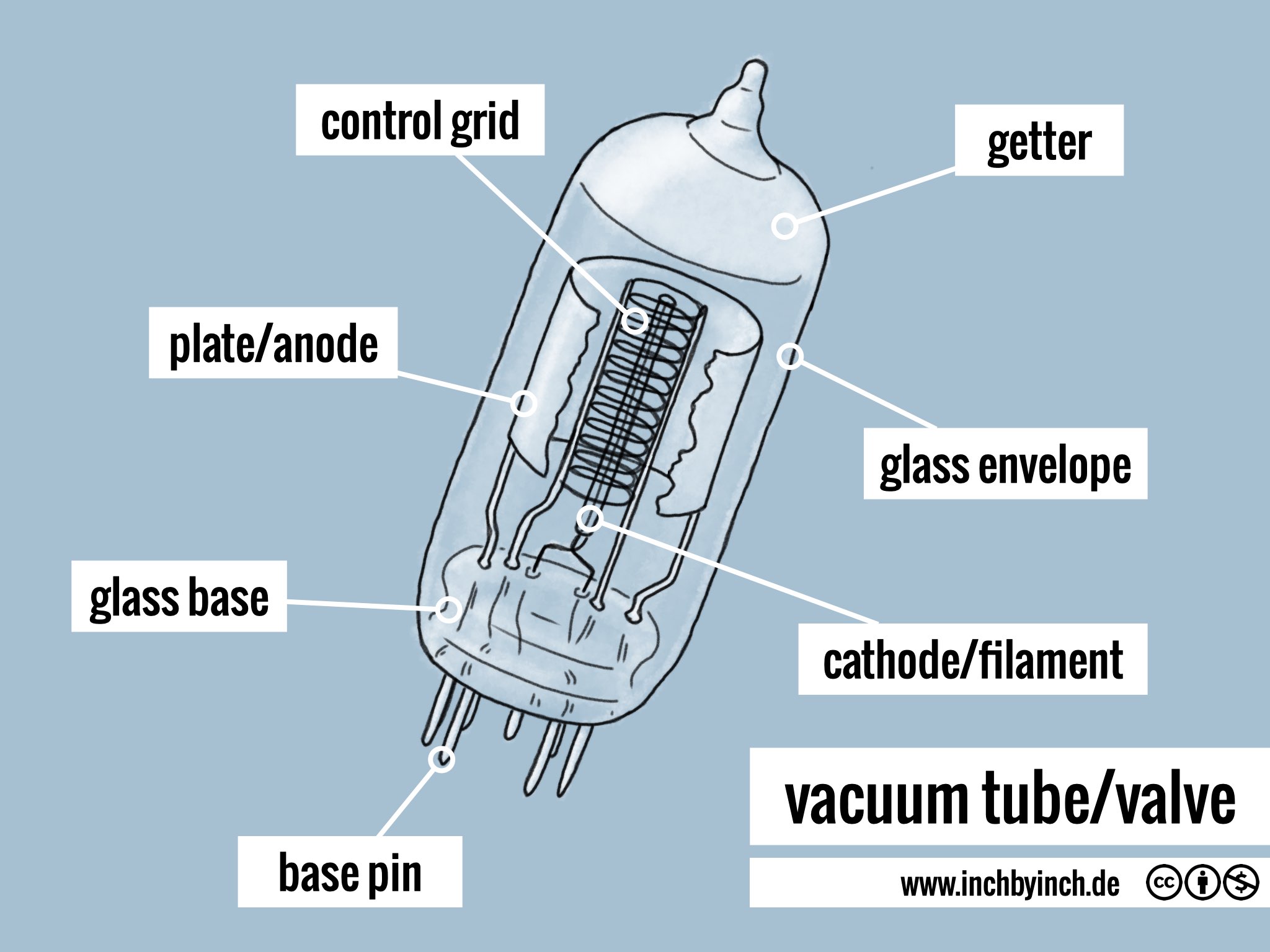
Imagine a tiny, sealed glass bottle, not for your grandma’s jam, but for a whole bunch of electrical wizardry. Inside this bottle, we’ve got a few key players. Think of them like tiny actors on a very small stage, all working together to create something spectacular.
First up, we have the heater, sometimes called the filament. This little guy is like the tiny spark plug in your car, but instead of starting an engine, it gets super hot when electricity flows through it. It’s the cue for our show to begin!
Once the heater is all glowy and toasty, it does something super cool. It starts to "boil off" tiny, invisible particles from its surface. These aren't water molecules, though; these are electrons, the fundamental building blocks of electricity! They're like little freedom fighters eager to escape their metal confines.
Now, to catch these rogue electrons, we have another component: the plate. This is usually a metal sheet positioned nearby. Think of it like a hungry magnet, just waiting to gobble up all those freed electrons.
So, we have the heater making electrons super energetic, and the plate ready to collect them. But how do we control this whole electron circus? This is where the real genius comes in, with a component called the grid.
The grid is like a tiny, almost invisible fence made of wire, positioned between the heater and the plate. It’s not there to block the electrons, but to guide them. It’s the traffic cop of our electron highway!
Here's the mind-blowing part: by applying a tiny electrical signal to this grid, we can control a much larger flow of electrons from the heater to the plate. It’s like using a whisper to control a roar!

If we make the grid slightly negative, it repels the negatively charged electrons, slowing them down or even stopping them from reaching the plate. It’s like putting up a gentle "do not enter" sign for our electron friends.
But if we make the grid slightly positive, it actually pulls the electrons towards it and then allows them to continue their journey to the plate. It’s like giving them a friendly nudge and saying, "Welcome aboard!"
This ability to control a big electron flow with a small electrical signal is the heart and soul of vacuum tube magic. It's called amplification, and it’s what allowed those old radios to pick up faint signals from miles away and those amplifiers to make a guitar sound like a rock god.
Think about it: a tiny signal from an antenna, representing the music or voice, is fed to the grid. The grid, in turn, controls the much larger flow of electrons between the heater and the plate. This bigger flow, when captured by the plate, is a magnified version of the original signal. Voila! Your music is loud and clear!
Vacuum tubes come in different flavors, too. The simplest is the diode, which basically just has a heater and a plate. It acts like a one-way street for electricity, only allowing current to flow in one direction. Think of it like a turnstile that only lets people go one way.

Then we have the triode, which adds that crucial third element: the grid. This is where the amplification party really starts! It’s like upgrading from a basic turnstile to a sophisticated gatekeeper.
For even more power and control, engineers invented the tetrode and the pentode. These added even more grids, each with its own job, to fine-tune the electron flow even further. They’re like adding more levels of security and sophistication to our electronic fortress.
These tubes were the backbone of technology for decades. They powered everything from early computers, which were the size of rooms, to the television sets that brought us amazing stories. They were the unsung heroes of the digital age, before the tiny transistors took over.
Even though transistors are smaller and more energy-efficient, there's a certain je ne sais quoi about vacuum tubes that enthusiasts adore. It’s a warm, rich sound, often described as “organic” or “musical,” that’s hard to replicate.
The heat they generate creates a unique kind of distortion that many musicians find incredibly pleasing. It’s like the difference between a perfectly smooth, digitally generated sound and the slightly gritty, imperfect beauty of a hand-drawn sketch.
So, next time you hear that sweet, soulful guitar solo or catch a glimpse of a vintage radio, take a moment to appreciate the humble vacuum tube. It’s a marvel of ingenious engineering, a little glass wonder that brought our world to life with sound and light.

They're like tiny, glowing embers of innovation, still warming our hearts and pleasing our ears. The way they manipulate electrons is a testament to human creativity and our quest to control the invisible forces that shape our lives.
Think of the sheer bravery of those early inventors, tinkering with glass and metal, trying to bend electricity to their will. They were pioneers, boldly going where no electron had gone before, all thanks to these wonderful glass bulbs.
And the sound! Oh, the sound! It's a sound that resonates with history, a sound that tells tales of a bygone era, a sound that still makes audiophiles weep with joy. It’s the sound of pure, unadulterated electrical poetry.
So, don't underestimate these glowing glass beauties. They might seem old-fashioned, but their impact on our modern world is undeniable. They laid the foundation for so much of what we enjoy today.
They're a reminder that sometimes, the most complex and beautiful things can be achieved with a few simple ingredients and a whole lot of brilliant design. It’s a symphony of electrons playing out in miniature glass concert halls!

And the best part? They still work! Many people choose to use them in their audio equipment for that sought-after vintage tone. It’s like choosing to drive a classic car for the sheer joy of the experience.
The subtle glow, the warmth they radiate, the way they handle signals – it’s all part of their enduring charm. They're not just electronic components; they're pieces of history, art, and pure sonic delight.
So, if you ever get the chance to experience something powered by vacuum tubes, do it! Let your ears be filled with their legendary sound and your mind be amazed by the simple yet profound way they work. It’s an electrical embrace you won’t soon forget!
They’re a testament to the fact that sometimes, the old ways really are the best ways, especially when it comes to creating something truly special. The magic is real, and it’s all contained within a humble glass tube.
It’s a beautiful dance of science and art, a fusion of engineering prowess and sonic magic. These tubes are the unsung heroes of warmth and character in the electronic world.
So let’s raise a toast to these glowing marvels! To the vacuum tubes that amplified our music, illuminated our screens, and fundamentally shaped the electronic age. They truly are the rockstars of the past, present, and even a little bit of the future!