
How Is Expanded Metal Measured
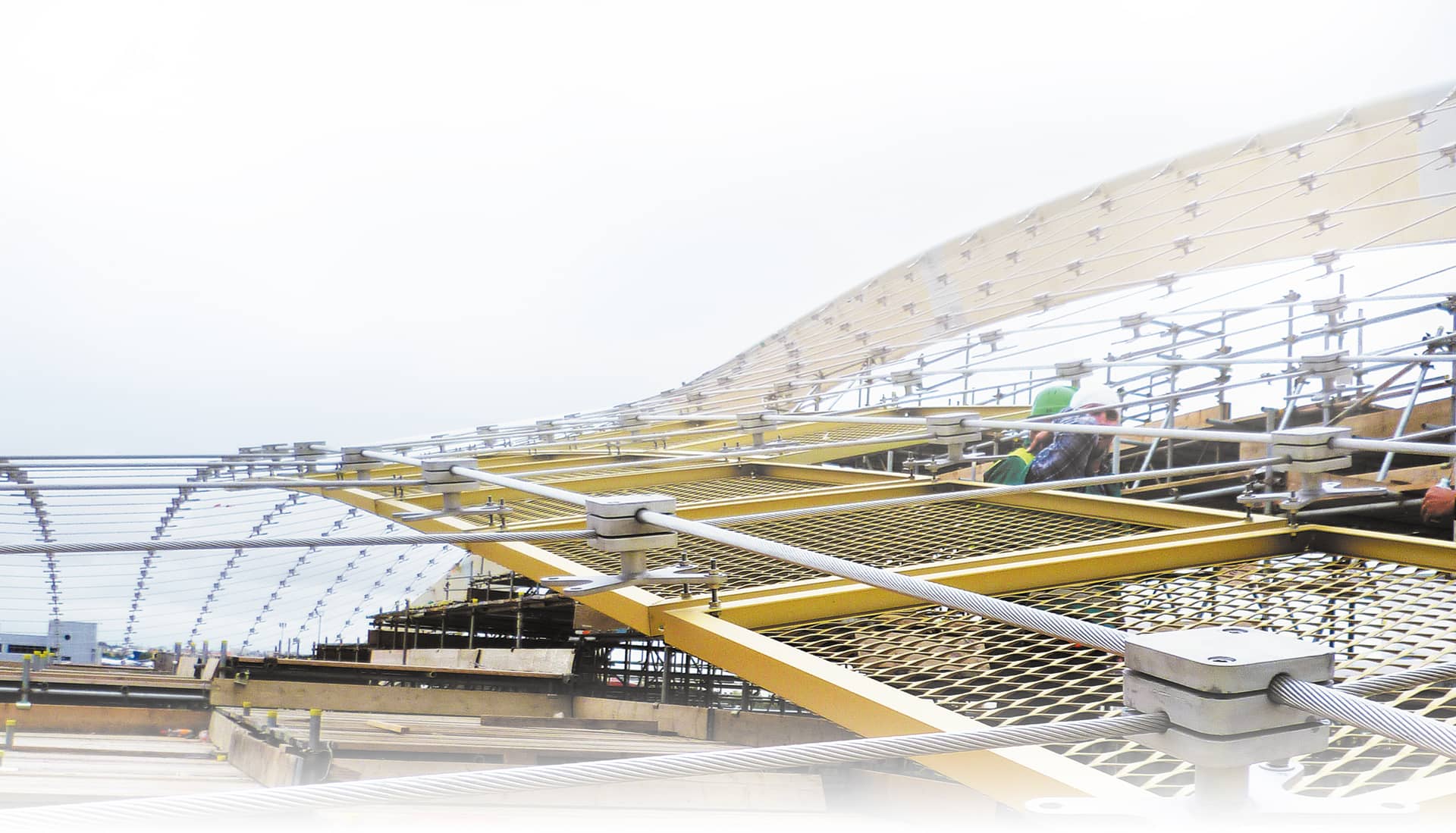
Okay, so you’ve probably seen expanded metal. It’s that stuff that looks like it’s been through a very polite but firm cheese grater. You know, the kind with the diamond-shaped holes? It pops up everywhere, from security grates on windows to decorative screens on fancy buildings. And while it’s super useful, figuring out how it’s measured can feel like trying to herd cats. Seriously, who invented these measurement methods? I have questions.
Let’s be honest, my first thought when I saw a big sheet of this stuff was, "How do you even start to measure this thing?" You can't just whip out a tape measure and go corner to corner. It's got all these little openings, and they’re not exactly straight lines. It’s like trying to measure a cloud. Impressive, but a bit mind-boggling.
So, how do they do it? Well, it turns out it’s not about measuring the metal itself in the traditional sense. It's more about measuring the holes and the strands. Think of it like this: you’re not measuring the air in a slice of Swiss cheese, you’re describing the cheese by the holes. Makes sense, right? (Or does it? This is where my confusion truly begins.)
The big boss of measurements for expanded metal is the SWD. That stands for Short Way of Diamond. Imagine you’re looking at one of those diamond shapes. The SWD is simply the measurement across the diamond, from one point to the opposite point, the shorter way. Easy peasy, right? Well, maybe for some. My brain starts doing gymnastics trying to visualize this. Is it the pointy bit to the pointy bit? Or the fatter bit to the fatter bit? The suspense is killing me!
Then there’s the LWD, or Long Way of Diamond. You guessed it! It’s the measurement across the diamond the other way, the longer way. So, you have a short measurement and a long measurement for each little diamond hole. It’s like having two different personalities for every single hole. Talk about complex!
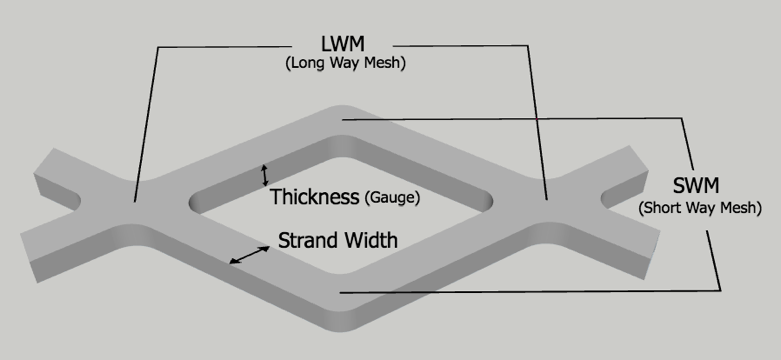
But wait, there’s more! Because this isn’t just about the holes. We also have to talk about the metal itself, the stuff that makes up the diamonds. They call these bits the strands. And yes, they have their own measurements too. You’ve got the strand thickness, which is how thick the metal is. This is pretty straightforward. It’s like asking, "Is this a thin strand or a chunky strand?" I can handle that. My inner craftswoman is starting to awaken.
Then there’s the strand width. This is how wide each of those little metal strips is. So, you can have a nice, thin strand for a delicate look, or a wider, beefier strand for, you know, serious security. It’s the difference between a gossamer scarf and a suit of armor. Both have their place, but you wouldn't measure them the same way, would you?
Now, here’s where it gets truly… interesting. When you’re talking about a whole sheet of expanded metal, they don’t just give you one measurement. Oh no. They’ll give you something like 1/2" x 2" SWD x .042 strand thickness x 24" width. My eyes glaze over just reading it. It sounds like a secret code. Is this a new alien language? Are they trying to communicate with us through mesh patterns?

The 1/2" x 2" part usually refers to the SWD and LWD. So, the short way across the diamond is half an inch, and the long way is two inches. That’s a pretty big diamond, by the way. Imagine a whole field of these big diamonds! It’s like a geometric disco floor. You could probably roller skate on that.
And then they’ll tell you the overall size of the sheet. That’s usually in feet and inches, like a regular piece of lumber. You know, "This sheet is 4 feet by 8 feet." That part is blessedly normal. It’s like the universe throwing us a bone of familiarity in this sea of diamond-related measurements.
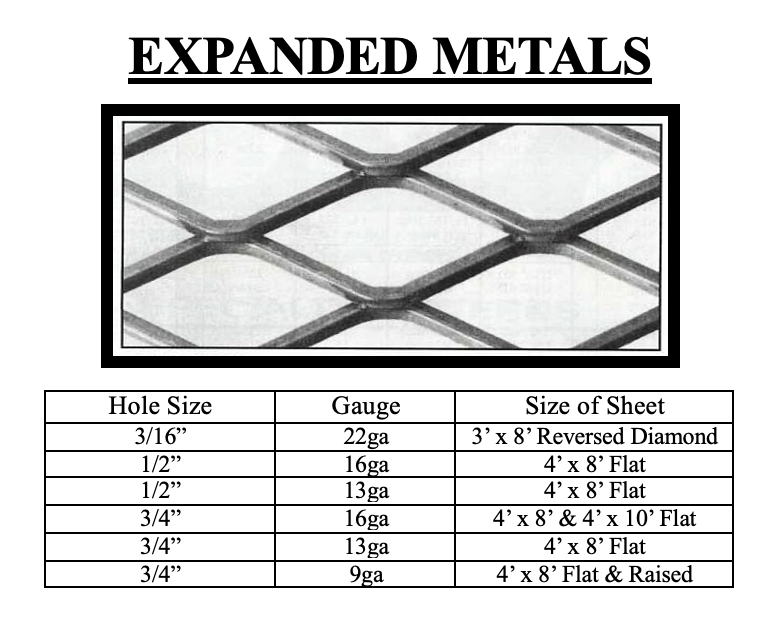
I’m pretty sure if I tried to order expanded metal for a DIY project, I’d end up with something completely wrong. "Yes, I’d like a sheet of that fancy holey metal, about this big, with… you know… the holes facing the right way?" The salesperson would probably just sigh and hand me a flyer.
It’s funny because, at the end of the day, it’s all just metal that’s been stretched. But the way we talk about it, the way we measure it, it’s like a whole separate field of study. Who knew that a simple piece of perforated metal could be so… complicated?
And don’t even get me started on the different types of expanded metal. There’s the standard, which is what most people picture. Then there’s flattened expanded metal, which is exactly what it sounds like – it’s been run through a roller to make it flatter. Easier to walk on, perhaps? Or maybe just less likely to snag your favorite sweater. Every time I think I’ve got a handle on it, there’s another twist, another turn, another… diamond.
My unpopular opinion? We should simplify. Can we just call them "hole size" and "metal thickness"? Maybe even "diamondy-ness"? I think the world would be a slightly less confusing place. But alas, I’m just here to ponder the mysteries. So, next time you see that diamond-patterned metal, just nod knowingly. You might not understand all the numbers, but you know it’s being measured. And that, my friends, is half the battle. The other half is probably remembering what SWD stands for. I’m still working on that one.