
How Long Does It Take Aluminum To Decompose

Hey there, curious minds! Ever wondered about the stuff that surrounds us, like that trusty aluminum foil in your kitchen or the sleek cans holding your favorite fizzy drink? It’s everywhere, right? But what happens to it after we’re done? Specifically, how long does it take for aluminum to, you know, break down?
It’s a question that might not pop into your head every day, but once you start thinking about it, it’s kind of fascinating, isn’t it? We’re talking about a material that feels super permanent, like it’s always been around and always will be. So, let’s dive into the surprisingly long and winding journey of aluminum decomposition. Grab a comfy seat, maybe a snack (just not in an aluminum wrapper for now, okay?), and let's get chatting.
First off, let's get one thing straight: aluminum isn't like a banana peel that'll turn to mush in a week. Nope. Aluminum is a bit of a stubborn character. It’s a metal, and metals have this incredible ability to stick around for a really long time. Think of it like a superhero of durability.
So, What Exactly is "Decomposition" for Aluminum?
When we talk about decomposition for organic things, we mean things like rotting, breaking apart into simpler natural compounds. For metals, it's a bit different. The main process we're interested in is corrosion. For aluminum, this usually means it’s reacting with its environment, most commonly with oxygen, to form aluminum oxide. This is that powdery, sometimes flaky stuff you might see on old aluminum items.
But here’s the cool part: this aluminum oxide actually forms a protective layer. It’s like the aluminum puts on a little shield to protect itself from further damage. This is why even though it’s reacting, it doesn’t just crumble away like a dry leaf. It's a slow-burn kind of reaction, not a dramatic collapse.
The Million-Year Question: How Long Does It REALLY Take?
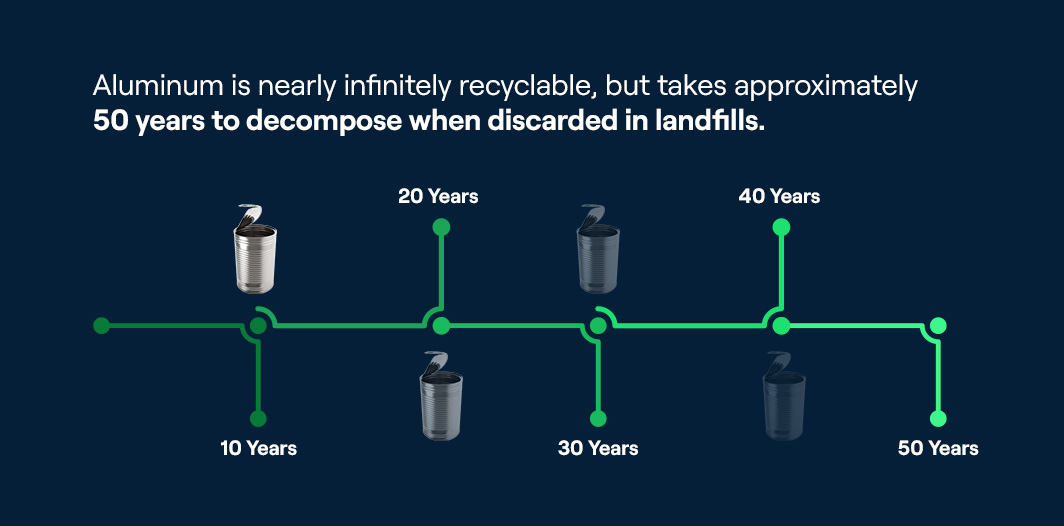
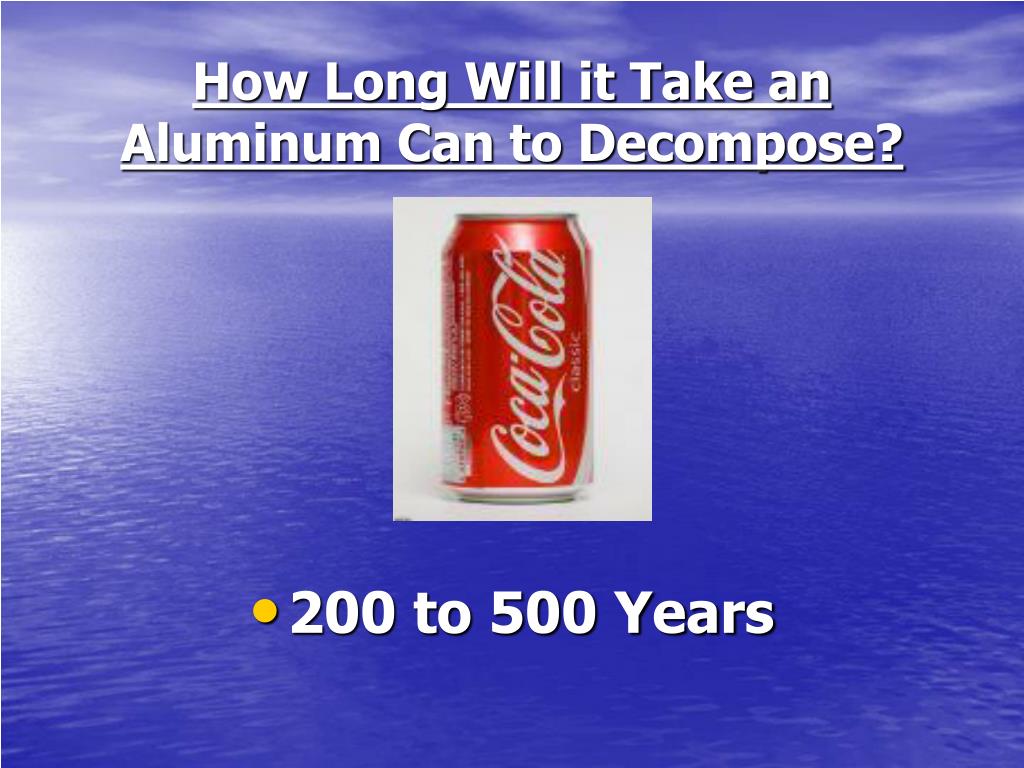
Okay, drumroll please… the answer is… a very, very long time. We’re talking hundreds, even thousands, or potentially even hundreds of thousands of years, depending on the conditions!
Imagine the pyramids of Egypt. They’ve been standing for thousands of years, right? Aluminum, in its raw form or in objects, can last even longer. It’s not something that’s going to disappear in our lifetime, or our grandchildren’s lifetimes, or even their grandchildren’s… you get the idea.
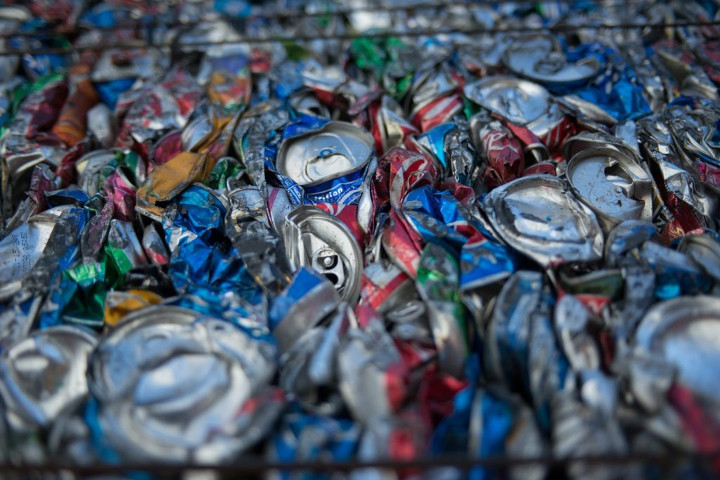
So, when you toss that aluminum can into the recycling bin (which, by the way, is a fantastic thing to do – more on that later!), it’s not going to magically vanish. It’s going to stick around for an incredibly extended period if it ends up in a landfill.
Factors Affecting Decomposition (Or, Why Some Aluminum is Stubborner Than Others)
Now, before you picture every piece of aluminum turning into a petrified statue, let’s talk about what can speed up or slow down this whole process. It’s not a one-size-fits-all situation.
Location, Location, Location: Where the aluminum ends up makes a huge difference. Is it buried deep underground, exposed to salt water, or sitting on a shelf in your dry garage?
Salty Environments: If your aluminum item ends up near the ocean, the salt can act like a little catalyst, speeding up the corrosion process. Think of it like adding a bit of fizz to a reaction. It’s still slow, but it’s going at a slightly faster pace.
Underground Burial: Burying aluminum can be like putting it in a time capsule. The soil conditions – its acidity, moisture levels, and the presence of certain bacteria – all play a role. In some very specific, oxygen-deprived environments, it might decompose slightly differently, but still incredibly slowly.
Exposure to Air and Moisture: Even just sitting out in the open air, especially if it’s humid, will cause that protective oxide layer to form and thicken over time. This is the most common way we see aluminum "weathering."
The Recycling Superpower!
Here’s where we get to the really positive and cool part about aluminum. While it might be a decomposition slowpoke, it’s also an absolute superstar when it comes to recycling. This is a big deal!
Making aluminum from scratch, from bauxite ore, is a really energy-intensive process. It takes a ton of electricity. Think of all the power needed to mine, refine, and smelt the metal. It’s a massive undertaking.
But, recycling aluminum? It uses about 95% less energy than making it from raw materials! That’s a staggering difference. It’s like going from running a marathon to a brisk walk. Suddenly, that aluminum can is not just waste; it’s a valuable resource that can be melted down and reformed into new products again and again.
And here’s the kicker: recycled aluminum can be back on the shelves as a new can or product in as little as 60 days! Compare that to the hundreds or thousands of years it takes to decompose naturally. It’s a superhero turnaround story!
Aluminum vs. Other Materials: A Fun Comparison
Let’s put this into perspective. How does aluminum’s slow decomposition stack up against other common materials we might encounter?
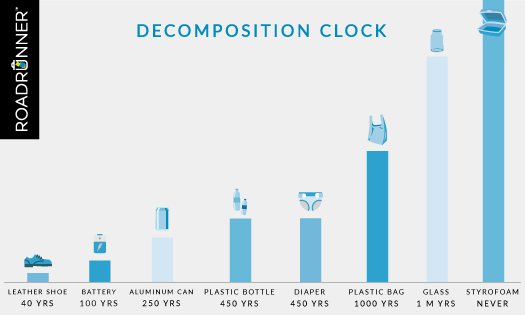
Plastic Bottles: These can take anywhere from 450 to 1,000 years to decompose. So, aluminum is definitely in the same ballpark of "long-lasting," but often even longer depending on the specific plastic and conditions.
Glass Bottles: Glass is practically immortal. It takes around 1 million years to decompose. So, aluminum is a spring chicken compared to glass!
Paper Products: These are the speed demons. A paper bag might decompose in about a month, while a cardboard box might take up to two months. So, aluminum is nowhere near these guys.
Organic Waste (Food Scraps, etc.): This is what decomposition is typically thought of. Food scraps can break down in a few weeks to months, depending on the conditions. Aluminum is on a completely different timescale.
The Takeaway: Be Kind to Your Aluminum
So, while aluminum might not decompose quickly, it’s not necessarily a bad thing. Its durability is one of its greatest strengths, making it useful in countless applications where longevity is key.
But, and this is a big but, because it sticks around for so long, it’s incredibly important for us to manage it responsibly. That means recycling is our best friend when it comes to aluminum. Every can, every foil tray, every piece of aluminum scrap we put in the recycling bin is a step towards conserving energy and reducing the amount of waste that will linger on our planet for millennia.
Next time you use something made of aluminum, take a moment to appreciate its resilience. And then, do the planet a favor and make sure it gets a chance to be reborn through the magic of recycling. It’s a win-win for us and for the Earth!