
How Much Does It Cost To Raise Chickens For Meat
So, you've been eyeing those cute little fluffballs at the feed store, picturing a life of fresh eggs and maybe even a homegrown Sunday roast. It’s a lovely thought, isn't it? Like a little piece of the good old days, right in your backyard. But then the practical side kicks in, and you start wondering, "Just how much does it actually cost to raise chickens for meat?"
Let’s be honest, we’ve all done the grocery store math. You see that package of chicken breasts and think, "Wowzers, that's a few dollars!" Raising your own can feel like a noble pursuit, a way to connect with your food, and maybe even save a buck. But like anything worth doing, it’s not entirely free. Think of it like starting a small business, but your employees are tiny, chirping bundles of potential deliciousness!
The Upfront Investment: Getting Started
First things first, you need a place for your feathered friends to live. This is your chicken palace, your chook condo, your… well, you get the idea. The cost here can range wildly. You could get super fancy with a custom-built coop that looks like a miniature log cabin, or you could go the DIY route with a repurposed shed or even a sturdy doghouse.
For a small flock of, say, 6-10 meat birds, a basic, safe coop can cost anywhere from $100 to $500. This might include materials, some basic tools if you’re building it yourself, or if you’re buying a pre-made kit. Think about it: you wouldn't want to move into a new house without walls, right? Your chickens feel the same way about their home. It needs to be predator-proof – because nobody wants a surprise raccoon guest at dinnertime – and offer protection from the elements. Rain, shine, or a surprisingly chilly breeze, they need a cozy spot.
Then there are the chicks themselves! Buying meat chicks, often called broiler chicks, is usually done in batches. You’ll typically buy them as day-old babies. A single chick might be a few dollars, but you’ll often buy them in quantities. So, for a batch of 10 chicks, you're looking at maybe $30 to $50 to get them started. They arrive as these incredibly vulnerable, fluffy balls, and it’s a big responsibility, like bringing home a new puppy, but a lot less likely to chew your slippers (though they might make a mess!).
The Daily Grind: Feed and Water
This is where the bulk of your ongoing costs will be. Chickens, especially fast-growing meat birds, are hungry little creatures. They eat a lot. And we mean a lot. Imagine trying to keep up with a toddler who’s discovered a bottomless cookie jar – that's kind of the energy level we’re talking about with feed.

For meat birds, you’ll want a specialized feed that’s formulated for their rapid growth. This isn’t just any old birdseed; it’s a balanced diet to help them put on weight efficiently. A 50-pound bag of good quality broiler feed can cost around $20 to $30. How much do they eat? Well, a single meat chicken will go through roughly 8-10 pounds of feed by the time they're ready to process, usually around 6-8 weeks old.
So, for a flock of 10 birds, that’s about 80-100 pounds of feed. That means 2-3 bags of feed. Conservatively, that’s another $40 to $90 in feed per flock. It might seem like a lot for something so small, but they’re essentially converting that feed into delicious protein!
And, of course, they need water. You'll need feeders and waterers, which are usually a one-time purchase that can range from $20 to $50. Keeping them clean and full is part of the daily routine, like making your morning coffee.
The Little Extras: Bedding and Health
Chickens are… messy. They scratch, they poop, and they like to dust bathe. To keep their coop clean and comfortable, you’ll need bedding. Pine shavings are a popular choice, and a large bag can cost around $10 to $20. You’ll need to top this up periodically, especially as they grow and their… output… increases.

Think of it like changing the sheets on your bed. It’s a necessary chore for hygiene and comfort. For a flock of 10, you might go through a couple of bags of shavings during their ~7-week lifespan. So, another $20 to $40 for bedding.
Health is another consideration. While meat birds are generally bred for robustness and fast growth, sometimes little things pop up. You might want to have some basic poultry electrolytes on hand for stress, or a general poultry vitamin. These are usually inexpensive, maybe $10 to $20 for a small supply. It’s like having a small first-aid kit for your flock, just in case. Most of the time, they’re healthy as can be, but it’s good to be prepared!
Other Odds and Ends
There are a few other small things to factor in. You might need a heat lamp for the very young chicks (they can’t regulate their own body temperature), which is a one-time purchase of around $20 to $30, plus electricity costs. Then there’s the electricity to run your coop lights (if you choose to use them), or any electric fencing you might opt for to keep them contained, especially if they free-range.

And let’s not forget the purpose of it all: processing. While the actual processing is an activity rather than a cost, if you’re not comfortable doing it yourself, there are costs associated with hiring someone or using a local processing facility. This can vary significantly by region but is an important factor to consider when calculating your true cost per pound.
Putting It All Together: The Grand Total (Sort Of!)
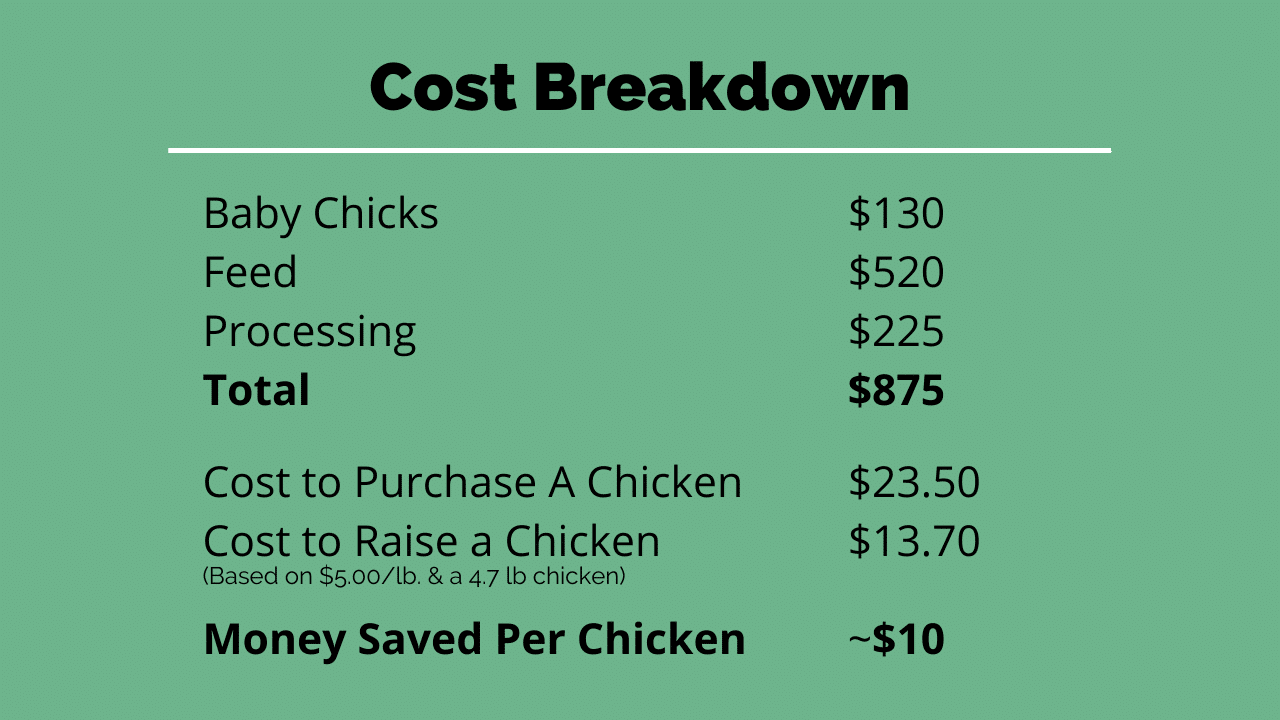
So, let’s do some quick math for a small flock of 10 meat birds, raised for about 7 weeks.
- Coop (assuming a modest DIY or basic pre-made): $250
- Chicks: $40
- Feed: $70
- Waterers/Feeders: $35
- Bedding: $30
- Health Supplies: $15
- Heat Lamp: $25
That brings our rough estimate for the initial setup and raising one flock of 10 birds to around $465.
Now, if you divide that by 10 birds, you’re looking at about $46.50 per bird before you consider processing. That sounds like a lot, doesn't it? But remember, this is for the entire process, from a day-old chick to a ready-to-process bird.
Let’s compare that to the grocery store. If a pound of chicken breast is, say, $5, and a chicken yields roughly 3-4 pounds of usable meat, you're looking at $15-$20 per chicken at the store. Our DIY chicken cost, while it looks high on its own, actually becomes quite competitive when you consider the quality and traceability of your homegrown meat.
Why Bother? The Non-Monetary Rewards
Beyond the dollars and cents, there’s a whole lot of “warm fuzzy” that comes with raising your own chickens. It’s about understanding where your food comes from. It’s about the satisfaction of nurturing a life and providing for yourself and your family in a tangible way.
Think about the joy of watching those little chicks grow, their personalities emerge. It's like a science experiment, a nature documentary, and a culinary adventure all rolled into one! Plus, your kids will learn invaluable lessons about responsibility and the food cycle. Imagine the pride they’ll have in eating chicken they helped raise!
And let’s not forget the environmental benefits. Chickens can help turn kitchen scraps into valuable fertilizer for your garden. They’re like little, feathered composting machines! It’s a beautiful, cyclical way of living that connects you to the earth in a deeper way. So, while the cost might seem daunting at first glance, the rewards – both tangible and intangible – are pretty darn significant. It’s about more than just saving money; it’s about a richer, more connected way of life.