
How Much Electricity Can A Human Survive In Volts
Ever wondered what happens if you accidentally touch a live wire? Yeah, not ideal. But the real question that tickles our morbid curiosity is: how much zap can a human body actually handle?
It’s a question that sounds straight out of a mad scientist’s lab, right? But it’s actually more about our bodies and how they react to electricity. Think of your body as a really, really damp sponge. Sponges are good at absorbing things. Your body? It’s a pretty good conductor. Not as good as a copper wire, thankfully, but good enough to get zapped.
So, what’s the magic number? The number of volts that’ll make you say “ouch” and maybe rethink your career choices? Well, it’s not a single, simple answer. It’s more like a “it depends” kind of situation. And that’s what makes it so darn interesting!
Volts vs. Amps: The Electrical Showdown
Before we dive into the human drama, let’s get our electrical terms straight. We often hear about volts. High voltage! Danger! But here’s a fun fact: it’s not just the volts that matter. It’s the amps. Amps are the flow of electricity. Think of volts as the pressure behind the water in a hose, and amps as the actual amount of water coming out.
A low voltage with a lot of amps can be way more dangerous than a high voltage with almost no amps. It's like a tiny drip from a really tall waterfall. Not scary. But a torrent from a low hill? That could still knock you over.
So, while we talk about volts, remember the unsung hero (or villain) of electrical danger: amps. They’re the real troublemakers.
The Tingly Threshold
Let’s talk about the really low stuff. We’re talking about the kind of zaps you might get from a static shock. You know, when you shuffle your feet on the carpet and then touch something metal? ZAP!
Those shocks are usually caused by a very high voltage, sometimes thousands of volts, but for a tiny fraction of a second and with very, very low amps. So low, in fact, that it’s more startling than dangerous. It’s like a tiny tickle from the electrical gods. Your nerves just freak out for a second.
This is the level where you feel a tingle, maybe a twitch. Your body registers it, but it’s not enough to cause any real harm. Think of it as a polite warning. "Hey, there’s electricity here. Be mindful."
The Danger Zone: Where Things Get Serious
Now, let’s crank it up a notch. What happens when the amps start to increase, even a little?
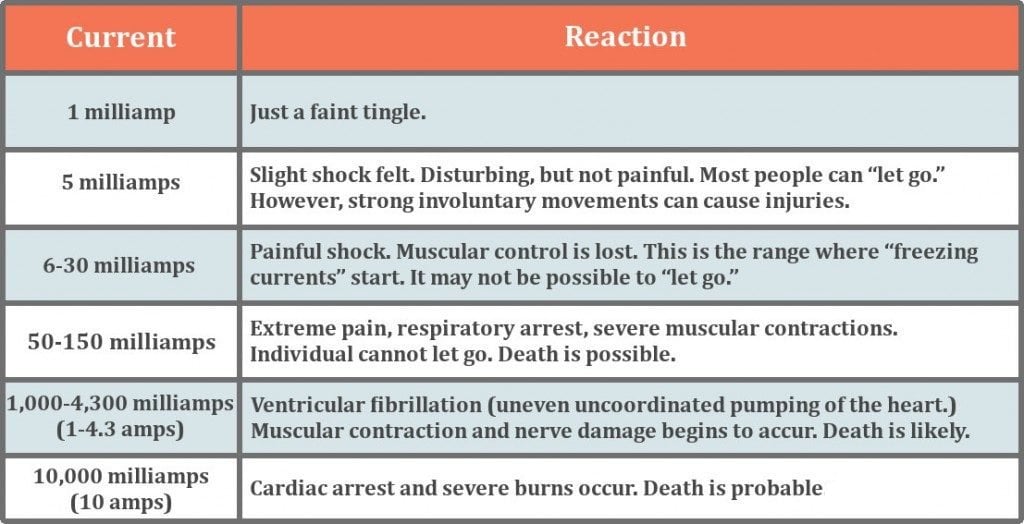
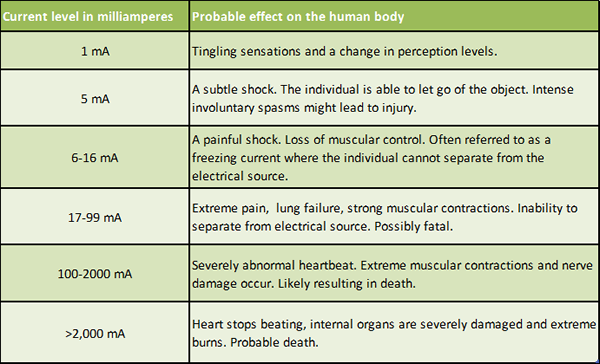
Even a small amount of current, like 10 to 20 milliamps (that’s 0.01 to 0.02 amps!), can cause your muscles to contract uncontrollably. This is where it gets scary. If your hand is touching a wire, your muscles might clamp down, making it impossible to let go. You’re basically stuck in an electrical embrace.
Imagine your fingers involuntarily gripping something. Not fun. This is called “let-go current.” It’s the point where you lose control. And that’s just the beginning.
The Heart of the Matter: Cardiac Arrest
This is where the topic gets truly serious, and why we need to be careful. If the current passing through your body gets higher, it can interfere with the electrical signals that control your heart.
As little as 100 to 200 milliamps (0.1 to 0.2 amps) can cause ventricular fibrillation. That’s a fancy term for your heart’s lower chambers quivering instead of pumping blood. It’s like a chaotic disco in your chest. And that’s a medical emergency, folks.
This level of current can be deadly. It’s the kind of thing you see in movies, but it’s a very real danger. The electricity disrupts your body's own electrical system.
The Volts That Kill: It’s Complicated
So, you might be thinking, "Okay, so how many volts are dangerous?" The answer, as we’ve hinted, is… complicated. It depends on a lot of factors!
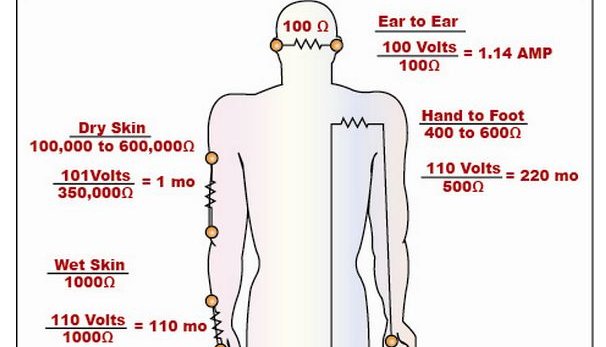
What’s your skin condition? Dry skin is more resistant than wet skin. Ever tried to get a static shock when it's humid? Much harder. So, a little moisture can make a big difference.
What’s the path the electricity takes through your body? If it goes through your heart or your brain, it’s much more dangerous than if it just goes through your finger and out your toe.
And the type of current matters too! Alternating current (AC), like what comes out of your wall outlets, is generally more dangerous than direct current (DC) at the same voltage, especially at household frequencies.
The Standard Outlet: A Surprising Danger
Let’s talk about your everyday household outlet. In most places, that’s around 120 volts (or 240 in some countries). That sounds like a lot, right? But the amount of amps that can flow from a standard outlet is usually limited by a fuse or circuit breaker.
However, if you bypass those safety features, or if something goes wrong, that 120 volts could still be incredibly dangerous if it can push enough amps through you. It’s the potential for significant current flow that makes even these “lower” voltages a serious threat.
It’s like having a powerful engine in your car. The engine itself isn’t dangerous until you put your foot on the gas. Your wall outlet has the potential for power, and it’s important to respect that.
The Shocking Truth About High Voltage
Now, what about those super-high voltage lines you see zipping across the countryside? We’re talking thousands, even millions, of volts.
These are incredibly dangerous, and not just because of the voltage. They can also cause arcing. That’s when electricity can jump through the air, even without direct contact. So, you don’t even have to touch the wire to get a nasty surprise. That’s a whole new level of “don’t touch that!”
At these extreme levels, the sheer force of the electricity can cause severe burns, internal damage, and death, often instantly. It’s not about feeling a tingle anymore. It’s about catastrophic damage.
A Quirk of Nature: Your Body as a Conductor
Isn't it wild that our own bodies are part of this electrical equation? We’re not inert objects; we have electrical signals running through us all the time. Our brains, our nerves, our muscles – they all work on electricity.
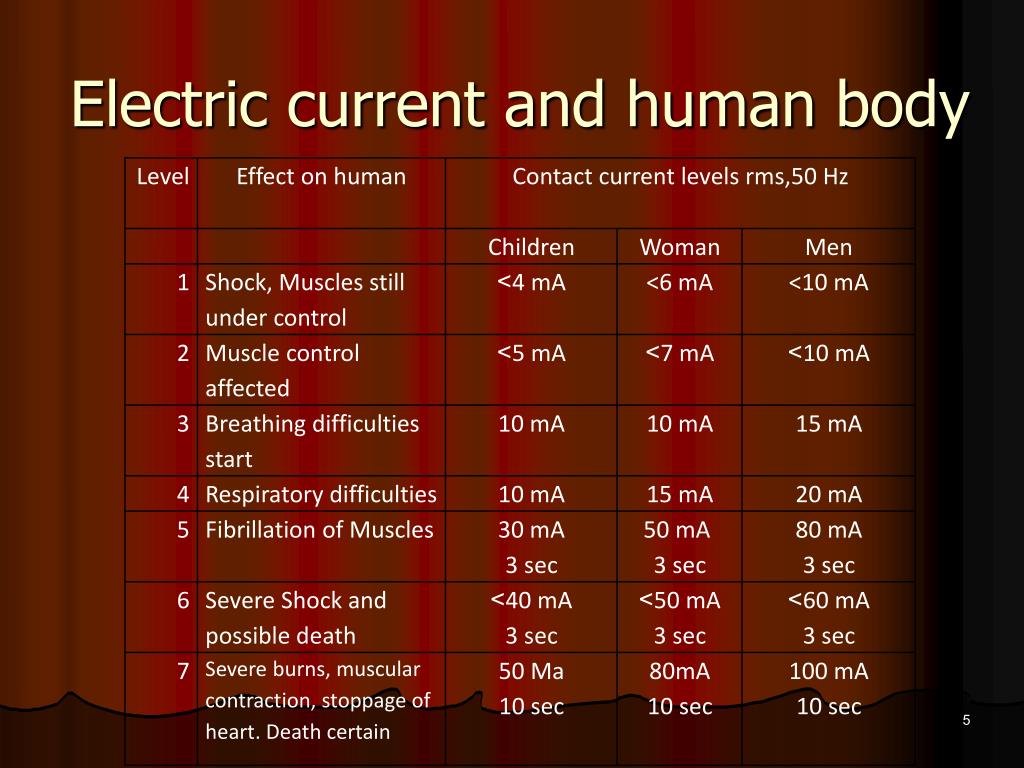
So, when external electricity enters the picture, it’s like an unwelcome guest messing with the delicate internal wiring. It’s a biological circuit board being overloaded. Pretty fascinating, and a little terrifying.
The fact that we can survive certain electrical encounters is a testament to our body’s resilience, but also a stark reminder of how vulnerable we are.
The Takeaway: Respect Electricity!
So, to sum it all up in a fun, no-sweat way: a tiny tingle from static electricity is usually harmless volts with negligible amps. But anything that can push even a small amount of continuous current (amps!) through your body, especially across your chest, can be incredibly dangerous, even deadly.
The exact “survival voltage” is a moving target, depending on amps, duration, path, and your own personal “electrical resistance.”
The most important thing to remember is to always respect electricity. Don’t mess with wires. Don’t stick things into outlets. And if you see a downed power line, stay far, far away. It’s not worth the risk for a quirky factoid or a curious poke.
This topic is fun to think about from a distance, but in reality, it’s a serious matter. Stay safe, and let the electricity do its job without you!