
How The Metal Detector Works

Ever dreamt of uncovering hidden treasures? Like, actual, shiny, buried-for-ages treasures? Or maybe just finding that lost earring your aunt Mildred gave you (bless her heart)? Well, my friends, that’s where the magical metal detector swoops in like a superhero’s cape! And guess what? It’s not some complicated, science-fiction gizmo. It’s actually quite a clever little contraption, and understanding how it works is like getting the secret handshake to a world of discovery.
So, how does this wonderful device turn a regular patch of dirt into a potential treasure trove? It all boils down to a little bit of electromagnetism. Don't let that word scare you! Think of it like this: we're creating a tiny, invisible force field that talks to metal. Pretty neat, huh?
At its core, a metal detector has two main players: a search coil (that big, round disc at the bottom) and the control box where all the smart stuff happens. The search coil is the real workhorse here. It’s actually made up of two separate coils of wire, usually wound in opposite directions. Imagine two perfectly matched dancers, doing their thing in sync.
The Invisible Ripple Effect
Here’s where the magic starts. The control box sends an electric current through the first coil in the search head. This current zipping and zapping through the wire creates an invisible magnetic field. Think of it like dropping a pebble into a still pond – it sends out ripples. This magnetic field is the ripple, and it extends downwards, into the ground. It’s a gentle ripple, mind you, nothing to worry about! It’s just our friendly magnetic field saying hello to everything below.
Now, what happens when this invisible ripple encounters something metallic? Ah, this is the good part! When our magnetic field bumps into a piece of metal, it does something super interesting. It causes the electrons in the metal to start moving. This movement, in turn, creates its own, much weaker, magnetic field. It’s like the metal is whispering back to our detector!
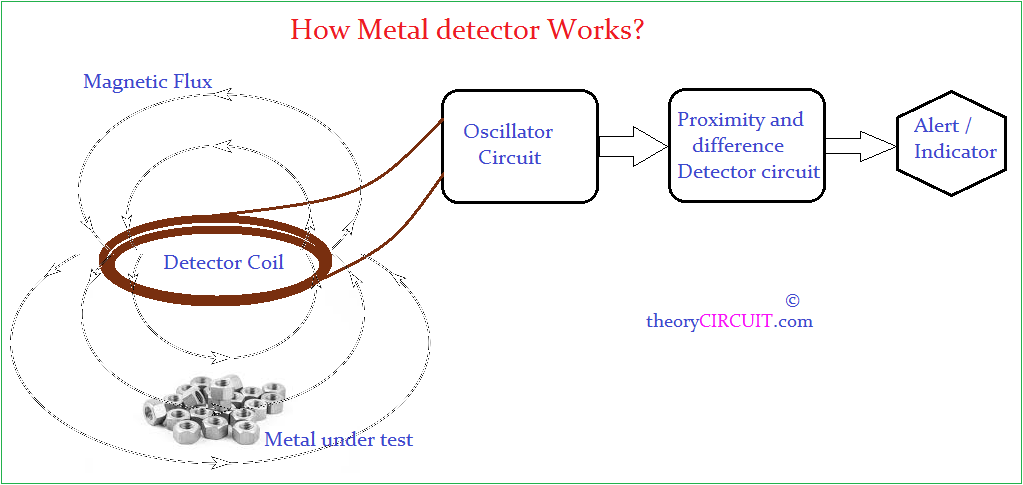
The second coil in the search head is the listener. It's designed to pick up on these faint magnetic whispers from any metal objects it encounters. If it detects a returning magnetic signal, it sends that information back to the control box. And voilà! The control box interprets this signal, and usually, you’ll hear a beep, a buzz, or see a light flash. Bingo! You’ve got a metal target!
Different Strokes for Different Folks (and Metals!)
Now, you might be thinking, “Does it beep for all metal?” Well, that’s where things get even more sophisticated and, dare I say, fun!

Some metal detectors are pretty basic and will beep for anything metal – a lost coin, a rusty nail, or even that pesky aluminum foil wrapper from your lunch. And you know what? Even finding a rusty nail can be surprisingly satisfying! It’s a mystery solved, a little piece of the past revealed.
However, the more advanced detectors have something called discrimination. This is like a discerning ear for your metal detector. It allows you to tell the difference between different types of metals. For example, you can set it to ignore iron (so you don't dig up a million rusty nails) and focus on more valuable targets like gold, silver, or copper. It’s like having a personal assistant who filters out the junk and points you towards the good stuff.
How does discrimination work? It’s all about the electrical properties of different metals. Different metals react to the magnetic field in slightly different ways, creating subtle variations in the returning signal. A good detector’s circuitry is smart enough to pick up on these variations and tell the difference. It’s quite a feat of engineering, really!

The Thrill of the Hunt
So, why is all this so inspiring and, frankly, fun? Because it opens up a whole new way to interact with the world around you! You’re not just walking; you’re exploring. You’re not just looking at the ground; you’re listening to its secrets.
Think about it: the beach, the park, even your own backyard could hold forgotten histories. That old coin might have a story to tell. That lost piece of jewelry might have sentimental value. It’s like a scavenger hunt designed by nature and time, and you’ve got the perfect tool to join in the game!

Metal detecting is a fantastic way to get outdoors, get some exercise, and connect with history. It’s a hobby that appeals to the curious, the adventurous, and anyone who loves a good surprise. Imagine the sheer joy of that first strong signal, the digging, the anticipation, and then… discovery! It’s a feeling unlike any other.
It’s about more than just finding things. It’s about the process, the learning, and the sheer delight of the unknown. Every outing is an adventure, and every beep is a potential story waiting to be unearthed.
So, the next time you see someone with a metal detector, give them a nod and a smile. They’re not just wandering around aimlessly; they’re engaging in a fascinating dance with electromagnetism, listening to the whispers of the past, and potentially unearthing a little bit of wonder. And who knows? Maybe you’ll be inspired to grab one yourself and start your own thrilling adventure. The ground beneath our feet is full of possibilities, just waiting for a keen eye and a good detector to reveal them!