
How To Anchor In Metal Studs

So, you've got this awesome idea. A new shelf! A TV mount! Maybe even a whole floating disco ball. Whatever it is, it's going to hang on your wall. And that wall, my friend, is probably hiding a secret. Not a scandalous one, but a metallic one: metal studs.
Yep, those sleek, modern homes? They often ditch the old-school wood for these cool, industrial channels. And while they're tough and fire-resistant (bonus!), they can feel a bit like trying to nail Jell-O to a mirror. Scary? A little. But totally doable, and honestly, kinda fun once you get the hang of it.
The Mystery of the Metal Stud
Imagine your wall is like a fancy, grown-up LEGO set. Wood studs are the big, chunky red bricks. Easy peasy. Metal studs? They're more like those intricate, silver Technic pieces. You need the right connector to make things stick.
Why the metal? Think about it. Lighter, straighter, and they don't warp if your bathroom is a bit humid. Plus, the building codes love 'em. So, you're basically working with the future of walls. Pretty cool, right?
Why Bother Knowing This?
Because you don't want your masterpiece to end up on the floor, do you? That's like inviting your grandma to a rave and then serving her lukewarm tea. Awkward. Anchoring in metal studs is the difference between a triumphant display and a DIY disaster.
And let's be real, there's a certain satisfaction in mastering a skill that feels a bit... technical. It's like learning a secret handshake for your house. You'll be looking at walls with a whole new appreciation, muttering "Ah, yes, a 20-gauge C-stud, how delightful." Okay, maybe not that last part. But you get the idea.
The Treasure Hunt: Finding Those Studs
First things first: you need to find these elusive metal studs. They're hiding behind that drywall like a shy celebrity. But fear not! We have tools!
Stud Finders: Your New Best Friend
You've probably seen them. Little gadgets that beep or light up. For wood, they're pretty straightforward. For metal? It's a tad more nuanced.
Some stud finders have a specific "metal" mode. This is your golden ticket. Others might detect the density difference, but it can be a bit of a guessing game. You might get false positives from pipes or wiring (eek!). So, read the instructions, people!
Another trick? A strong magnet! Metal studs are, well, metal. A small, powerful magnet (like a neodymium magnet) can sometimes "stick" to the stud through the drywall. It's a bit of a tactile treasure hunt. Be patient, run it slowly across the wall. You'll feel that little tug. It's like finding a tiny, hidden magnet where the studs are.
You can also tap the wall. Wood studs sound a bit duller, like tapping on a cushion. Metal studs? They give a more hollow, sometimes pingy sound. It's a subtle difference, but with practice, you can learn to distinguish them. Think of it as learning to hear the difference between a Stradivarius and a kazoo. Not entirely, but you get the idea.
And finally, the old-school method: pilot holes. If you're really stuck, you can drill tiny, exploratory holes in inconspicuous spots (like behind where you plan to hang something anyway). If you hit metal, ding ding ding! Stud found!
The Art of the Anchor: Sticking It To Metal
Okay, you've found your metallic fortress. Now, how do you make things cling to it? Forget those old-school plastic anchors you use for drywall. They're basically useless here. They'll just spin around like a lost sock in a washing machine.
Self-Tapping Screws: The Speedy Solution
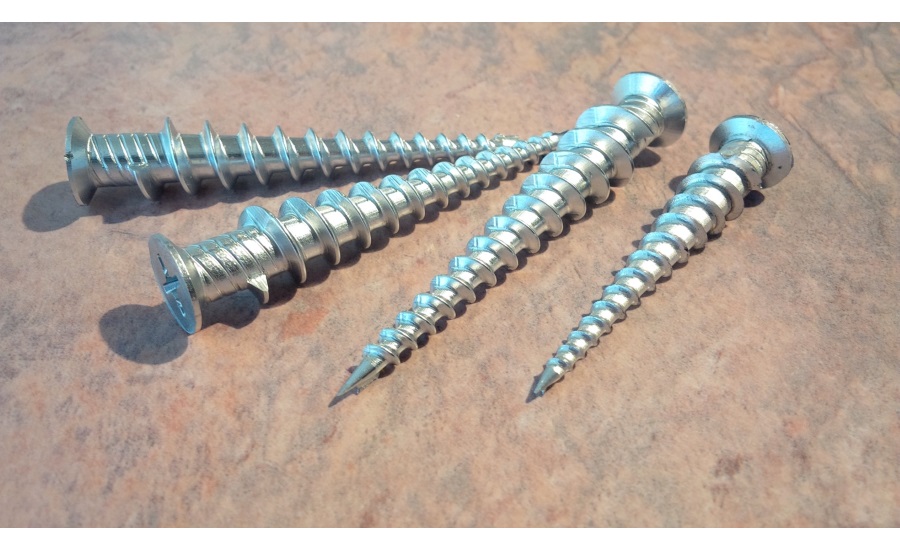
These are your go-to guys for lighter-duty stuff. Think small shelves, picture frames, or that motivational poster of a cat hanging from a branch. Self-tapping screws have a pointed tip that literally taps its own threads into the metal stud as you screw it in.
The trick here is to use a drill bit that's slightly smaller than the screw's shank. This creates a pilot hole for the screw to grab onto. It’s like giving the screw a little runway to land on. Then, drive the screw in slowly with your drill. You want it to bite into the metal, not just spin. Gentle but firm pressure is key.
Quirky Fact: The "tapping" action of these screws actually shaves tiny metal shavings as it goes. It's like the screw is performing a mini, metallic manicure on the stud!
Toggle Bolts: The Heavy Lifters
Now, if you're hanging something substantial – a TV, a heavy mirror, or a bookshelf that’s going to be stuffed with your entire library – you need something more robust. Enter the toggle bolt.
These guys are like little winged superheroes. You drill a hole (big enough for the folded toggle). You then push the toggle, with its spring-loaded wings, through the hole. Once it's on the other side of the drywall, the wings spring open, creating a broad surface area behind the stud. Then, you tighten the bolt, and those wings hug the back of the metal stud like a cozy blanket.
Why they're fun: The "snap" when those wings open is incredibly satisfying. It's a tiny mechanical miracle happening inside your wall!
Important Note: You'll need to make sure the hole you drill is the correct size for the specific toggle bolt you're using. Too small, and the toggle won't fit. Too big, and it'll just fall through. Consult the packaging!
Specialized Metal Anchors: The Pros' Choice
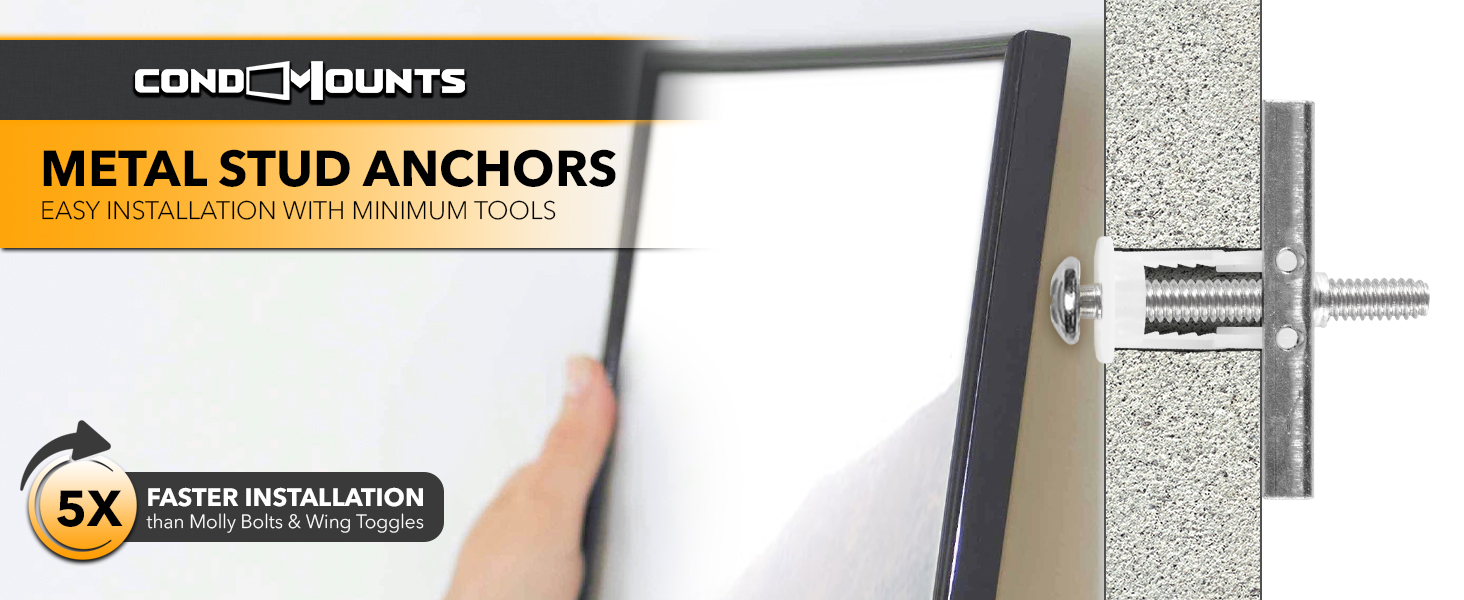
There are also specific anchors designed for metal studs. These often involve a pre-drilled hole and then a special anchor that expands or grips the metal from the inside. Think of them like tiny, engineered gripping devices. They might look a bit more complex, but they offer incredible holding power.
Some might require a special tool to install. It's like having a tiny, specialized construction crew working for you! These are usually for very heavy loads or commercial applications, but they’re good to know about.
Safety First, Fun Always!
Before you go drilling willy-nilly, a few crucial points:
- Know what's behind the wall: Use a stud finder that can also detect electrical wires and pipes. Nobody wants a surprise plumbing or electrical adventure. Seriously.
- Weight limits are your friends: Every anchor has a weight limit. Don't exceed it. Your TV doesn't want to do a swan dive.
- Read the instructions: I know, I know. But seriously, for anchors, especially toggle bolts, the instructions are your map to success.
- Measure twice, drill once: The age-old wisdom applies here with a vengeance.
Anchoring in metal studs isn't as intimidating as it sounds. It’s a little puzzle, a bit of engineering, and a whole lot of satisfaction when your project stays put.
So go forth! Find those metal studs. Choose your anchor wisely. And hang that disco ball with pride. You've conquered the metallic beast, and the only thing that’s going to fall now is probably your jaw when you see how good it looks.