
How To Determine Charge Of Transition Metals
Ever looked at a colorful gem and wondered why it shines so brilliantly? Or maybe you've seen a science experiment with some seriously cool reactions. A lot of that magic comes down to a sneaky group of elements called transition metals. These guys are the rockstars of the periodic table, and figuring out their "charge" is like unlocking their secret identity. It's a puzzle, sure, but a really fun one!
Think of it like this: transition metals are a bit like chameleons. They can change their "color" or, in science terms, their charge. This ability to switch charges is what makes them so versatile and why they pop up in so many awesome things. You see them in the vibrant blues of copper in ancient pottery, the fiery reds of iron in your blood, and the shimmering silvers of gold and silver in jewelry.
So, how do we figure out what charge a transition metal is rocking in a particular situation? It’s not like they wear name tags. It’s more like detective work! We have to look at the clues. The biggest clue usually comes from the other elements they're hanging out with. These are called ligands, and they're like the entourage of our transition metal star.
Each ligand has its own known charge, and these charges are usually pretty straightforward. They're like the supporting actors who have their roles clearly defined. When the transition metal teams up with these ligands, they have to balance everything out. It’s all about maintaining harmony, kind of like a band making sure all the instruments are in tune.
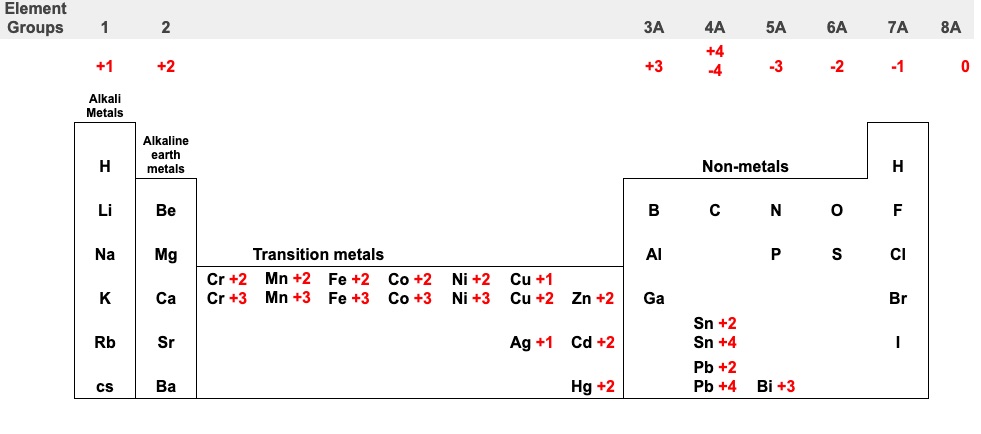
Let's take a common scenario. Imagine you have a compound like iron(III) chloride. The name itself gives you a huge hint! The "III" in Roman numerals tells you that the iron atom has a charge of +3. Simple, right? That's the beauty of these elegantly named compounds. The name is the cheat sheet!

But what if the name doesn't spell it out so clearly? This is where the real fun begins. We have to look at the chemical formula. This is like the blueprint of the compound. You’ll see the symbols for the elements and numbers indicating how many of each are present. Your job as a budding detective is to work backward.
You know the charges of most of the other elements involved. For example, oxygen is almost always -2, and hydrogen is usually +1. So, if you see a compound like manganese dioxide, which has the formula MnO₂, you know that each oxygen atom is -2. Since there are two of them, that’s a total of -4 from the oxygens. To make the whole compound neutral (which most compounds are), the manganese atom has to carry a charge that cancels out that -4. Bingo! The manganese must be +4.
It’s like solving a little math problem. You have a total (which is usually zero for a neutral compound), and you know some of the numbers. You just need to figure out the missing one. This is where you get to flex those brain muscles! And the best part is, you’re not just staring at numbers on a page; you’re uncovering the unseen forces that hold these amazing molecules together.
Sometimes, the transition metals can be a bit trickier. They might form compounds where they have a different charge than you'd expect. This is where things get really exciting because it means they're behaving in a unique way. Think of it as a surprise plot twist in your detective story!

One way to figure out these trickier situations is by looking at the overall charge of the compound. If a compound has a charge itself (it’s an ion, not a neutral compound), you have to account for that extra positive or negative sign. For instance, if you see something like [Fe(CN)₆]³⁻, the overall charge is -3. You have six cyanide ligands (CN), and each one has a charge of -1. So, that's -6 from the cyanides. To get an overall charge of -3, the iron atom must have a charge of +3. See? It’s a clever little balancing act!
What makes this whole process so captivating is that you're not just memorizing facts. You're learning to think logically and critically. You're developing a skill that allows you to peer into the molecular world and understand why things behave the way they do. It’s like gaining a superpower of understanding!
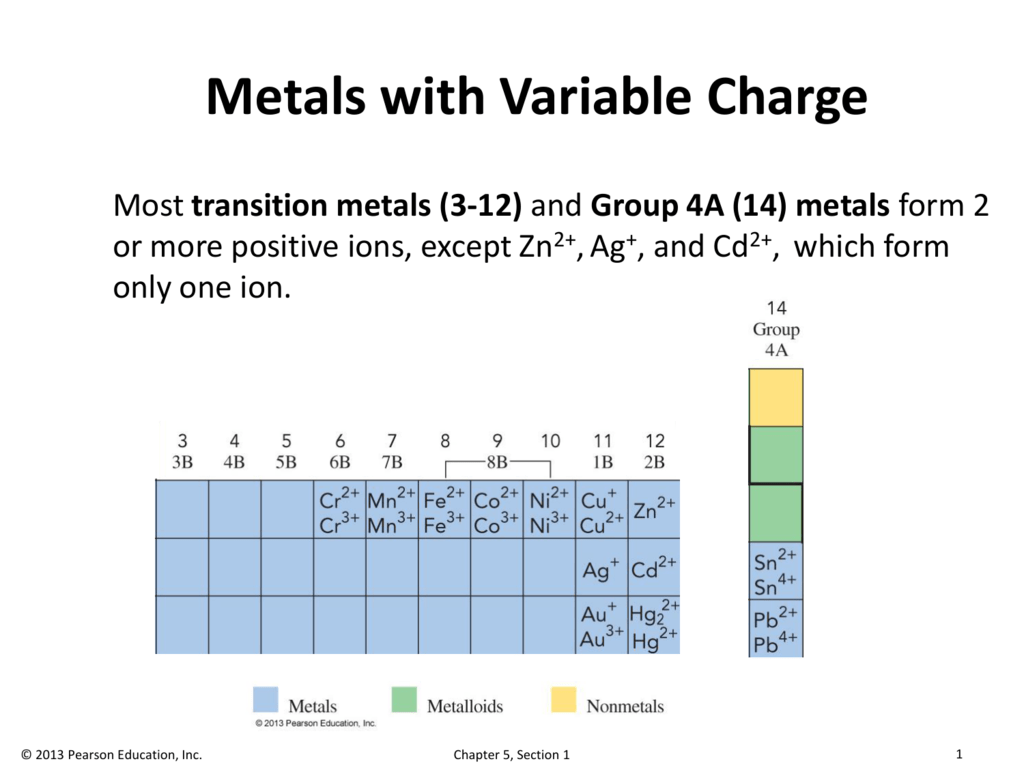
And the transition metals themselves are so incredibly cool. They're the architects of color, the drivers of reactions, and the backbone of so many essential processes in nature and in our technology. From the green of chlorophyll in plants to the catalysts that make plastics, these elements are everywhere, and their ability to flex their charges is key to their incredible usefulness.
So, the next time you see a vibrant blue pigment, a rust-colored surface, or a dazzling piece of jewelry, remember the fascinating world of transition metals and their charges. It's a puzzle waiting to be solved, a story waiting to be understood, and it's a lot more entertaining than you might think!
"The beauty of chemistry is in its ability to reveal the hidden order of the universe, one element at a time."
Give it a try! Pick a chemical formula you've seen, and see if you can determine the charge of the transition metal. It’s a rewarding challenge that opens up a whole new way of looking at the world around you.