
How To Factor Quadratics With A Leading Coefficient
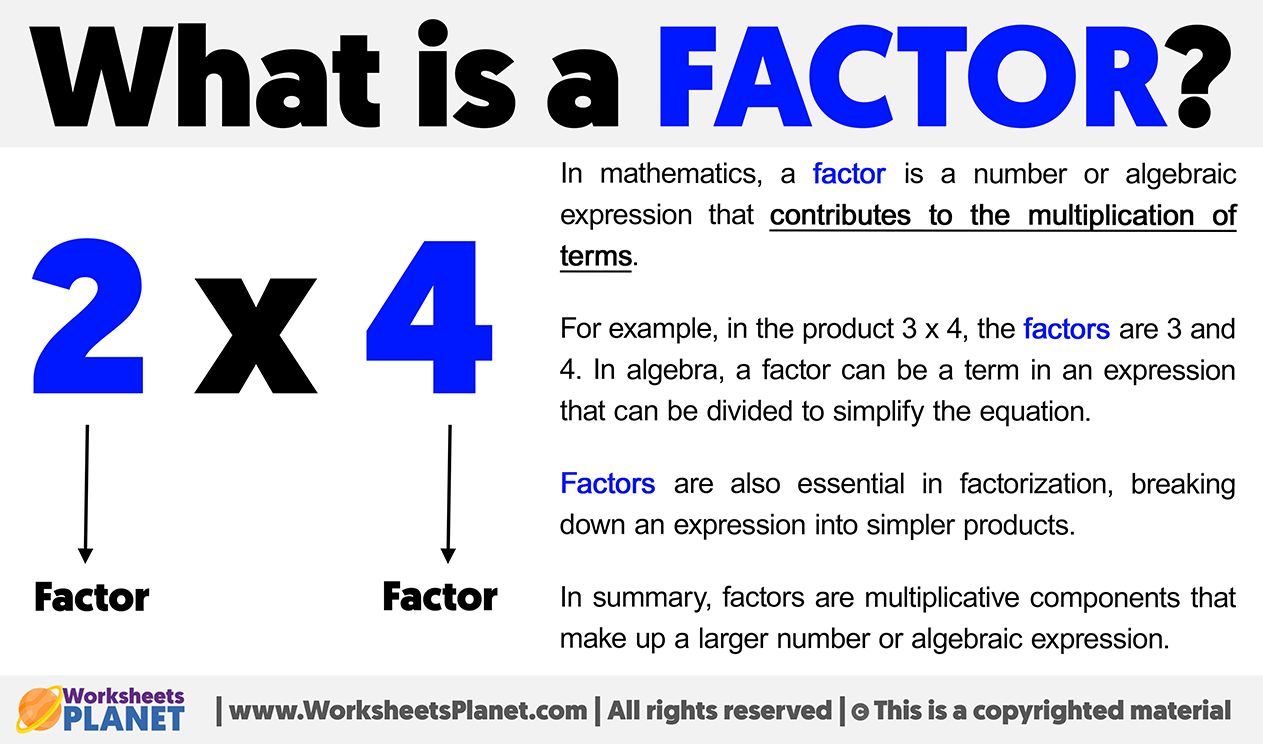
Alright, let's talk about factoring quadratics, but not the kind that makes you want to hide under your desk. We're diving into the slightly trickier, but ultimately more rewarding, world of quadratics with a leading coefficient. Think of it like this: most of the time, you're baking cookies where the flour is already measured out. This is like baking cookies where you have to measure the flour yourself – a little more hands-on, but the delicious results are totally worth it!
So, what’s this "leading coefficient" thing? Imagine your quadratic expression is a little family. The leading coefficient is like the energetic parent at the front of the line, waving a tiny flag and saying, "Follow me, team!" For example, in an expression like 2x² + 7x + 3, that '2' is our lively leader. It’s not a '1' (which is the quiet, unassuming parent who blends into the background), so it adds a tiny bit of flair to our factoring adventure.
Now, you might be thinking, "Is this going to be another one of those 'guess and check' situations that feels like trying to find a needle in a haystack?" Well, sometimes it feels a little like that, but we’ve got some neat tricks up our sleeves to make it more like a treasure hunt! The core idea is to break down this energetic parent and get them to work harmoniously with the rest of the quadratic family.
It’s all about finding the right combination of numbers that, when you multiply them together, give you the original family, but in its happiest, most factored-out form. Like finding the perfect puzzle pieces that snap together!
Let's take our example, 2x² + 7x + 3. Our leader is '2'. We need to think about the ways we can get '2x²' by multiplying two terms. The most straightforward way is 2x * x. Easy peasy, right? This gives us the first part of our two parentheses, which will look something like (2x ...)(x ...). See? We've already got a head start, and our energetic leader is already in place.
Now, we need to figure out what goes into the "..." spots. This is where the rest of the family, the '7x' (the busy bee in the middle) and the '+3' (the sweet dessert at the end), come into play. We need two numbers that multiply to give us '+3'. The classic pairs for '3' are (1, 3) and (-1, -3). We’ll try these out.

The magic happens when we combine these pairs with our (2x ...) (x ...) structure. Remember, when we FOIL (First, Outer, Inner, Last) these two parentheses to multiply them back out, the "Outer" and "Inner" parts are where our '7x' will be formed. This is where our leading coefficient of '2' really shines! It influences how these middle terms combine.
Let's try putting '+1' and '+3' in our parentheses. We could have (2x + 1)(x + 3). Let's FOIL this:
- First: (2x)(x) = 2x² (Perfect! That's our leading term.)
- Outer: (2x)(3) = 6x
- Inner: (1)(x) = x
- Last: (1)(3) = 3

What if we tried (2x + 3)(x + 1)?
- First: (2x)(x) = 2x²
- Outer: (2x)(1) = 2x
- Inner: (3)(x) = 3x
- Last: (3)(1) = 3
The beauty of this process is that the leading coefficient, that '2', forces you to be a little more strategic. It’s not just about finding two numbers that multiply to the constant term; it's about finding those numbers and then testing them in a way that accounts for that multiplier. It's like a slightly more complex recipe, but the resulting mathematical dish is incredibly satisfying.
There’s a wonderful sense of accomplishment when you finally crack the code. It’s a little 'aha!' moment that feels genuinely earned. Each successful factoring is a small victory, a testament to your growing mathematical prowess. And the more you practice, the more intuitive it becomes. You start to see the patterns, almost like recognizing familiar faces in a crowd. The leading coefficient, initially a little intimidating, becomes just another friendly character in the grand theater of algebra. So, embrace it, play with it, and enjoy the delightful unraveling of these quadratic expressions!